Achiote Seed: The Colour That Has to Go Through Fat
Annatto in its raw form. What the seed does, why water will not extract it, and how to buy and store it.
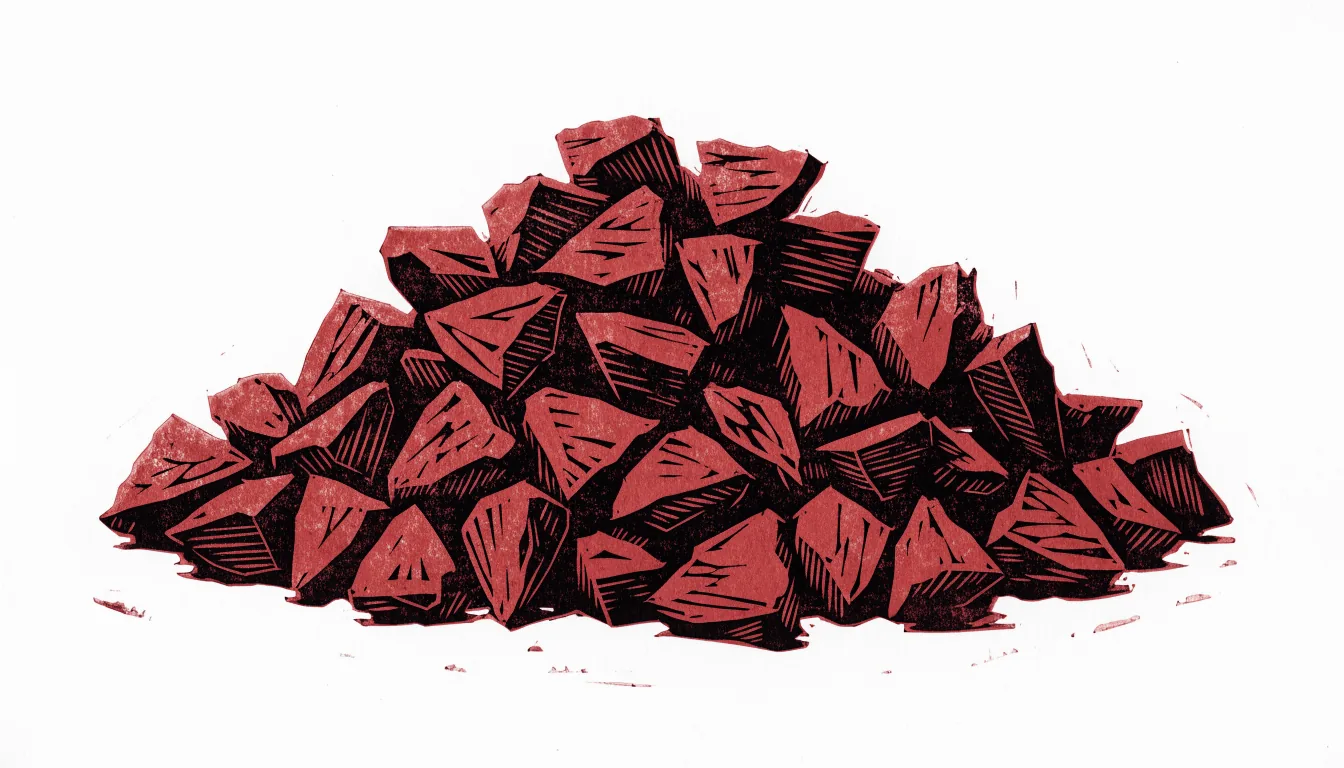
Achiote seed is the hard brick-red seed of Bixa orellana, used across Latin America for the orange colour it gives to fat, and its defining property is that the pigment is fat-soluble rather than water-soluble. That single fact determines every technique built around it.
The oil made from it is covered separately. This page is about the seed: what to buy, what form to buy it in, and what it is doing.
What the seed actually is
Achiote is the seed of a tropical shrub, coated in a red-orange pigment layer, hard enough that it will not grind usefully in most domestic grinders and almost flavourless when raw.
The pigment is on the outside of the seed rather than through it, which is why steeping works and why grinding is not necessary to extract colour.
Flavour is subtle. Achiote contributes a mild peppery earthiness and a faint bitterness. Anyone expecting a strong taste from something this vividly coloured will be disappointed, and that expectation gap is the most common misunderstanding about the ingredient.
Annatto is the same thing. Annatto is the English name, achiote the Spanish. Both refer to Bixa orellana, and recipes use them interchangeably.
Why it has to go through fat
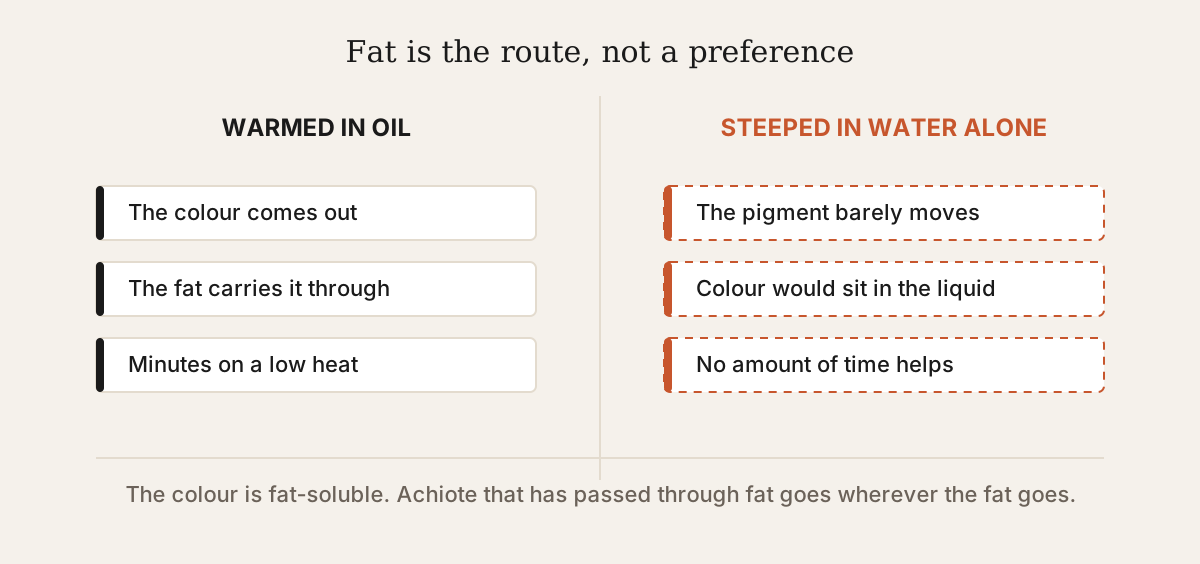
The pigment is fat-soluble and only sparingly water-soluble, so a preparation that adds achiote to a simmering pot of liquid extracts very little of it.
That is the whole reason achiote oil exists as a step. Warming the seed in oil pulls the colour out in minutes, and the coloured fat then distributes through everything cooked in it. An Ecuadorian refrito begins this way; so does a great deal of Central American and Caribbean coastal cooking.
It is also why a synthetic dye is not equivalent in a base. A dye added to a dish sits in the dish. Achiote that has passed through the fat is carried wherever the fat goes.
And it is why powder in a dry rub behaves differently from seed in oil: in a dry application there is no fat stage, so the colour transfers to the surface of the food rather than through the dish.
The forms it is sold in
Achiote reaches the United States in four forms and they are not interchangeable, so the form is the first buying decision rather than the brand.
Whole seed is the most versatile and the longest-keeping. It is what you want for making oil, and it strains out cleanly.
Ground annatto is faster and does not strain, so it leaves sediment. That is fine in a base going straight into a pan and wrong for a clear coloured oil.
Achiote paste, the Yucatecan block, is a different product entirely: annatto plus acid, garlic, oregano and other seasonings, compressed into a brick. It is a seasoning in its own right and not a substitute for the seed.
Achiote or annatto oil, sold bottled, is convenient and among the least worthwhile things to buy ready-made given how quickly it is made.
Buy whole seed as the default. It is inexpensive, keeps longest and covers the most uses.
How to judge it
Judge achiote seed on colour first and on how much loose pigment has shed into the bag second, and expect it to smell of almost nothing.
Seed should be a bright brick red to red-orange. Dull brown seed has aged and will give a weaker, muddier colour.
It should not be dusty in the bag. A lot of loose pigment powder at the bottom means the seed has been knocked about and has already shed some of what you are buying.
Smell tells you almost nothing, which is worth knowing so you do not reject good seed for smelling of nothing.
Checked on 13 August 2026, the first page of United States results for achiote seed returned spice retailers and general marketplaces, which describes that search on that date rather than recommending any seller. Availability is genuinely good and the seed is inexpensive.
Using it
Steep in warm oil for about five minutes, strain, and use the oil. That is the primary technique and it covers most applications.
Proportions are forgiving, roughly one part seed to four or five parts oil by volume. Beyond saturation, more seed adds nothing.
Low heat, and watch it. Achiote scorches at a lower temperature than most spices and burnt achiote turns grey-brown and bitter irreversibly. The oil should barely shimmer.
Strain completely. Seeds left in the oil keep leaching, eventually turning it harsh, and they scorch when the oil is next heated.
For dry applications, ground annatto goes into rubs and blends directly, where it contributes colour to the surface rather than through the dish.
Storage
Whole seed keeps a year or more sealed, dry and away from light. Ground annatto fades considerably faster, in months rather than a year.
Light is the main enemy of the pigment, so a tin or an opaque jar beats a clear one on a counter.
The seed does not spoil, it fades. Old seed is safe and gives a weaker, browner colour, which is a quality problem rather than a safety one.
Buy small and often if you use it occasionally, since the difference between fresh and two-year-old seed is visible in the finished dish.
Frequently asked questions
Does achiote taste of anything?
Faintly. It carries a mild peppery earthiness and a slight bitterness, and it is far weaker than most people expect from something so strongly coloured. Its main job is colour distributed through a dish via fat. Anyone using it expecting a pronounced flavour has the wrong expectation of the ingredient rather than a bad batch.
Is achiote the same as annatto?
Yes. Achiote is the Spanish name and annatto the English one, both for the seed of Bixa orellana. Recipes use the two words interchangeably. Achiote paste is a separate product, a Yucatecan seasoning brick carrying acid and other spices, and it is not a substitute for the plain seed.
Can I grind achiote seed at home?
With difficulty. The seed is very hard and most domestic spice grinders struggle with it, and grinding is usually unnecessary since the pigment sits on the outside and steeps out into warm oil in minutes. Buy ground annatto if you need a powder, and whole seed for everything else.
Why did my achiote oil turn bitter?
Scorching, almost always. Achiote burns at a lower temperature than most spices and burnt seed turns the oil grey-brown and harsh, which cannot be fixed. Keep the oil barely shimmering and steep for around five minutes. The other cause is leaving the seeds in the finished oil, where they continue to leach over weeks.
What can I substitute for achiote?
For colour alone, paprika gives a redder result with its own flavour, and turmeric gives a yellower one with a much more assertive taste. Neither reproduces achiote’s combination of strong colour with a near-neutral flavour, which is precisely why achiote is used. If the dish depends on the colour, paprika is the nearer stand-in.
The pairing
“Alma Llanera”, Pedro Elías Gutiérrez, 1914, Venezuela.
Regional. A piece so thoroughly absorbed into daily Venezuelan life that it works as a second anthem, which is roughly what achiote is in the kitchens that use it: everywhere, and rarely remarked on.
We write about seasoning preparations across Latin America, what separates the regional variants, and where to buy them in the United States.