Achiote vs Annatto: One Seed, Two Names, Three Forms
The same seed under a Spanish name and an English one, sold as whole seed, ground powder, oil and a Yucatecan paste. Which form does what, and where the paste stops being the seed.
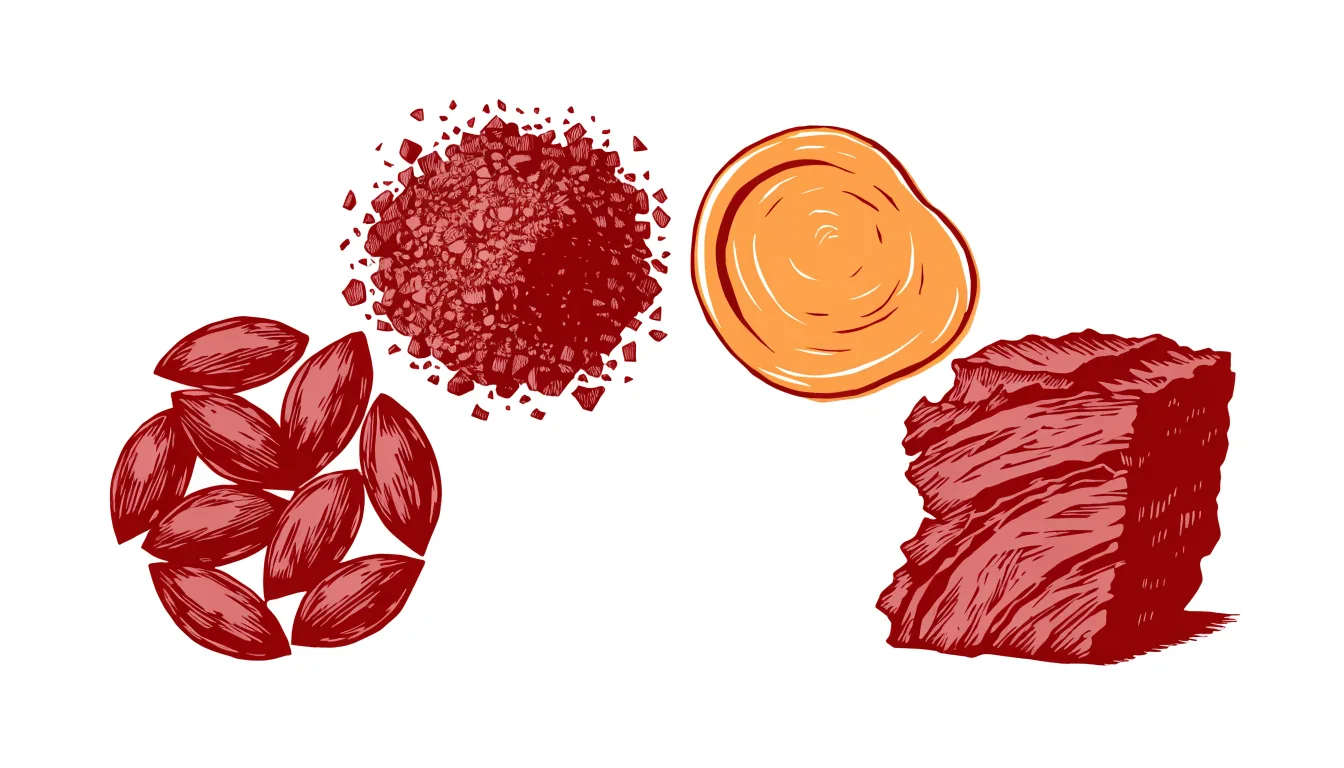
Achiote and annatto are the same thing: the seed of Bixa orellana, used across Latin America as a colouring agent and a mild seasoning.
Achiote is the Spanish name and annatto the English one. The confusion is not between two ingredients but between the four forms the one seed is sold in, which do very different jobs.
They are the same seed
Achiote and annatto both name the seed of Bixa orellana, a shrub native to tropical South America.
Achiote is the Spanish word, from Nahuatl achiotl, and is what the ingredient is called across Latin America.
Annatto is the English word, and it is also the name used on ingredient labels and in food regulation, where it appears as a permitted colouring.
Urucum is the Brazilian Portuguese name for the same seed, and bija is used in parts of the Caribbean and Colombia.
On a United States ingredient panel it will say annatto. In a Latin grocer it will say achiote. Nothing has changed but the language.
What it actually contributes
Achiote is a colouring agent first, contributing a strong orange-red, and a mild seasoning second.
The colour comes from bixin, a carotenoid in the seed coat, and it is powerful. A small quantity colours a large pot.
The flavour is mild, faintly peppery and earthy with a slight bitterness, and it is easily overwhelmed by anything else in a dish.
It is not hot. Achiote contains no capsaicin and is not related to peppers in any way.
Anyone expecting a flavour-forward spice will be disappointed, which is the most common first encounter with it. It is used because of what it does to the colour of fat.
The four forms, and which one a recipe means
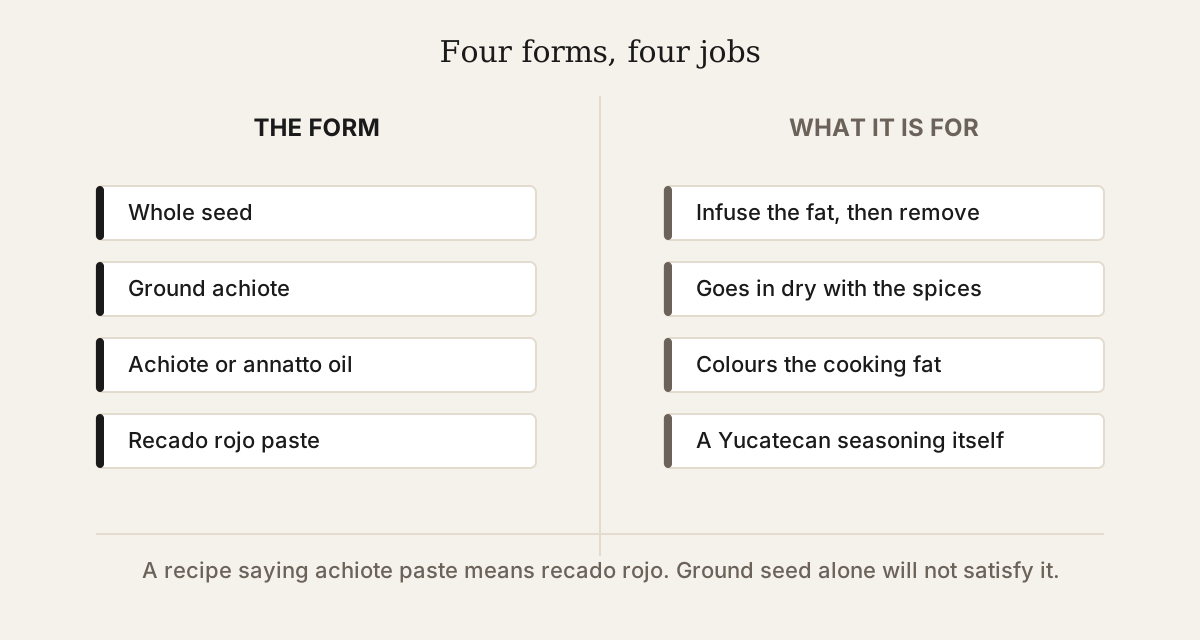
Achiote is sold as whole seed, ground powder, infused oil and a compounded paste, and they are not interchangeable.
Whole seed is hard, almost stony, and does not soften in cooking. It is used to infuse fat and then removed, or ground in a spice mill.
Ground achiote is the seed milled, sometimes with other spices, and it disperses directly into a dish.
Achiote oil, or annatto oil, is fat that has been heated with the seed and then strained. It is a colouring fat and is the form used in Colombian and Venezuelan cooking.
Achiote paste, or recado rojo, is a Yucatecan compound of ground achiote with oregano, cumin, garlic, salt and sour orange. It is a preparation and not the seed, and it is where most English-language confusion happens.
A recipe saying achiote paste means recado rojo and cannot be satisfied with ground seed alone.
Where the paste stops being the seed
Recado rojo contains achiote and is not achiote, and treating them as the same thing is the error this page is here to prevent.
Substituting ground achiote for the paste gives you colour and none of the acidity, garlic or oregano the paste carries, so a cochinita pibil made that way is missing most of its seasoning.
Substituting the paste for ground achiote introduces salt, acid and aromatics into a dish that only wanted colour, which is the more damaging direction.
Recado rojo is a Mexican preparation and has its own node on this site. Achiote as a seed is used across the whole region and belongs to no single country.
Coverage of Yucatecan preparations here is researched rather than first-hand, written from published sources and supplier documentation.
How each form is used
Match the form to the job: oil for colouring fat, ground for dispersing, whole for infusing, paste for Yucatecan marinades.
To colour a base, use achiote oil, or make it by warming seed in oil and straining.
To colour rice or a stew directly, ground achiote goes in with the other dry seasonings.
To infuse and remove, whole seed warmed in fat for a few minutes gives colour without any grit.
Do not let it get too hot. Achiote turns bitter and the colour dulls toward brown if the fat scorches, which happens faster than most cooks expect.
Buying it in the United States
All four forms are widely available, and annatto is the word to search on a mainstream retailer while achiote is the word in a Latin grocer.
Checked on 13 August 2026, a United States search for the term returned suppliers of seed, paste and ground powder on the first page alongside reference material. Counting rule: a result counts as a seller when it offers any achiote product for purchase. Sellers were present on that rule, which describes that search on that date and is not a recommendation of any seller.
Whole seed keeps far longer than ground, and is the better buy for anyone using it occasionally.
Check the paste’s ingredient list. Recado rojo formulas vary and some carry a great deal of salt or added colouring.
Ground achiote is sometimes cut with other ingredients, so a very cheap powder may be more filler than seed.
Storage
Whole seed keeps two to three years, ground achiote about a year, oil a few months, and paste as the label states.
Whole seed is remarkably stable because the colour compound sits in a hard seed coat.
Achiote oil goes rancid on the fat’s schedule rather than the seed’s, so store it as you would store the oil.
Paste is refrigerated after opening and behaves like the wet preparation it is.
Everything achiote touches stains, including hands, cloth and plastic, permanently.
Frequently asked questions
Are achiote and annatto different ingredients?
No, achiote and annatto are the same seed, Bixa orellana, under a Spanish name and an English one. Annatto is what appears on United States ingredient labels and in food regulation, achiote is what a Latin grocer and a Latin American recipe will call it. Urucum and bija are two further regional names for the same seed.
Can I substitute ground achiote for achiote paste?
Not without changing the dish. Achiote paste, or recado rojo, is a Yucatecan compound containing oregano, cumin, garlic, salt and sour orange alongside the ground seed. Using plain ground achiote gives you the colour and none of the seasoning, which matters most in dishes like cochinita pibil where the paste is the marinade.
Does achiote taste of anything?
A little. It is mildly peppery and earthy with a slight bitterness, and it is easily overwhelmed by other seasonings. It is used primarily for the strong orange-red colour it gives to fat, and anyone expecting a bold flavour will find it underwhelming, which is the usual first reaction to it.
Is achiote spicy?
No, achiote is not spicy. It contains no capsaicin and is not botanically related to peppers at all. Bixa orellana is in its own family, Bixaceae. The colour leads people to expect heat and there is none.
What can I use instead of achiote for colour?
Nothing matches it exactly. Paprika gives a redder, less orange colour and adds its own flavour. Turmeric gives yellow rather than orange-red. Saffron is a different colour and a different order of price. For a dish where the orange is the point, achiote is difficult to replace convincingly.
The pairing
“Pueblito Viejo”, Garzón y Collazos, 1963, Colombia.
Regional. A bambuco from the Andean interior of Colombia, where achiote oil is the everyday colouring fat in the cooking pot.
We write about seasoning preparations across Latin America, what separates the regional variants, and where to buy them in the United States.