Adobo Seco: The Garlic-Led Dry Rub, and What Separates It From Sazón
Garlic, oregano and turmeric rather than annatto. Where the two blends diverge, how to read a jar, and why the word adobo means three things.
Adobo seco is a dry rub led by garlic powder, usually with oregano, salt, pepper and turmeric for colour, used on meat before cooking. It is not sazón, and the fastest way to tell them apart in a jar is the colour: adobo runs yellow from turmeric, sazón runs orange from annatto.
The word adobo is doing three separate jobs across Latin American and Iberian cooking, which is most of why this blend is confusing in English.
What adobo seco actually is
Adobo seco is a ground blend of garlic powder, dried oregano, salt, black pepper and commonly turmeric, sometimes with onion powder or cumin in small quantity. Seco means dry, distinguishing it from the wet adobo marinades.
Garlic leads. In a good adobo seco garlic is the dominant aromatic by weight after salt, and a blend where it is faint has been thinned.
Turmeric is the usual colouring agent, giving the characteristic yellow. Some versions use annatto instead, which blurs the line with sazón, and some use none at all.
It carries no cumin in many versions, which is the clearest compositional difference from a Chilean aliño completo.
It is a rub rather than a cooking blend. Adobo seco goes onto the surface of meat before heat, where garlic powder browns and salt draws moisture out to form a crust.
The three meanings of adobo
The word describes a method, a wet marinade and this dry blend, and English-language recipes rarely say which they mean.
Adobo as a method is the Iberian technique of preserving meat in a seasoned mixture, which is the oldest sense and the ancestor of the rest.
Adobo as a wet marinade is the most common sense across Latin America: a paste or liquid of chiles, vinegar, garlic and herbs. Chipotle in adobo is this sense, and the adobo is the sauce the chiles sit in.
Adobo seco is the dry blend on this page, and it is a modern commercial format more than a traditional one.
Filipino adobo is a fourth thing entirely, a braise in vinegar and soy, unrelated to any of the above beyond sharing the Spanish word. It is outside this site’s scope and is mentioned so the collision is visible.
How it differs from sazón
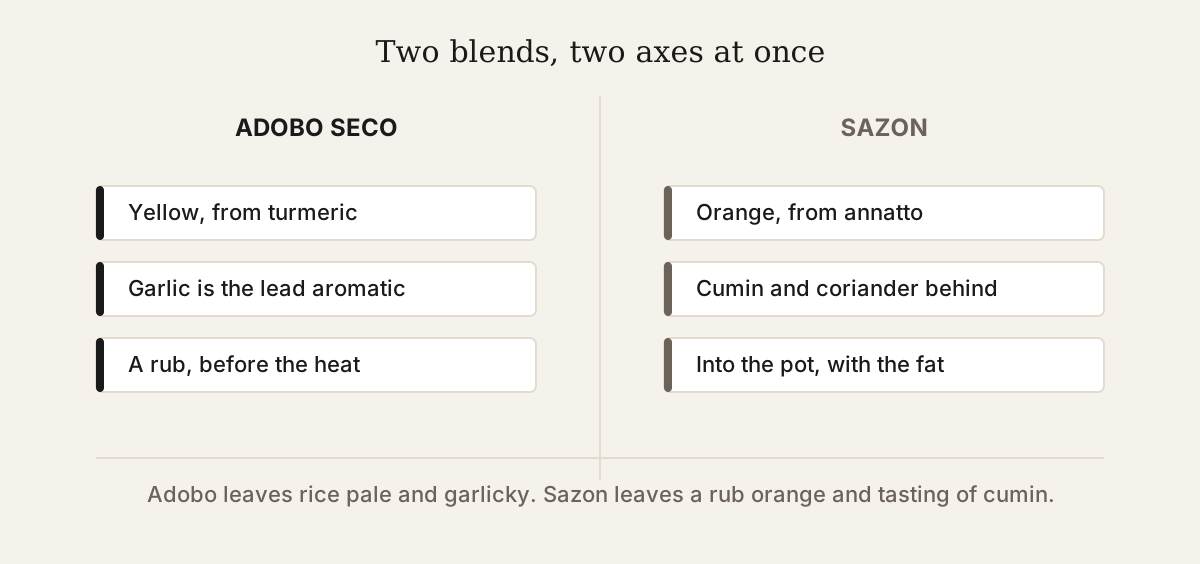
Adobo seco and sazón are two dry blends sold in near-identical packets that do different jobs at different points in the cooking.
Colour and its source. Adobo seco is yellow from turmeric; sazón is orange from annatto. That is the fastest visual check.
Lead aromatic. Adobo leads on garlic; sazón leads on annatto with cumin and coriander behind it.
Position in the cooking. Adobo is a surface rub applied before heat; sazón goes into the pot with the fat and the liquid, where the annatto colours the dish through.
They are not substitutes. Using adobo where sazón was intended leaves the rice pale and garlicky; the reverse leaves a rub that colours the meat orange and tastes of cumin rather than garlic.
How to read a jar
Salt position first, then whether the garlic is powder or granulated, then the colouring.
Salt first means you are buying seasoned salt. In a blend where the aromatics do the work, salt sits below at least the garlic. Commercial adobo is frequently salt-led, and a recipe calling for a packet plus additional salt will usually over-season.
Granulated garlic holds up better than fine powder in a rub, because it browns rather than scorching on a hot surface. Powder is more common and cheaper.
Turmeric named is better than a generic colouring. A synthetic yellow doing turmeric’s job is a substitution you are paying for.
MSG appears in many commercial versions, which is a legitimate choice rather than a defect, and a blend leaning on it generally carries fewer aromatics.
Checked on 13 August 2026, the first page of United States results for adobo seco returned spice retailers and reference material rather than recipe publishers, which describes that search on that date rather than recommending any seller. Counting rule: a result counts as a retailer when it sells a seasoning product rather than publishing a recipe. On that rule retailers dominated the page, which is unusual for this property and reflects that adobo seco is a commercial format first.
Making it
Combine granulated garlic, dried oregano, salt, black pepper and a little turmeric, and control the salt yourself.
The proportions are yours to set, which is the main argument for making it. Commercial versions are salt-led because salt is cheap; a homemade blend can be aromatic-led.
Toast nothing. Unlike a Chilean aliño where toasting the cumin transforms it, adobo seco is built on powdered aromatics that do not benefit.
Go easy on the turmeric. It colours strongly and its flavour becomes medicinal in quantity. A small amount does the visual work.
Make it small. Ground blends flatten within months.
Using it
Rub it onto the surface of meat thirty minutes to several hours before cooking, and use less than instinct suggests if the blend is salt-led.
It suits chicken, pork and beef before grilling, roasting or frying. It also seasons beans and rice, though there it is doing a different job from a base and will not colour the dish the way sazón does.
A dry rub draws moisture to the surface, which then evaporates and helps a crust form. Applying it immediately before cooking skips that and wastes half the effect.
It is not a finishing seasoning. Sprinkled on after cooking it tastes raw and powdery, because garlic powder in particular needs heat.
Storage
Sealed, dark and dry, six months to a year. Salt-heavy commercial blends keep longer because the salt does preservation work.
The garlic and oregano fade first while the turmeric holds its colour indefinitely, so an old jar looks correct and seasons weakly. That is the same failure pattern as every ground blend on this site.
Keep it away from the stove, where heat and steam clump the grind and accelerate the fade.
Frequently asked questions
Is adobo seco the same as sazón?
No. Adobo seco is garlic-led and coloured with turmeric, used as a dry rub on the surface of meat. Sazón is defined by annatto, coloured orange, and goes into the pot where it colours the dish through the fat. They are sold in similar packets and are not substitutes in either direction.
What is the difference between adobo seco and wet adobo?
Seco means dry. Adobo seco is a ground blend rubbed onto meat. Wet adobo is a paste or liquid of chiles, vinegar, garlic and herbs, which is the more traditional and more common sense of the word across Latin America. Chipotle in adobo uses the wet sense, where the adobo is the sauce the chiles sit in.
Is Filipino adobo related?
Only through the Spanish word. Filipino adobo is a braise in vinegar and soy sauce with garlic and bay, arrived at independently, and it shares no method or seasoning profile with the Latin American senses. It is outside this site’s scope and is worth naming because the collision confuses English-language searches.
Why is commercial adobo so salty?
Because salt is the cheapest ingredient in the jar and it bulks the packet. Ingredient lists run by weight, so a blend listing salt first is mostly salt carrying seasoning. That matters practically: a recipe calling for a packet of adobo plus additional salt will usually over-season the dish.
Can I use adobo seco as a marinade?
Not directly, since it is a dry blend, but you can make a wet marinade by combining it with oil and an acid such as vinegar or citrus. Applied dry it draws moisture to the surface and helps form a crust during cooking, which is a different effect and generally the one it is designed for.
The pairing
“El Preso”, Fruko y sus Tesos, 1975, Colombia.
Regional. Salsa dura from Barranquilla, built on a hard repeated figure rather than on ornament, which suits a blend whose whole character is garlic doing the same job every time.
We write about seasoning preparations across Latin America, what separates the regional variants, and where to buy them in the United States.