Ají Amarillo: The Pod Peruvian Cooking Is Built On
Fruity rather than merely hot, and orange despite the name. What it tastes of, the forms it is sold in, and why nothing substitutes cleanly.
Ají amarillo is a Peruvian pod that is fruity as much as it is hot, and it is the single most important seasoning ingredient in Peruvian cooking, appearing in aderezo, in ají verde, in causa and in most of the country’s stews. Despite the name, which means yellow, the ripe pod is deep orange.
It has no clean substitute, which is unusual. Most heat can be approximated by another pod; ají amarillo’s combination of moderate heat with pronounced fruit cannot.
What it actually tastes like
Ají amarillo is moderately hot with a distinct fruitiness that reads close to apricot or mango, and a slight floral note behind the heat. The fruit is not a garnish on the flavour; it is most of why the pod is used.
Heat is moderate rather than extreme, sitting well below a habanero and above a jalapeño for most people. Peruvian cooks routinely deseed it, which lowers the heat considerably while keeping the fruit, and that is the standard treatment rather than a concession.
The colour matters commercially. Ripe pods are deep orange and turn dishes a characteristic warm yellow-orange. A paste that looks pale or brownish has usually been made from underripe pods or has oxidised.
It is not interchangeable with the other Peruvian ajies. Ají panca is dark, mild and smoky-sweet. Rocoto is much hotter and juicier. Ají limo is floral and sharper. They do different jobs in the same kitchen.
The forms it is sold in
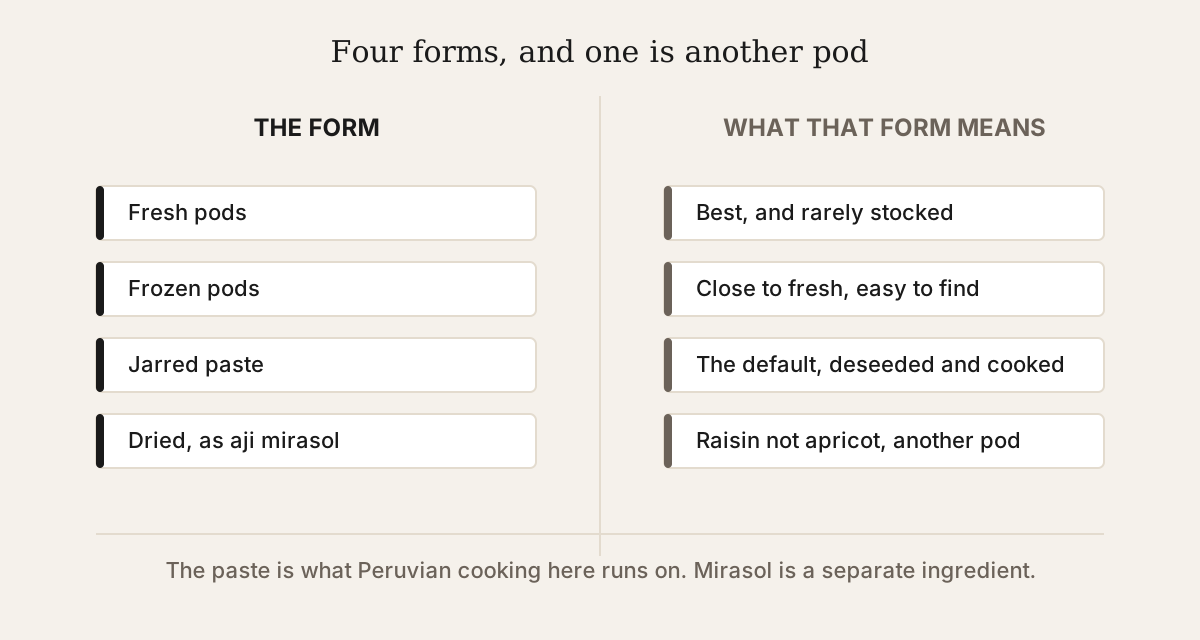
Four forms reach the United States and they are not equivalent, so the form is the first buying decision rather than the brand.
Jarred paste is the practical default and what most cooks in the United States use. It is deseeded, cooked and blended, keeps for months unopened, and is widely available. It is what almost every Peruvian recipe written for an American audience assumes.
Frozen whole pods are the closest to fresh and are stocked by many Latin American grocers. They thaw soft, which is fine since the pod is almost always cooked or blended anyway.
Fresh pods are difficult to find outside specialist produce markets and are worth buying when you see them, though the difference over frozen is smaller than the difficulty of sourcing suggests.
Dried, sold as ají mirasol. Drying changes it substantially, deepening and concentrating it and moving it toward raisin and away from apricot. Ají mirasol is a distinct ingredient rather than a shelf-stable version of ají amarillo, and swapping one for the other changes the dish.
How to judge a jarred paste
Read for the pod position, the additive block and the colour, in that order.
Ají amarillo should be first, ideally with a percentage. A jar leading with water has been extended, and one leading with oil is closer to a condiment than a paste.
A short list is the signal. Pod, water, salt, an acidifier, and little else. Preservatives are ordinary in a shelf-stable paste; thickeners and colourings are not.
Colour should be a clear warm orange. Pale suggests underripe fruit, and dull brown suggests age or oxidation.
Checked on 13 August 2026, the first page of United States results for aji amarillo returned general retailers and pepper reference sites with no recipe drift and no Caribbean island results, which describes that search on that date rather than recommending any seller. Counting rule for that claim: a result counts as recipe drift when the domain is a recipe publisher or the title names a dish rather than the pod. On that rule the drift was zero, which is the cleanest result recorded on this property.
Where to buy it
Latin American grocers carry the paste reliably and the frozen pods often. General supermarkets increasingly carry the paste in their international aisle, and online importers carry all four forms.
Availability is genuinely good, which is not true of most of the ingredients on this site. Ají amarillo paste is among the easiest South American seasoning ingredients to obtain in the United States.
Buy the paste in the smallest jar you will use within a couple of months. It keeps well unopened and dulls noticeably once opened, and it is inexpensive enough that a fresh small jar beats a half-used large one.
Substituting, and why it does not really work
There is no clean substitute for ají amarillo, and it is worth saying so rather than offering a bad one.
The difficulty is that ají amarillo pairs moderate heat with pronounced fruit, and most available pods deliver one or the other. A habanero brings fruit and far too much heat. A yellow bell pepper brings sweetness and no heat at all. A jalapeño brings heat and a green vegetal note that is quite wrong.
The nearest approximation is a mild orange or yellow pod with a small quantity of a fruity hotter one, plus a little of something sweet. It gets the colour and the rough shape and misses the specific perfume.
The honest answer is to order the paste, which is inexpensive, keeps unopened, and is the form Peruvian cooking in the United States runs on anyway.
Using it
Use the paste by the tablespoon into a base, a marinade or a blended sauce, and cook it briefly in fat before adding liquid.
Frying the paste in oil for a minute or two before anything else joins it deepens it considerably, in the same way a tomato paste benefits from being cooked out. This step is standard in a Peruvian aderezo and is frequently skipped in recipes written elsewhere.
It is used in quantity rather than by the pinch. A Peruvian stew may take several tablespoons, which surprises cooks calibrated on hotter pods used sparingly.
Deseed fresh or frozen pods unless you want the full heat. This is standard practice and not a compromise.
Storage
Unopened jarred paste keeps for a year or more in a cupboard. Once opened, refrigerate and use within about a month, keeping the surface smooth.
Frozen pods keep for months and should be used straight from frozen where the recipe blends or cooks them. Fresh pods keep about a week refrigerated.
Paste that has darkened toward brown has oxidised. It is not unsafe and it has lost the fruit that was the reason for buying it.
Frequently asked questions
Is ají amarillo very spicy?
Moderately, sitting above a jalapeño and well below a habanero for most people, and Peruvian cooks routinely deseed it, which lowers the heat considerably while keeping the fruitiness. It is used by the tablespoon rather than the pinch, which surprises people who have calibrated their expectations on hotter pods.
Why is it called yellow if it is orange?
The name refers to the colour it turns a dish rather than the ripe pod itself, and the pod passes through yellow on its way to deep orange. Peruvian naming for pods is descriptive and inconsistent in the same way English naming is, so the mismatch is ordinary rather than a sign of a different variety.
What can I substitute for ají amarillo?
Nothing cleanly, which is unusual and worth stating plainly. The pod combines moderate heat with pronounced apricot-like fruit, and most available pods deliver one without the other. The nearest approximation is a mild orange pod plus a small amount of a fruitier hot one, and the practical answer is to order the paste, which is inexpensive and widely available.
Is ají mirasol the same thing?
Ají mirasol is dried ají amarillo, and drying changes it enough that it functions as a separate ingredient. It moves from apricot toward raisin, deepens considerably and loses the fresh floral note. Recipes calling for one should not be made with the other without expecting a different result.
Should I buy paste or frozen pods?
Paste for convenience and reliability, frozen pods if you want to control the deseeding and the texture. The paste is what most Peruvian cooking in the United States runs on and what most English-language recipes assume. Frozen pods are closer to fresh and require a little more work.
The pairing
“El Cóndor Pasa”, Daniel Alomía Robles, 1913, Peru.
Regional. Written as part of a zarzuela about a mining town in the Andes long before it travelled, which is roughly this pod’s trajectory: entirely domestic in Peru, and known abroad mostly in a processed form that lost something on the way.
We write about seasoning preparations across Latin America, what separates the regional variants, and where to buy them in the United States.