Ají Criollo and Colombian Ají Picado: The Everyday Table Finishes
Two closely related raw finishes from Ecuador and Colombia. What is in each, how they differ from a Mexican salsa, and why they are made fresh rather than bought.

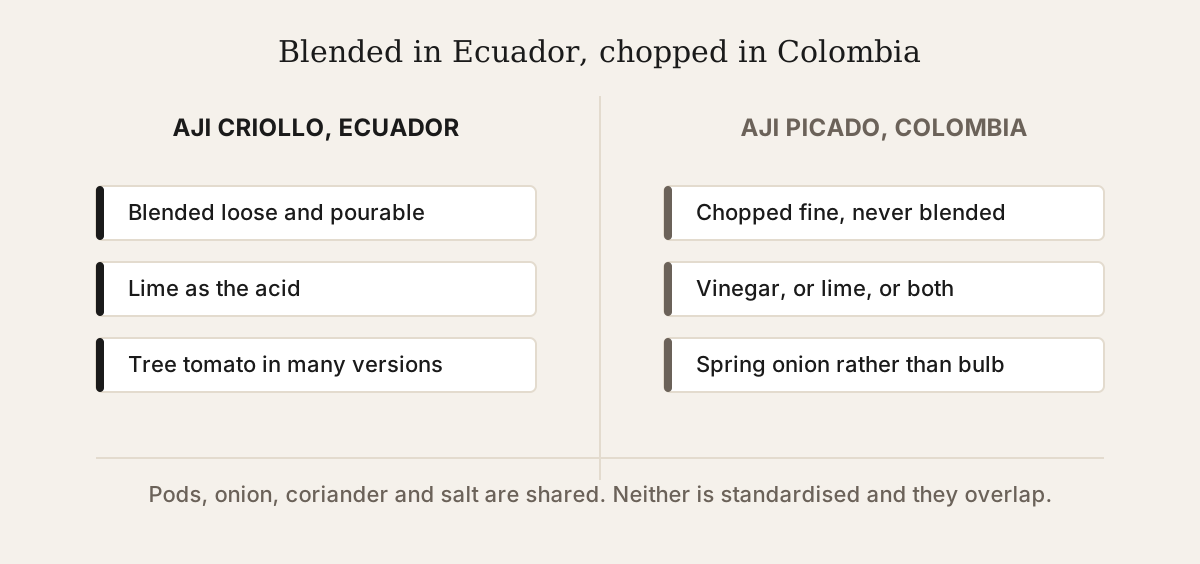
Ají criollo is an Ecuadorian table finish of fresh ají blended or finely chopped with onion, coriander and lime, and Colombian ají picado is the same idea kept chunky and usually loosened with water and vinegar. Both sit on the table and are added by the eater.
They are the least documented preparations on this site in English and the most used at home in their own countries, which is a gap worth closing directly.
What ají criollo actually is
Ají criollo is fresh ají, usually a green Ecuadorian variety, blended with white onion, coriander, lime juice and salt into a loose, pourable green sauce. It is raw and it is made in small quantities.
The texture sits between a blended sauce and a chopped relish. Most households blend it briefly, leaving some structure rather than reducing it to a smooth purée, and thin it with a little water.
Tree tomato, or tamarillo, appears in many Ecuadorian versions and is worth knowing about because it is the component most likely to be missing outside Ecuador. It adds a tart fruitiness that softens the pod’s heat and gives the sauce body. A version without it is still ají criollo and tastes noticeably sharper.
What Colombian ají picado actually is
Ají picado is fresh ají, onion and coriander chopped fine rather than blended, loosened with water and vinegar and salted. The name says it: picado means chopped.
The chunkiness is the defining difference. Where ají criollo pours, ají picado is spooned, and the individual components stay visible and distinct in the bowl.
Colombian versions frequently include spring onion rather than white onion, and some carry a little tomato. Lime appears in some households and vinegar in others; either supplies the acid.
It is often served at the table in a small jar with a spoon, alongside soups, grilled meat, arepas and empanadas, in the same everyday position that hot sauce occupies elsewhere.
How they differ from a Mexican salsa
Ají criollo and a Mexican salsa differ in the pod, in the acid, and in the herb, and the difference is not a matter of degree.
The pod. These are ají, the South American genus of pods, and reading them through Mexican vocabulary as “chiles” imports the wrong flavour expectations. Ají tend to be fruitier and more aromatic at a given heat level.
The acid. Mexican fresh salsas commonly lean on lime and tomato. These lean on lime or vinegar with little or no tomato, so they read sharper and thinner rather than sweet and pulpy.
The herb. Coriander is common to both traditions, but here it is doing more of the structural work, since there is less tomato to carry the sauce.
This site uses the regional terms throughout. Ají, not chile. It is a border rule rather than a stylistic preference, because using Mexican vocabulary quietly relocates a preparation that belongs somewhere else.
Why you make them rather than buy them
Ají criollo and ají picado are both built on fresh pods, fresh herb and raw onion, and none of those three survives commercial jarring in a form worth paying for.
Checked on 13 August 2026, the first page of United States results for aji criollo returned recipe publishers and a general marketplace rather than dedicated producers, which describes that search on that date. The practical reading is that these are home preparations, and the market has not produced a jarred version worth seeking.
What you can buy usefully is the pod. Frozen ají and jarred ají pastes are sold by Latin American grocers and online importers, and a frozen pod makes a far better ají criollo than a jarred sauce does.
Both take about ten minutes. That is the honest reason there is no commercial category.
Making either one
Blend for criollo, chop for picado, and in both cases rest the mixture for twenty minutes before serving so the onion loses its edge.
For ají criollo, blend the pods, onion, coriander, lime and salt with a splash of water, stopping while some texture remains. Add tree tomato if you have it. Taste for salt after resting rather than before, because the salt reads differently once the onion has softened.
For ají picado, chop everything as fine as patience allows, then add water, vinegar and salt to a consistency where a spoon moves through it easily. It should be loose enough to pour off a spoon but chunky enough that the components are visible.
Deseed for less heat rather than reducing the pod count, which keeps the fruitiness while dropping the burn. This matters more with ají than with hotter genera because the flavour and heat are less tightly coupled.
Neither wants sugar or oil. Both appear in export-facing recipes and both take the preparation somewhere else.
What to serve them with
Almost anything savoury, and characteristically with soup, grilled meat, potatoes and maize preparations.
In Ecuador, ají criollo appears beside llapingachos, hornado, encebollado and soups, and on the table by default. In Colombia, ají picado sits beside empanadas, arepas, grilled meat and the everyday soups.
Where they work least well is on anything delicate. Raw onion and fresh pod overwhelm mild fish or eggs in a way that a cooked base would not.
Storage
Refrigerated in a sealed jar, both keep two to four days, with ají picado holding slightly better because it carries vinegar and less blended herb.
The coriander is the first thing to go, darkening and going limp within a couple of days. The heat also shifts: both preparations tend to taste hotter on the second day as the pod’s compounds distribute.
Neither freezes usefully. The raw onion collapses and the fresh herb turns to sludge.
Frequently asked questions
Is ají criollo very spicy?
Ají criollo varies widely by pod and household, and it is usually moderate rather than extreme. Ecuadorian cooks often deseed the pods, which lowers the heat while keeping the fruitiness. Because heat depends entirely on the specific pods you have, add them incrementally and taste after resting rather than trusting a quantity from a recipe.
What is the difference between ají criollo and ají picado?
Texture and acid, mainly. Ají criollo is Ecuadorian, blended to a loose pourable sauce, and often carries tree tomato and lime. Ají picado is Colombian, chopped rather than blended so the components stay visible, and usually loosened with water and vinegar. They do the same job at the table.
What can I use if I cannot find ají?
A fresh green pod of moderate heat is the practical substitute, accepting that you lose the specific fruitiness that makes ají what it is. Frozen ají and jarred ají paste are sold by Latin American grocers and are much closer than any fresh substitute available in a general supermarket.
Is tree tomato necessary for ají criollo?
No, tree tomato is not necessary, and many versions do not use it. Tamarillo adds tartness and body and softens the heat, and its absence makes the sauce sharper and thinner rather than wrong. If you cannot find it, make the sauce without it rather than substituting an ordinary tomato, which adds sweetness and pulp but not the same tartness.
Can I make these ahead for a party?
Up to a few hours ahead, yes, and they benefit from at least twenty minutes of resting. Beyond about a day the coriander darkens and the texture of the onion softens, so they are best made the same day. Neither improves with long keeping the way a cooked preparation might.
The pairing
“Vasija de Barro”, Los Corazas, 1950, Ecuador.
Lyrical. The song asks to be buried in a clay vessel, close to the ground it came from, which is the same instinct these preparations run on: made in the house, eaten the same day, never intended to travel.
We write about South and Central American seasoning preparations, what separates the regional variants, and where to buy them in the United States.