Ají Limo: The Ceviche Pepper, and the One Where Habanero Actually Works
Small, floral and genuinely hot, sold in half a dozen colours. Why it belongs in leche de tigre, how it differs from amarillo, and the one honest substitute.

Ají limo is a small, very hot Peruvian pod with a floral, fruity aroma, sold fresh in red, yellow, orange, purple, green and near-white, and it is the pepper minced into ceviche. It belongs to Capsicum chinense, the same species as the habanero.
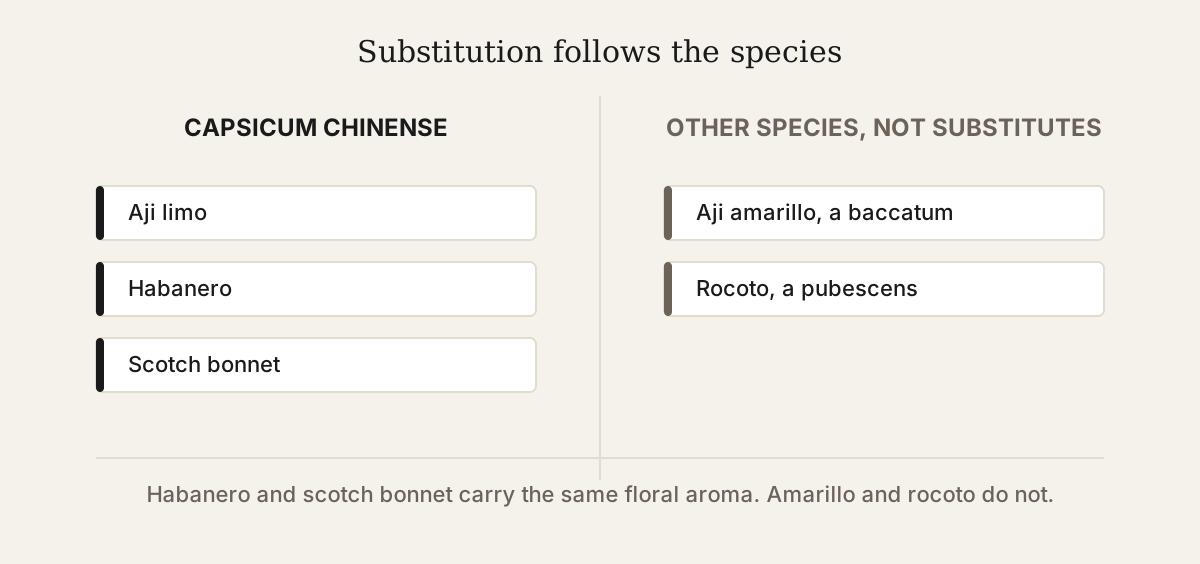
That last fact is the useful one, because it makes ají limo the rare Peruvian pod with a substitute that genuinely works.
What ají limo actually is
Ají limo is a small pod, roughly the length of a thumb, with thin walls, a lantern-like or tapered shape depending on the strain, and heat well above ají amarillo.
Its aroma is floral and fruity rather than merely hot. That perfume is the family signature of Capsicum chinense and is the reason the pod is used in a raw preparation, where the aroma survives.
It arrives in many colours on the same market stall and often on the same plant. Colour tracks ripeness and strain rather than a difference in kind, so a red and a yellow limo are used interchangeably.
It is hot enough to be used sparingly. A single pod seasons a bowl of ceviche for several people, and the seeds and the pale internal ribs carry most of the heat.
It is used fresh. Unlike ají panca or ají mirasol, drying is not part of its normal life, and a dried limo is a different and lesser thing.
Why it belongs in ceviche
Ají limo is the pepper for ceviche because a raw, acidic, fast preparation needs a chile that gives aroma immediately and does not need cooking to become itself.
Leche de tigre is assembled in minutes. The lime juice, fish, onion, salt and chile come together and are eaten almost at once, so there is no stage at which a dried or cooked pod could release its flavour.
The floral note reads through acid. Lime juice flattens many chile flavours. The chinense perfume is one of the few that stays legible against it.
It is minced or thinly sliced rather than blended. Ceviche wants points of heat rather than a uniform burn, and whole thin rings are frequently left in the bowl as a signal of how hot it will be.
Rocoto appears in the same role in some kitchens and gives a rounder, less floral heat, so the two are not interchangeable even though both are used raw.
How it differs from ají amarillo
Ají limo and ají amarillo are different species used for different jobs, and the difference is not simply that one is hotter.
They belong to different species. Ají amarillo is Capsicum baccatum; ají limo is Capsicum chinense. That is a wider gap than the one between a jalapeño and a bell pepper, which are the same species.
Amarillo is fruity and moderately hot; limo is floral and properly hot. Amarillo’s job is body and colour across a whole dish, most often as a paste cooked into an aderezo.
Amarillo is usually cooked and limo is usually raw. That single difference explains most of the rest.
Amarillo is far easier to buy in the United States as a paste or frozen pod. Limo is a fresh-market pepper and travels badly.
Where to find it and what to use instead
Fresh ají limo is difficult to buy in the United States, and habanero is the substitute that works.
Habanero is the same species, carries the same floral chinense aroma and sits in a comparable heat range. Use less than the recipe’s pod count and taste, since habanero commonly runs hotter.
Scotch bonnet works equally well and for the same reason, being another chinense variety.
This is the opposite of the advice for ají amarillo, where no widely available pod reproduces the fruit and body and the honest answer is that nothing substitutes cleanly. For limo, the substitution is real.
Checked on 13 August 2026, United States retail for fresh ají limo is limited to specialist Latin American grocers and seed suppliers, which describes availability on that date rather than recommending any seller. Frozen pods appear occasionally; a limo paste is uncommon.
Growing it is a genuine option. Seed is sold in the United States, the plant behaves like any other chinense, and a single plant produces more pods than a household uses.
How to use it
Mince it fine or slice it into thin rings, add it raw, and keep the quantity low until the pod in front of you is known.
Deseed it to lower the heat without losing the aroma. The perfume sits in the flesh and much of the burn sits in the seeds and ribs, so the two can be separated to a useful degree.
Add it late in anything cooked. Its aroma is volatile and a long simmer removes the reason to use this pod rather than a cheaper one.
It suits raw fish, raw onion and lime above all, which is to say ceviche, tiradito and the salsas served alongside them.
A whole pod left in a dish perfumes without much heat. Pierce it, leave it whole, and remove it before serving.
Storage
Fresh pods keep one to two weeks in the refrigerator in a paper bag, and they freeze well whole.
Freezing is the best preservation route. The thin walls collapse on thawing, which does not matter when the pod is going to be minced into a raw dressing anyway.
Do not dry it. Drying suits the thick-walled pods such as panca and the amarillo-derived mirasol. A dried limo loses the floral aroma that is its entire reason for existing.
A paste keeps a few weeks refrigerated under a film of oil, and freezes indefinitely in small portions.
Handle it with care. This is a genuinely hot pod and the oils transfer readily to skin and eyes.
Frequently asked questions
How hot is ají limo?
Ají limo is genuinely hot, well above ají amarillo and in the broad range occupied by habanero, which is its close relative. Heat varies considerably between individual pods and between strains, so the safe approach is to use a fraction of a pod, taste, and add. Removing the seeds and the pale internal ribs lowers the heat substantially while keeping the floral aroma.
Can I substitute habanero for ají limo?
Habanero substitutes for ají limo more successfully than any substitute works for a Peruvian pod, because the two are the same botanical species, Capsicum chinense, and share the floral aroma that defines the flavour. Use less than the stated number of pods and adjust upward, since habanero often runs hotter. Scotch bonnet works equally well.
Why does ají limo come in so many colours?
Ají limo appears in red, yellow, orange, purple, green and near-white because colour tracks ripeness and strain rather than a difference in kind. Pods of several colours frequently grow on one plant and are sold mixed on a market stall. Cooks treat them interchangeably, and the colour choice in a finished ceviche is usually about how it looks.
Is ají limo the same as ají charapita?
Ají limo and ají charapita are different Peruvian pods that share a fruity character and little else. Charapita is pea-sized, round, yellow and comes from the Amazon, where it is used whole or crushed and is extremely hot for its size. Limo is larger, comes in many colours, is a coastal pepper and is the pod used in ceviche.
Can I use ají limo paste instead of fresh?
Ají limo paste can stand in where a dish is cooked, and it is a poor exchange in ceviche, which is where the pod matters most. The paste loses much of the volatile floral aroma that survives in a fresh minced pod, and ceviche depends on exactly that aroma reading through the lime juice. Where fresh limo is unavailable, a fresh habanero is a better answer than a limo paste.
The pairing
“Toro Mata”, Caitro Soto, 1971, Peru.
Regional. An Afro-Peruvian landó from the coast, the same stretch of country where ceviche and this pod are everyday rather than remarkable.
We write about seasoning preparations across Latin America, what separates the regional variants, and where to buy them in the United States.