Ají Mirasol: Dried Ají Amarillo, Which Is a Different Ingredient
What drying does to the pod, why the two are not interchangeable, and how to rehydrate it properly.
Ají mirasol is dried ají amarillo, and drying changes it enough that Peruvian cooking treats it as a separate ingredient rather than a shelf-stable version of the fresh pod. It moves from apricot toward raisin, deepens considerably, and loses the floral top note that makes amarillo what it is.
The name means looking at the sun, which describes the drying rather than a different plant.
What drying actually changes
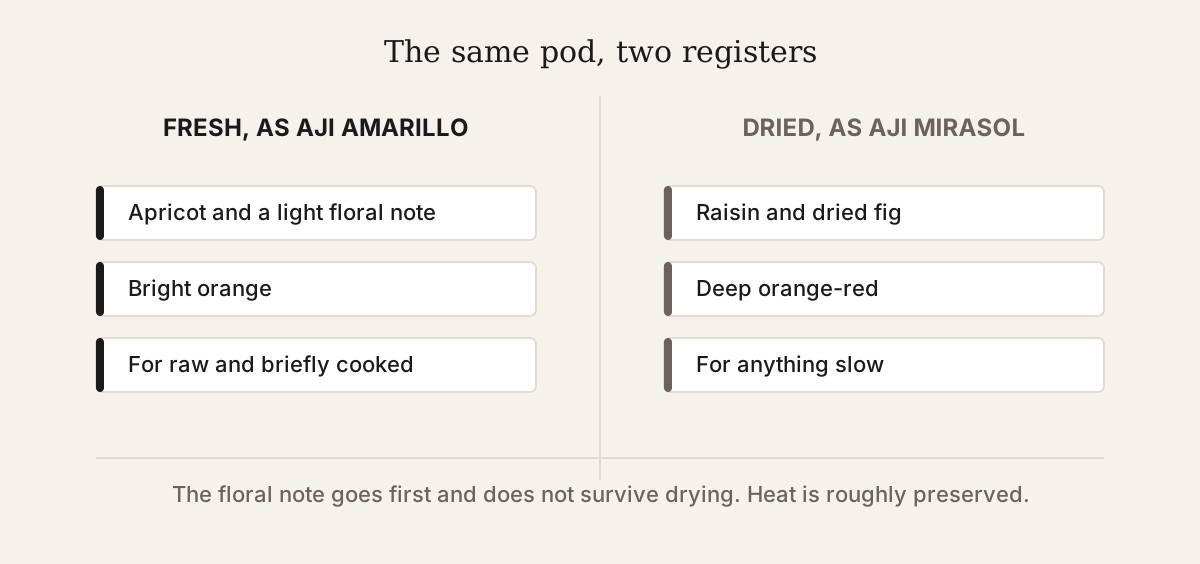
Drying concentrates the sugars, drives off the volatile aromatics and deepens the colour, which together move the pod from bright and fruity toward dark and raisiny.
The floral note goes first. Ají amarillo’s fresh character includes a light floral quality that sits on top of the fruit, and it is volatile enough that it does not survive drying at all.
The fruit stays and changes register. Apricot becomes something closer to raisin or dried fig, sweeter and heavier.
Colour deepens from bright orange to a dark orange-red, and a dish built on mirasol reads deeper and browner than the same dish built on the fresh paste.
Heat is roughly preserved, which surprises people expecting drying to concentrate it dramatically. It concentrates by weight and the quantities used adjust accordingly.
Why it is not a substitute for the fresh paste
Peruvian recipes distinguish between them, and swapping one for the other changes the dish in a way that is easy to taste.
In a fresh or barely cooked sauce, mirasol reads flat and dusty where amarillo reads bright. An ají verde made with mirasol is noticeably duller.
In a long braise, mirasol often works better than amarillo, because its concentrated character holds up where the fresher fruit fades.
The practical rule. Fresh or paste for anything raw, blended or briefly cooked. Mirasol for anything slow. Where a recipe specifies one, it usually means it.
They are frequently used together, mirasol for depth and amarillo for brightness, in the same way panca and amarillo are paired.
How to judge it
Judge a dried pod on pliability before anything else, then on colour and smell, because a pod that has dried past its useful point cannot be recovered by soaking.
Pods should bend rather than snap. A brittle pod has dried past its useful point and will rehydrate poorly and taste dusty, which is the single most common problem with dried pods bought from slow-moving shelves.
Colour should be a deep orange-red, not brown and not faded. Browning indicates age or poor storage.
Smell should be raisiny and sweet with a faint smokiness. Anything acrid or musty means it has gone.
Check for insect damage, small holes or webbing, which is a real risk with dried pods stored a long time and is why a shop with turnover is worth choosing.
Checked on 13 August 2026, the first page of United States results for aji mirasol returned spice retailers and Peruvian food sellers with no recipe drift and no Caribbean island results, which describes that search on that date rather than recommending any seller.
Rehydrating it properly
Soak in hot water for twenty to thirty minutes, seed and stem, then blend with a little of the soaking liquid.
Use hot rather than boiling water. Boiling makes the pods soft quickly and strips flavour into the water more aggressively than is useful.
Keep the soaking liquid. It carries a real amount of flavour and colour, and discarding it throws away part of what you paid for. Use it to thin the paste or add it to the dish.
Remove the seeds and the pale internal ribs unless you want the full heat. Peruvian practice is to remove them.
Skinning is optional and improves texture. After soaking, the skins slip off with a little effort and their removal gives a noticeably smoother paste. For a rustic braise it is unnecessary; for a sauce it is worth the time.
Where it belongs
Mirasol suits long-cooked dishes and anything where a deeper, sweeter pod character is wanted.
It goes into stews, braises, and the darker aderezos alongside panca. It appears in ají de gallina in some versions, and in the marinades for slow-roasted meats.
It is also useful where fresh paste would be too bright, which is a real category. A dish that tastes thin and sharp with amarillo paste often reads properly with mirasol doing part of the work.
It is not a table-sauce ingredient. Raw or barely cooked applications want the fresh pod.
Storage
Whole dried pods keep six months to a year in a sealed container away from light and heat.
Dried pods do not spoil so much as harden and fade. A pod that has gone brittle is safe and will make a weaker paste, and one showing insect damage should be discarded.
Refrigeration or freezing extends them considerably and is worth doing for anyone who buys in quantity, since dried pods are usually sold in bags larger than a household uses quickly.
Ground mirasol powder fades much faster than whole pods and is worth buying only in small amounts.
Frequently asked questions
Is ají mirasol the same as ají amarillo?
It is the same pod dried, and Peruvian cooking treats the two as separate ingredients because drying changes it substantially. Mirasol loses the floral top note entirely and moves from apricot toward raisin, deepening and sweetening. Recipes specifying one generally mean it, particularly where the dish is fresh rather than slow-cooked.
Can I substitute the fresh paste for mirasol?
In a long-cooked dish, at some cost, and you will get a brighter and less deep result. In the other direction, using mirasol where fresh paste was intended produces something noticeably duller and dustier. Where both are available, many Peruvian dishes use them together rather than choosing.
How do I rehydrate ají mirasol?
Soak in hot rather than boiling water for twenty to thirty minutes until pliable, then remove the stems and seeds and blend with a little of the soaking liquid. Keep the rest of that liquid, since it carries flavour and colour. Slipping the skins off after soaking gives a smoother paste and is optional.
Why does my dried ají taste dusty?
Usually because the pods were too old and had gone brittle rather than pliable, which happens on slow-moving shelves. Brittle pods rehydrate poorly and carry a flat, papery flavour. The other cause is discarding the soaking liquid, which takes a meaningful share of the flavour with it.
Is mirasol hotter than fresh ají amarillo?
Not meaningfully. Drying concentrates the pod by weight rather than transforming its heat, so a gram of dried pod is hotter than a gram of fresh simply because the water has gone. In use, quantities adjust and the perceived heat of a finished dish is similar. What changes substantially is the flavour, not the burn.
The pairing
“El Picaflor”, Los Morochucos, 1950s, Peru.
Regional. A criollo vals from the coast, recorded in an era when Peruvian music was being preserved on shellac much as pods were being preserved by drying, with something of the original lost and something else gained.
We write about seasoning preparations across Latin America, what separates the regional variants, and where to buy them in the United States.