Ají Panca: The Dark Peruvian Pod That Is Barely Hot
Deep red, smoky and sweet rather than fiery. What it does that ají amarillo cannot, and why it is the pod for anything slow-cooked.
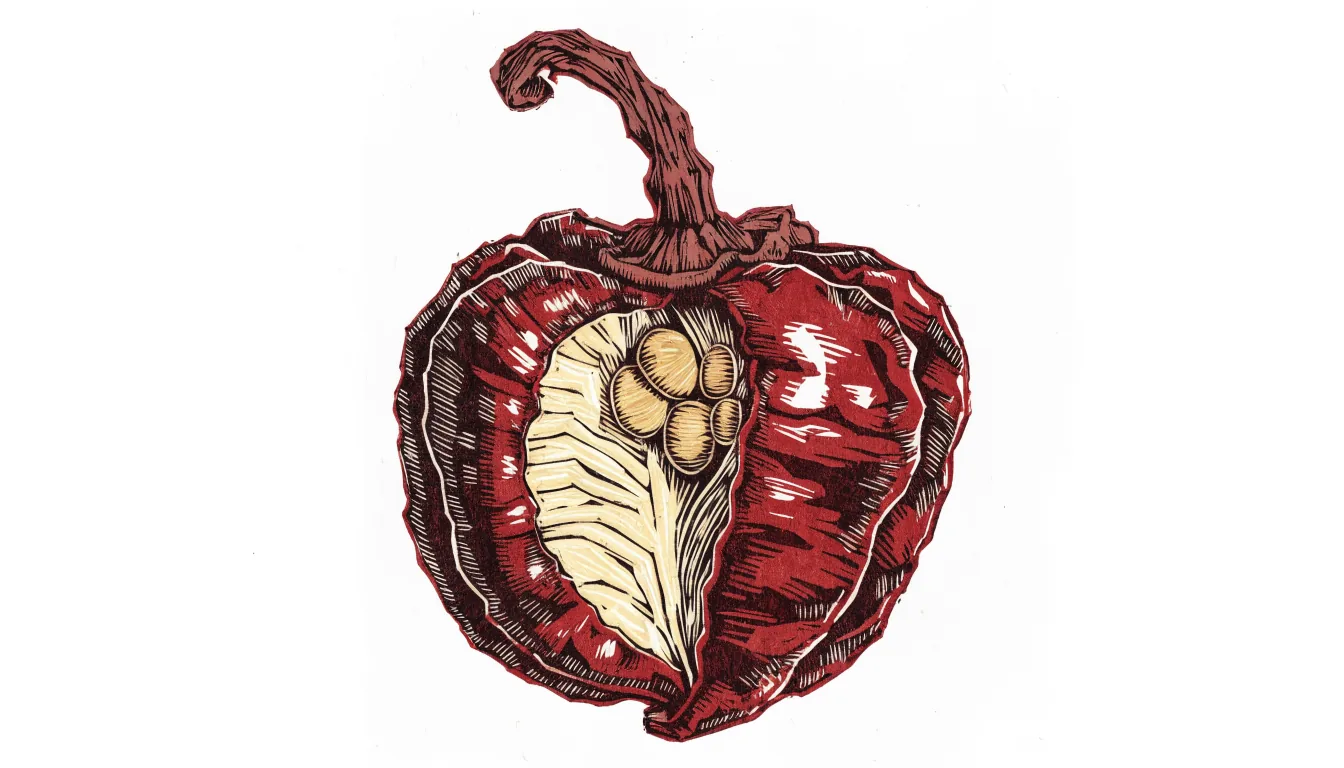
Ají panca is a dark red-brown Peruvian pod, dried rather than used fresh, and it is mild enough that most people find no real heat in it at all. What it brings instead is a smoky, faintly fruity sweetness closer to a dried berry than to a chilli.
It is the quiet counterpart to ají amarillo, and the two are used together far more often than either is used alone.
What ají panca actually is
Ají panca is a Peruvian pod sold dried, deep burgundy to near-black, with a wrinkled skin and a soft flesh that rehydrates readily. Its heat is very low and its aroma is smoky and slightly sweet.
It is almost always encountered dried or as a paste. Unlike ají amarillo, which is widely sold frozen and occasionally fresh, panca is a dried-pod ingredient in practice, which is why its flavour reads as concentrated and raisin-like rather than fresh and fruity.
The colour is its most useful property after the flavour. Panca turns a stew a deep reddish brown that amarillo cannot produce, and much of the colour of a Peruvian anticucho marinade or a slow-braised dish comes from it.
Heat is genuinely minimal. People who avoid hot food can use it freely, which is unusual for a pod with this much colour.
What it does that amarillo cannot
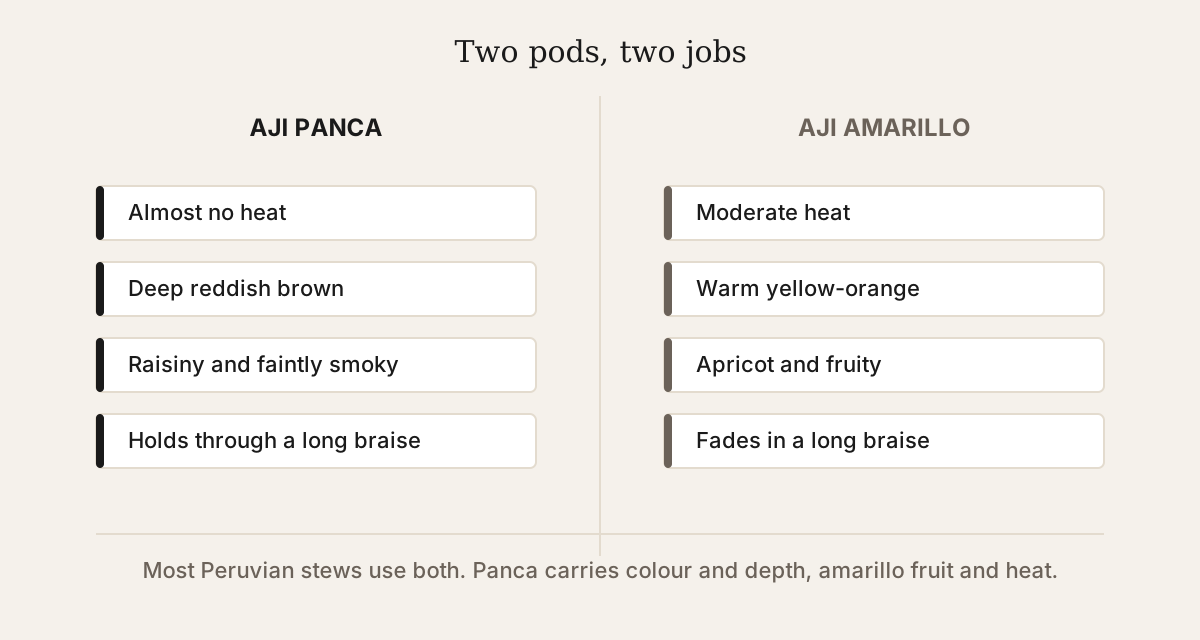
The two pods are not interchangeable and the difference is easy to state: amarillo brings fruit and moderate heat, panca brings smoke, sweetness and depth of colour with almost no heat.
Panca suits long cooking. Its flavour is already concentrated by drying and it holds up through hours of braising, where amarillo’s fresher fruitiness fades.
Amarillo suits fresh and blended preparations. In a raw or barely cooked sauce, panca reads flat and dusty where amarillo reads bright.
Most Peruvian stews use both, panca for the base colour and depth and amarillo for the fruit and the heat. Recipes calling for only one are usually simplifying.
Neither substitutes for a Mexican dried chile cleanly, despite panca’s superficial resemblance to a guajillo. Guajillo is tangier and sharper; panca is sweeter and smokier. They are relatives in effect rather than equivalents.
The forms it is sold in
Three forms reach the United States, and the paste is by far the most practical.
Jarred paste is the default, widely stocked by Latin American grocers and online importers, and it is what most recipes written for an American audience assume.
Whole dried pods are sold by specialist spice sellers and require soaking in hot water for twenty to thirty minutes, then blending, sometimes with the skins removed for a smoother result.
Ground panca powder exists and is the weakest of the three, since the drying and grinding together strip much of what made the pod interesting.
Buy the paste unless you have a reason not to. The gap between paste and freshly rehydrated pods is smaller here than for most ingredients, because the pod was already dried.
How to judge it
For paste, read the pod position and the colour. For whole pods, judge by pliability.
Paste should list ají panca first, ideally with a percentage, and should be a deep reddish brown. A pale or orange paste is either not panca or has been extended.
Whole pods should be pliable rather than brittle. A pod that cracks when bent has dried out past its useful life and will rehydrate poorly and taste dusty.
Smell should be raisiny and faintly smoky. Any sharp or acrid note means age.
Checked on 13 August 2026, the first page of United States results for aji panca returned general retailers and pepper reference sites with no recipe drift and no Caribbean island results, which describes that search on that date rather than recommending any seller.
Using it
Use it in anything slow, and cook the paste in fat before adding liquid.
The standard uses are anticucho marinade, where panca does most of the colouring and much of the flavour, and any braise or stew where a deep savoury base is wanted. It also goes into an aderezo alongside amarillo.
Frying the paste briefly in oil deepens it, the same step that benefits ají amarillo paste and tomato paste. Two or three minutes is enough.
It is used generously. Because there is almost no heat, quantity is limited by flavour rather than by tolerance, and Peruvian recipes routinely call for several tablespoons.
Rehydrating whole pods: soak in hot water twenty to thirty minutes, remove seeds and stems, blend with a little of the soaking water. Keep the soaking liquid; it carries flavour.
Storage
Jarred paste keeps a year or more unopened and about a month refrigerated once opened. Whole dried pods keep six months to a year in a sealed container away from light.
Dried pods do not spoil so much as harden and fade. A pod that has gone brittle is not unsafe and will make a weaker, dustier paste.
Paste that has darkened toward black or developed a sharp smell has oxidised and should be replaced.
Frequently asked questions
Is ají panca spicy?
Barely. It sits at the very low end of pod heat and most people find no meaningful burn in it at all, which is unusual for something this dark and this red. Its contribution is smoky sweetness and colour rather than heat, and it can be used freely by people who avoid hot food.
Can I substitute guajillo for ají panca?
It is the closest widely available substitute and it is not the same. Guajillo is tangier and sharper; panca is sweeter, smokier and slightly more raisin-like. In a long braise the swap is reasonable and will change the character noticeably. In a marinade where panca is the dominant flavour, it is a bigger change.
Should I buy paste or dried pods?
Paste, for most purposes. Because panca is a dried-pod ingredient to begin with, the gap between a good jarred paste and freshly rehydrated pods is smaller than it would be for a fresh pod like ají amarillo. Whole pods give you control over the texture and the seeding, which matters for a smooth sauce.
What is the difference between ají panca and ají amarillo?
Almost everything except their origin. Panca is dried, dark, sweet, smoky and very mild. Amarillo is used fresh or as a fresh-pod paste, orange, fruity and moderately hot. Peruvian cooking uses them together far more often than separately, and swapping one for the other changes both the colour and the heat of a dish.
How do I rehydrate dried ají panca?
Soak the pods in hot water for twenty to thirty minutes until pliable, then stem and seed them and blend with a little of the soaking liquid. Keep the rest of that liquid rather than discarding it, since it carries flavour and can go into the dish. Removing the skins after soaking gives a smoother paste and is optional.
The pairing
“Toro Mata”, Caitro Soto, 1973, Peru.
Regional. An Afro-Peruvian landó from the coast where this pod is a kitchen staple, and like panca the song works through depth and repetition rather than through anything sharp.
We write about seasoning preparations across Latin America, what separates the regional variants, and where to buy them in the United States.