Colombian Ají Picado: The Chopped Sauce on Every Table
Chopped rather than blended, loosened with water and vinegar. What separates it from ají criollo, and why nobody sells it.
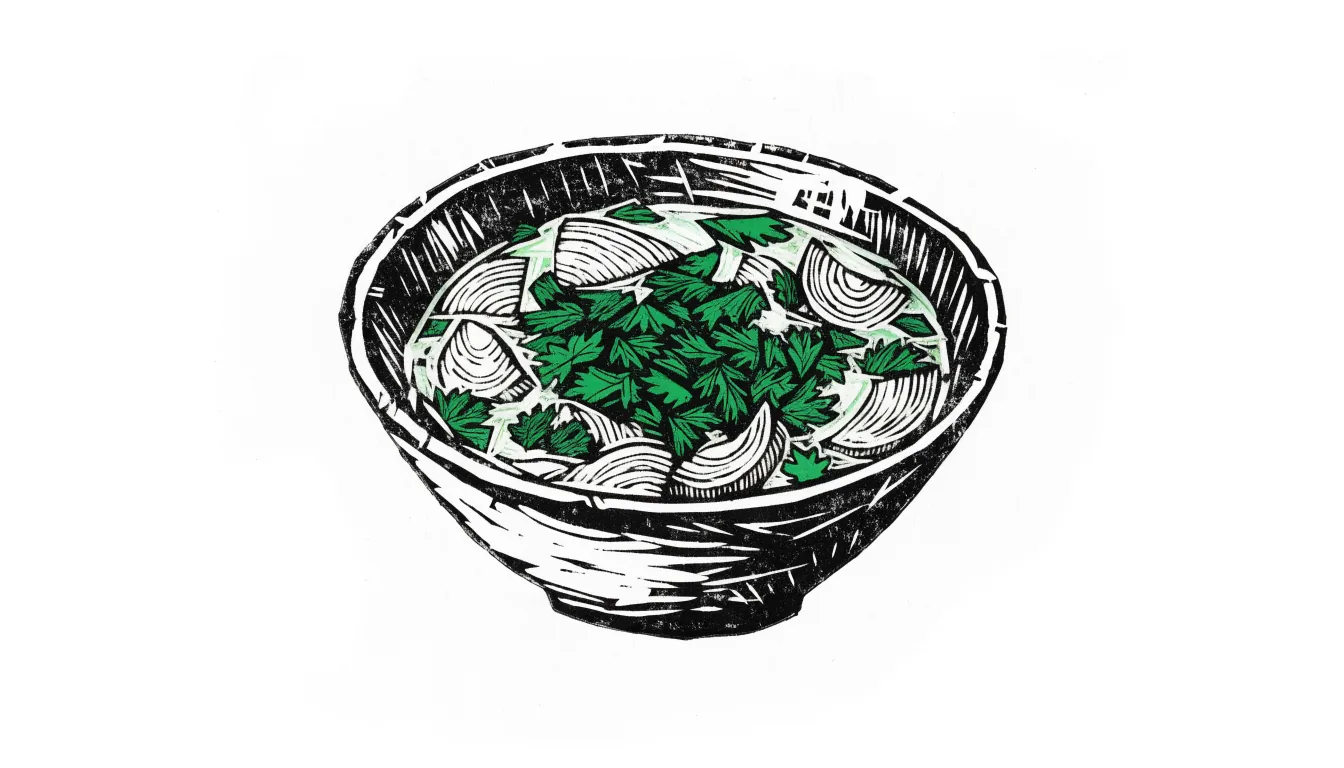
Ají picado is the Colombian table sauce of finely chopped ají, onion and coriander, loosened with water and vinegar and salted, and the name says the method: picado means chopped. It is not blended, and that is the whole distinction from its Ecuadorian neighbour.
It sits in a small jar with a spoon beside soups, arepas and grilled meat, in the position hot sauce occupies elsewhere, and it is made at home because there is nothing to buy.
What ají picado actually is
Ají picado is fresh ají, onion and coriander chopped fine, mixed with water, vinegar and salt into a loose, spoonable sauce with every component still visible. Nothing is cooked and nothing is blended.
Spring onion is common rather than bulb onion, which keeps the sauce lighter and greener.
The liquid is water plus an acid, and the acid varies by household: vinegar in most, lime in some, occasionally both. The water is not a shortcut. It gives the sauce the loose consistency it needs to be spooned rather than dolloped.
Tomato appears in some versions in small quantity, chopped as fine as everything else.
Nothing is required beyond the four. Garlic, cumin and hard-boiled egg all turn up regionally and none is standard.
Chopped rather than blended, and why it matters
The texture is the definition and it changes how the sauce behaves on food.
A blended sauce coats. A chopped one sits, and each spoonful delivers distinct pieces of pod, onion and herb rather than a uniform heat. That is the eating experience Colombian tables expect from ají picado.
It also changes how the heat arrives. In a blended sauce the capsaicin is distributed evenly and the burn is steady. In a chopped one you get bursts, because some spoonfuls carry more pod than others.
Fineness still matters. Chopped does not mean coarse. The pieces should be small enough that a single spoonful carries all the components at once, which is a fair amount of knife work.
How it differs from ají criollo
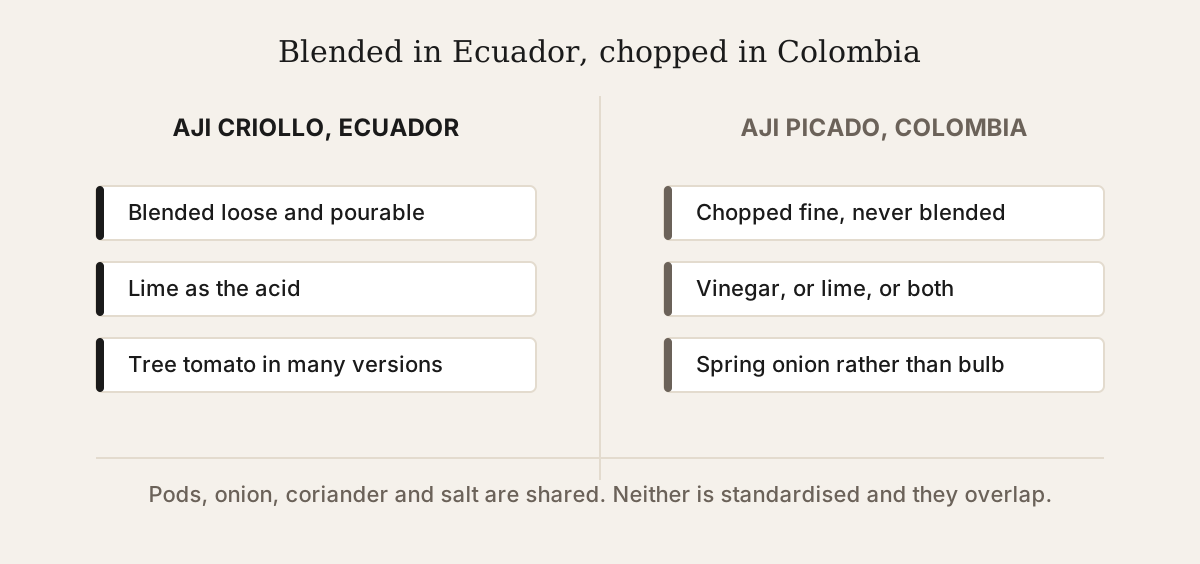
Ají picado and ají criollo are close relatives from adjacent countries, and the differences are consistent enough to be useful.
Ají criollo is Ecuadorian and blended into a loose pourable sauce, frequently carrying tree tomato and lime.
Ají picado is Colombian and chopped, loosened with water and vinegar, and rarely carries tree tomato.
The overlap is real. Households on both sides make versions that would pass in the other country, and neither is standardised. Anyone insisting on one correct formula is describing their family.
Both are finishes. Raw, added at the table, separable from the dish, and made in small quantities because neither keeps.
Why there is nothing to buy
Ají picado depends on raw onion, fresh coriander and fresh pod, and none of the three survives commercial jarring in a form worth paying for.
Checked on 13 August 2026, the first page of United States results for aji picado returned recipe publishers and reference material rather than sellers, which describes that search on that date rather than recommending any seller. Counting rule: a result counts as a seller when it offers the finished sauce for purchase rather than a recipe or an ingredient. On that rule there were no sellers on the first page.
The practical reading is that this is a made preparation, which is unsurprising given it takes fifteen minutes and its ingredients are ordinary.
What you can buy is the pod. Frozen ají and jarred ají pastes are stocked by Latin American grocers, and a frozen pod makes a far better picado than any bottled hot sauce standing in for one.
Making it
Chop everything as fine as patience allows, mix with water, vinegar and salt, and rest it twenty minutes before serving.
Rest is not optional. Straight after mixing it tastes of raw onion and sharp vinegar as separate things; after twenty minutes it tastes of one thing.
Get the consistency loose. It should pour off a spoon rather than sit in a mound. If it looks like a relish it needs more water.
Deseed for less heat rather than using fewer pods, which keeps the fruitiness while dropping the burn.
Salt at the end and taste after resting, since the salt reads differently once the onion has softened.
What to put it on
Almost anything savoury, and characteristically with soup, which is where a Colombian table reaches for it first.
Colombian soups take it by default: ajiaco, sancocho, caldo. It goes on empanadas, arepas, grilled meat, beans and rice. On the coast it appears beside fried fish.
It is used generously, by the spoonful rather than the drop, which surprises people calibrated on concentrated bottled hot sauces.
Where it works least well is on anything already acidic, since the vinegar compounds rather than balances.
Storage
Refrigerated in a sealed jar, two to four days. It holds slightly better than a pebre because the vinegar does some preserving work.
The coriander goes first, darkening and wilting within a couple of days, and the onion softens. Neither is unsafe and both mean the sauce has passed its best.
It does not freeze. Raw onion collapses and fresh herb turns to sludge.
Make small quantities often, which is how it is made at home.
Frequently asked questions
What is the difference between ají picado and ají criollo?
Texture and country, mainly. Ají picado is Colombian and chopped, so the components stay visible and the heat arrives in bursts. Ají criollo is Ecuadorian and blended into a loose pourable sauce, often with tree tomato and lime. Both are raw table finishes and the overlap between households is large.
Can I use a blender?
You can, and you will have made something closer to ají criollo. The chopping is the definition of picado, and blending changes both the texture and the way the heat is distributed. If you want the Colombian sauce, use a knife.
How spicy is it?
Ají picado varies entirely by household and by pod, and it is usually moderate rather than fierce. Because it is used by the spoonful rather than the drop, most versions are calibrated to be comfortable in quantity. Deseeding the pods lowers the heat considerably while keeping the fruitiness.
Can I substitute a bottled hot sauce?
Not usefully. A bottled sauce is concentrated, vinegar-forward and uniform, where ají picado is loose, fresh and textured, and its onion and coriander are doing as much work as the pod. The two occupy the same position on a table and are not the same kind of thing.
How long does it keep?
Two to four days refrigerated, slightly longer than a pebre because the vinegar helps. The coriander darkens first and the onion softens after that. It does not freeze, and since it takes fifteen minutes to make, small frequent batches are the practical approach.
The pairing
“Colombia Tierra Querida”, Lucho Bermúdez, 1960, Colombia.
Regional. Bermúdez built a national repertoire out of coastal forms that were considered too ordinary to write down, which is the position this sauce holds on a Colombian table: present at every meal and almost never discussed.
We write about seasoning preparations across Latin America, what separates the regional variants, and where to buy them in the United States.