Peruvian Ají Verde and Salsa Criolla: Two Finishes, One Table
The green sauce and the onion relish that appear together at Peruvian meals. What is in each, why ají amarillo sits inside a green sauce, and how to judge a jarred one.
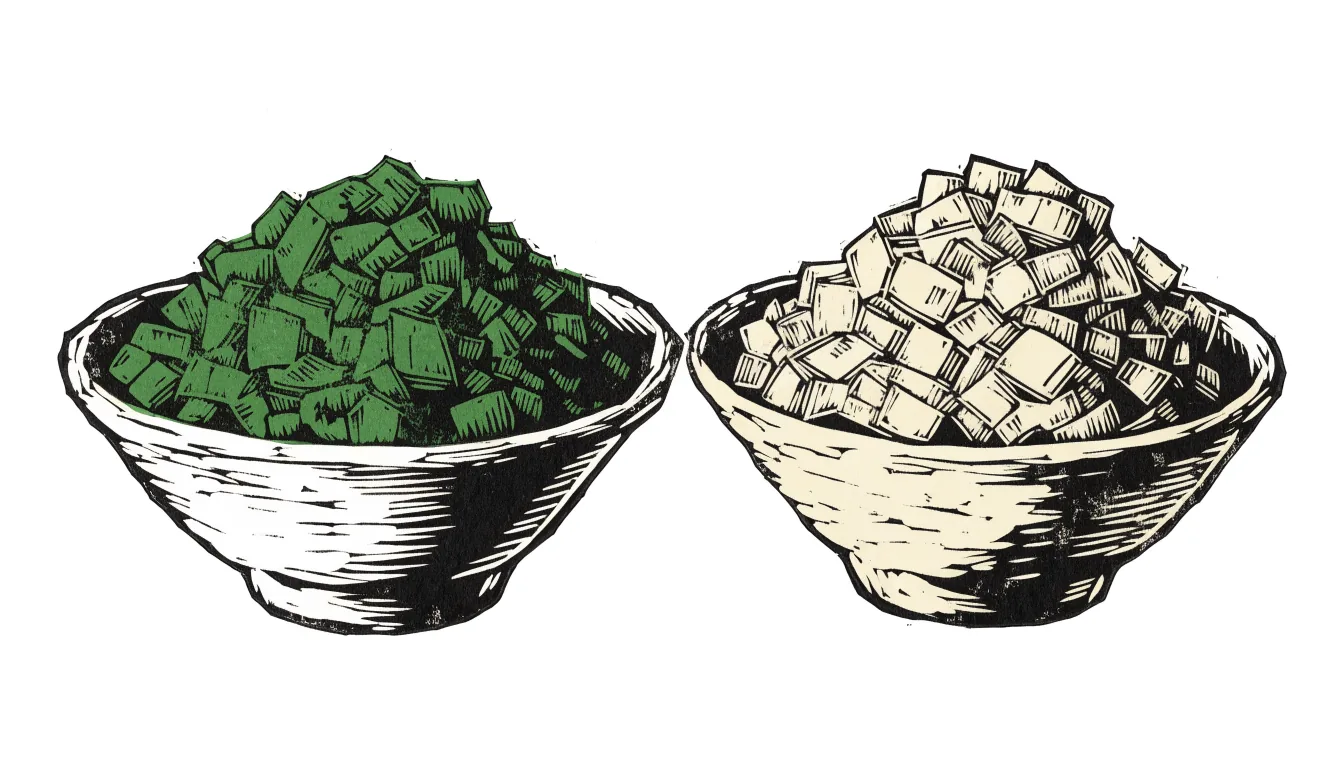
Ají verde is a blended Peruvian green sauce built on fresh ají with herbs and a dairy or oil emulsifier, and salsa criolla is a raw sliced red onion relish dressed with lime. They arrive together at Peruvian tables and do opposite jobs.
Treating them as one subject is deliberate. Almost every English-language source covers them separately, which hides the thing that makes them make sense: one is creamy and rich, the other is sharp and raw, and a Peruvian plate usually wants both.
What ají verde actually is
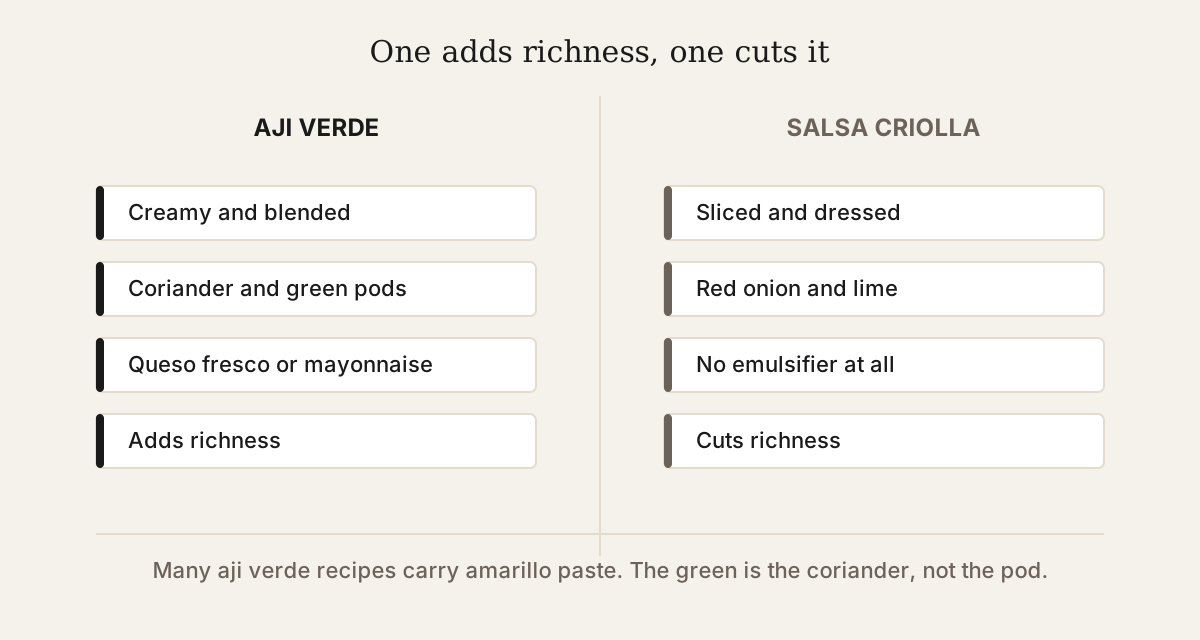
Ají verde is fresh green ají blended with coriander, garlic, lime and an emulsifier that is usually cheese, mayonnaise or oil, producing a thick pourable green sauce. It is barely cooked or not cooked at all.
The emulsifier is what separates it from a simple herb sauce. Queso fresco, huacatay, mayonnaise and evaporated milk all appear in different versions, and each produces a noticeably different body. A version built on oil alone is thinner and sharper.
Despite the name, many ají verde recipes carry ají amarillo paste, which is yellow-orange. The green comes from the coriander and the fresh green pods, and the amarillo is there for depth rather than colour. That surprises people reading the name literally.
On huacatay
Huacatay, sometimes called black mint, appears in many versions and has no close substitute. It is pungent, slightly aniseed and quite unlike mint despite the English name. A version without it is still ají verde; a version with it tastes distinctly more Peruvian.
What salsa criolla actually is
Salsa criolla is red onion sliced very thin, rinsed, then dressed with lime juice, salt and usually a little fresh ají, and left to sit briefly before serving. Nothing else is required.
The rinse is not optional in practice. Soaking the sliced onion in cold water for a few minutes removes the sulphurous bite while leaving the crunch, and skipping it produces a relish that overwhelms whatever it is served with.
The lime is doing two jobs: seasoning and a light cure. Given twenty minutes the onion softens slightly and turns a brighter pink, which is the visual signal that it is ready.
Coriander is common and optional. Some versions add it, some stay with onion and ají alone.
Why they appear together
One is rich and one is sharp, and a plate of roast chicken or fried fish wants both at once. That is the whole logic.
Ají verde coats and adds fat and heat. Salsa criolla cuts through it and resets the palate. Served together they cover a range that neither manages alone, which is why Peruvian restaurants put both on the table without asking.
The practical consequence for a cook. If you make only one, make the one that answers your dish. A rich fried or roasted dish is better served by salsa criolla than by more richness. A lean grilled dish takes ají verde well.
Judging a jarred ají verde
Read for the emulsifier and for whether the herbs are fresh, because those two decide almost everything about a jarred version.
Mayonnaise-based jars are the most common export version and they keep well, but they read heavier and blander than a fresh queso fresco version. That is a legitimate product rather than a fake, and worth knowing before you buy.
Dried coriander in the list is a warning. Fresh coriander is central here and its dried form contributes almost nothing.
Check where the ají sits. A jar listing ají amarillo paste or fresh ají near the top is doing the right thing. A jar where the first pepper mention is well down the list, after oil, water and thickener, is mostly a seasoned mayonnaise.
Checked on 13 August 2026, the first page of United States results for aji verde returned recipe publishers rather than sellers, which describes that search on that date. The consequence is that ají verde is more readily made than bought in the United States, while ají amarillo paste, its main component, is widely available in jars.
Salsa criolla is essentially never worth buying. It is three ingredients and twenty minutes, and it does not survive jarring.
Where to buy the components
Latin American grocers, and increasingly ordinary supermarkets, carry jarred ají amarillo paste, which is the hardest component to source fresh in the United States.
Fresh ají amarillo is difficult to find outside specialist produce markets, and frozen pods appear in some Latin grocers. The jarred paste is a reasonable substitute and is what most cooks in the United States use.
Huacatay is sold as a jarred paste by the same importers. If you are buying ají amarillo paste online, adding huacatay to the order costs little and moves an ají verde noticeably closer to the real thing.
Making each one
Ají verde is blended and salsa criolla is not, and that single difference decides the technique for both.
For ají verde, blend the ají, herbs, garlic and lime first, then add the emulsifier and blend again briefly. Adding cheese or mayonnaise at the start makes the sauce gluey, because the fat coats the herb before the herb has broken down. Taste for acid last: the lime should be present but should not announce itself, since the sauce is meant to coat rather than cut.
Consistency is a judgement rather than a measurement. It should pour thickly and sit on food without sliding off, roughly the body of a loose mayonnaise. Thin it with water rather than more lime, which is the common mistake and makes the sauce sharp before it is loose enough.
For salsa criolla, slice, rinse, drain properly, then dress. Draining matters more than it sounds: onion carrying rinse water dilutes the lime and the relish never seasons correctly. Shake it dry or spin it.
Dress with lime and salt, add the ají, and let it stand twenty minutes. If it has to wait longer than an hour, hold the lime back and add it shortly before serving, because extended contact takes the onion past crisp into limp.
Neither preparation wants sugar, which appears in some export recipes and pulls both toward a flavour that belongs to a different cuisine.
Storage
Ají verde keeps three to five days refrigerated, less if it is built on fresh dairy, and it separates as it sits. Stir rather than re-blend.
Salsa criolla is best within a few hours and acceptable the next day, by which point the onion has gone soft and lost the crunch that was the point. Make it in the quantity you will eat.
Neither freezes usefully. Ají verde splits and salsa criolla collapses entirely.
Frequently asked questions
Why is ají verde green if it contains ají amarillo?
Because the colour comes from the fresh coriander and any green pods, while the ají amarillo is there for its fruity depth rather than its colour. Blended into a large volume of green herb the yellow-orange paste does not dominate the appearance. The name describes the finished sauce rather than its ingredients.
What can I substitute for ají amarillo?
There is no close substitute, since ají amarillo is fruity as well as hot and most available pods are one or the other. The jarred paste is widely sold in the United States and is the practical answer. If you cannot get it at all, a mild fresh pod plus a small amount of a fruity ingredient gets you an approximation rather than the thing.
Is salsa criolla the same as pico de gallo?
No. Salsa criolla is sliced red onion dressed in lime with ají, and it carries no tomato in its standard form. Pico de gallo is a Mexican preparation built on tomato, onion and coriander in roughly equal parts. They look different on the plate and do different jobs.
Does ají verde have to contain cheese?
No, ají verde does not have to contain cheese. Queso fresco is common and produces the creamiest version, but mayonnaise, evaporated milk and oil all appear in legitimate versions. The requirement is an emulsifier of some kind, because without one the sauce is a thin herb purée rather than the coating sauce it is meant to be.
How thin should salsa criolla onions be sliced?
As thin as you can manage, ideally on a mandoline. Thickness is the most common reason a homemade salsa criolla is unpleasant, because a thick slice stays harsh and does not soften in the lime within the time available. Thin slices cure quickly and eat easily.
The pairing
“Toro Mata”, Caitro Soto, 1973, Peru.
Regional. An Afro-Peruvian landó from the coast, where both of these preparations belong, and like them it is built from very few elements arranged with more precision than the simplicity suggests.
We write about South and Central American seasoning preparations, what separates the regional variants, and where to buy them in the United States.