Ají vs Chile: Two Words, Two Traditions, One Genus
Both words mean pepper and neither is a translation of the other. Where each belongs, why English collapses them, and what gets lost when a recipe swaps one for the other.
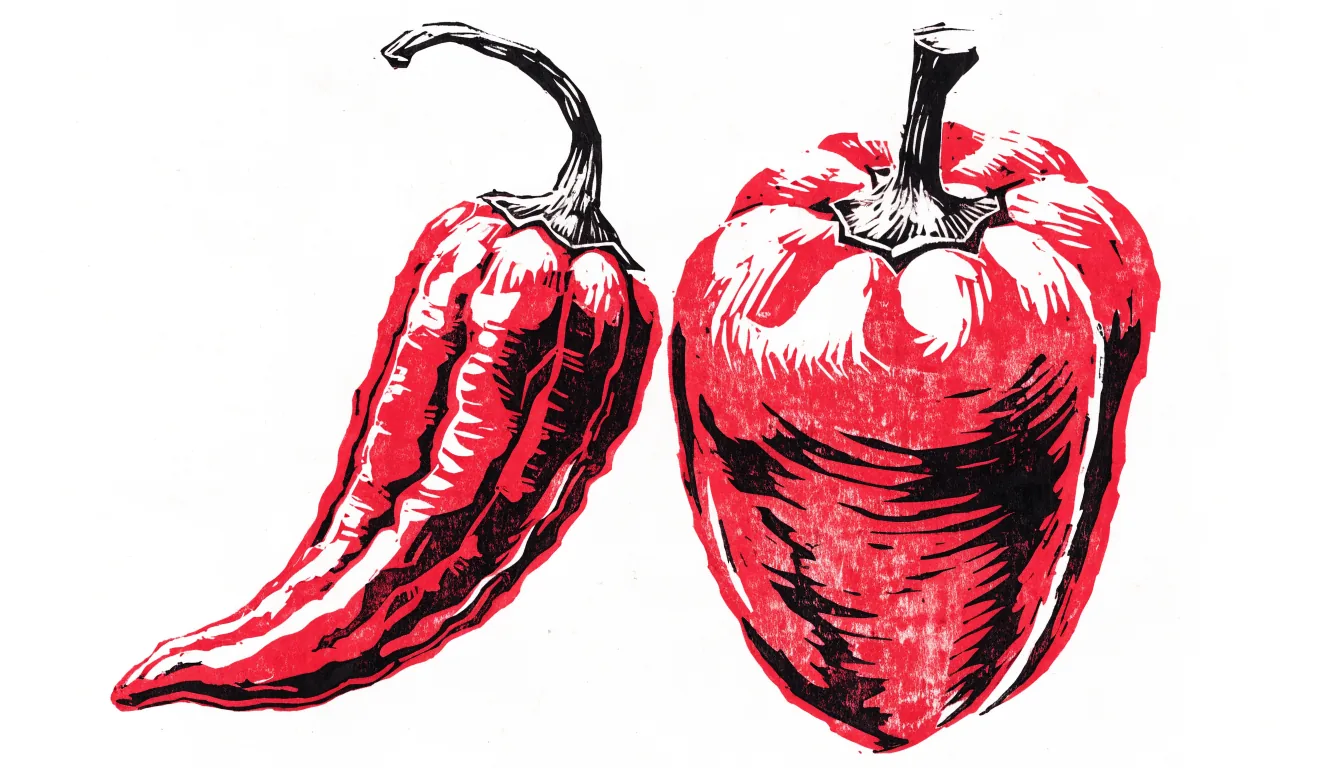
Ají and chile are regional names for peppers of the same genus, Capsicum, used in different parts of Latin America, and neither word is a translation of the other.
Ají is the South American and Caribbean word. Chile is the Mexican and Central American one. Using either in the other’s territory is the single most common vocabulary error in English-language writing about Latin American food.
Where each word belongs
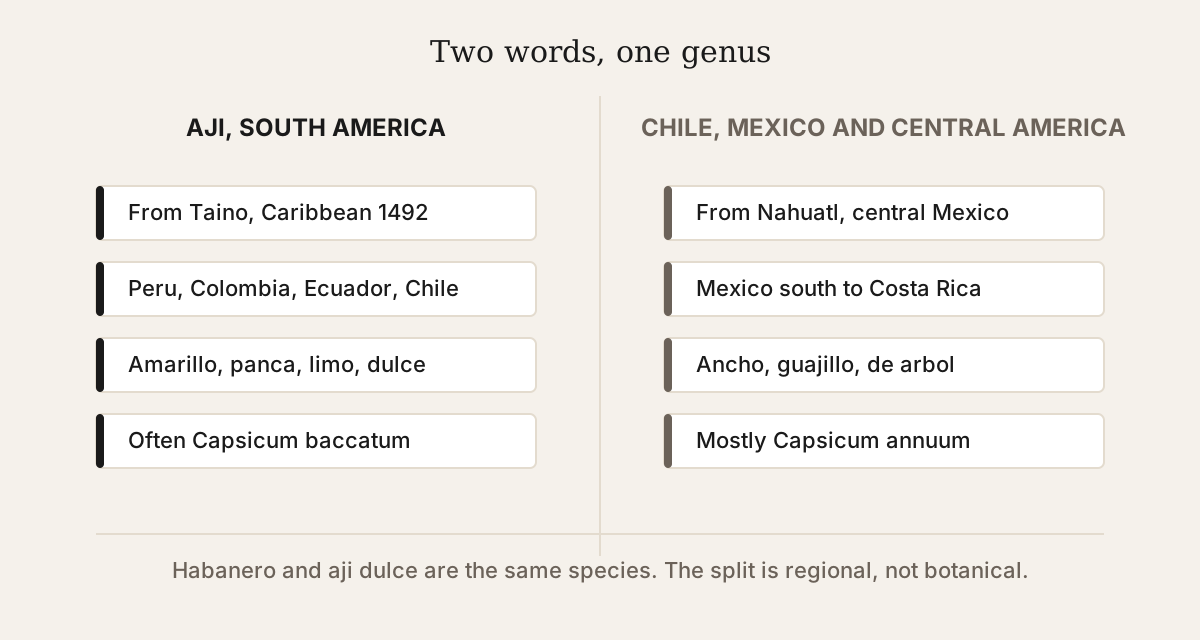
Ají is used in South America and the Spanish-speaking Caribbean. Chile is used in Mexico and Central America.
Ají is the word in Peru, Colombia, Ecuador, Bolivia, Venezuela, Chile, Argentina and the Caribbean. Ají amarillo, ají panca, ají limo, ají dulce, ají charapita.
Chile is the word in Mexico and Guatemala south to Costa Rica. Chile ancho, chile guajillo, chile de árbol, chile poblano.
The line is not perfectly clean. Central America sits at the seam and usage shifts by country and by speaker, which is what a language border looks like rather than a defect in the rule.
Neither word is more correct. They are two regional vocabularies for the same plant genus, both native, both old.
Why the words are different
The two words entered Spanish from different indigenous languages at different points in the conquest.
Ají comes from Taíno, an Arawakan language of the Caribbean, and was the word the Spanish encountered first, in 1492 in the Antilles.
Chile comes from Nahuatl, the language of central Mexico, and entered Spanish later as the Spanish moved onto the mainland.
Both words then travelled with the people who used them, which is why the modern distribution looks the way it does rather than following any botanical logic.
English took chile, chili and chilli from the Nahuatl branch and never adopted ají at all, which is the root of the collapse described below.
What English does with them, and what it loses
English-language writing routinely translates ají as chile, which erases the regional identity of the ingredient and frequently the ingredient itself.
Ají amarillo is not a yellow chile. It is a specific Capsicum baccatum cultivar with a fruity, almost tropical character that no Mexican chile duplicates, and calling it a yellow chile invites a substitution that will not work.
The species differ, not just the names. Most Mexican chiles are Capsicum annuum. Many South American ajíes are Capsicum baccatum or Capsicum chinense, which are different species with different flavour profiles.
Recipe substitution is where the damage shows. A recipe that says use any chile in place of ají panca is telling the reader something false, because ají panca’s smoky, raisin-like mildness is not a property Mexican chiles happen to share.
This site uses the regional word for the regional thing and does not apply either word to the other tradition.
The species underneath
Five domesticated Capsicum species cover almost everything in both traditions, and they do not map onto the two words.
| Species | Where it dominates | Examples |
|---|---|---|
| Capsicum annuum | Mexico and Central America, and worldwide | ancho, guajillo, de árbol, jalapeño, poblano |
| Capsicum baccatum | South America, especially Peru and Bolivia | ají amarillo, ají panca, ají mirasol |
| Capsicum chinense | Amazon, Caribbean, Yucatán | ají charapita, ají dulce, habanero |
| Capsicum pubescens | Andean highlands | rocoto, locoto |
| Capsicum frutescens | Scattered, widely cultivated | tabasco, malagueta |
Note that Capsicum chinense crosses the vocabulary line. Habanero is a chile and ají dulce is an ají, and they are the same species. That is the clearest single demonstration that the two words are regional rather than botanical.
None of the five is named for a country. Capsicum chinense is not Chinese; it was misnamed in the eighteenth century by a botanist who assumed a Chinese origin.
The other chile, and the confusion it causes
Chile is also a country, and in English the two are spelled identically.
Chilean cooking uses ají, following South American usage, so Chilean ají is a real phrase that reads like a contradiction to anyone expecting the Mexican word.
Merkén is Chilean, and it is a smoked and ground ají preparation rather than a chile powder in the Mexican sense.
Search results conflate the two constantly, which is worth knowing when researching either subject.
What this means when you cook
Match the word to the tradition, and treat a substitution across the line as a real change rather than a swap.
Where a Peruvian recipe calls for ají amarillo, the substitutions that work are other baccatum ajíes, or a compromise made knowingly. A Mexican chile is a different dish.
Where a Mexican recipe calls for guajillo, ají panca is the nearest South American analogue on smokiness and mildness, and it is still not the same thing.
Fresh and dried forms carry different names in both traditions, which multiplies the confusion. Chile poblano dried becomes ancho; ají amarillo dried becomes ají mirasol.
Coverage of Mexican ingredients on this site is researched rather than first-hand, and is written from published sources and supplier documentation rather than from travel.
Frequently asked questions
Is ají just the South American word for chile?
Not quite, and the distinction matters. Both words name peppers in the genus Capsicum, so at the level of the genus they refer to the same kind of plant. But the peppers each tradition actually uses are frequently different species with different flavours, so treating the words as translations leads directly to substitutions that do not work.
Which word should I use?
Use the one belonging to the tradition you are cooking in. Ají for Peruvian, Colombian, Ecuadorian, Bolivian, Venezuelan, Chilean and Argentine ingredients. Chile for Mexican and Central American ones. Applying either across the line is the error this page exists to name.
Are ají amarillo and yellow chile the same thing?
No, ají amarillo is a specific cultivar of Capsicum baccatum with a distinctive fruity character. Yellow chile is not a defined ingredient at all, and any yellow Capsicum annuum sold under that description will taste substantially different. The English translation invites a substitution that changes the dish.
Why is habanero a chile and ají dulce an ají when they are the same species?
Because the words are regional rather than botanical. Both are Capsicum chinense. Habanero is named in the Mexican and Yucatecan tradition, ají dulce in the Venezuelan and Caribbean one. This pair is the clearest available proof that the two words track geography and language history rather than the plant.
Does ají always mean the pepper itself?
No, ají does not always mean the pod. In several South American countries ají also names the finished table sauce made from it. Colombian ají picado and Ecuadorian ají criollo are sauces, not pods. Context usually resolves it, and a menu listing ají alongside a dish almost always means the sauce.
The pairing
“Cariñito”, Los Hijos del Sol, 1978, Peru.
Regional. A cumbia amazónica from the Peruvian jungle, the region that gives the map some of its most distinctive ajíes, including charapita.
We write about seasoning preparations across Latin America, what separates the regional variants, and where to buy them in the United States.