Chilean Aliño Completo and Adobo Seco: The Two Everyday Dry Blends
The all-purpose Chilean blend and the garlic-led dry rub used across the region. What is in each, how they differ, and what to check on the jar.

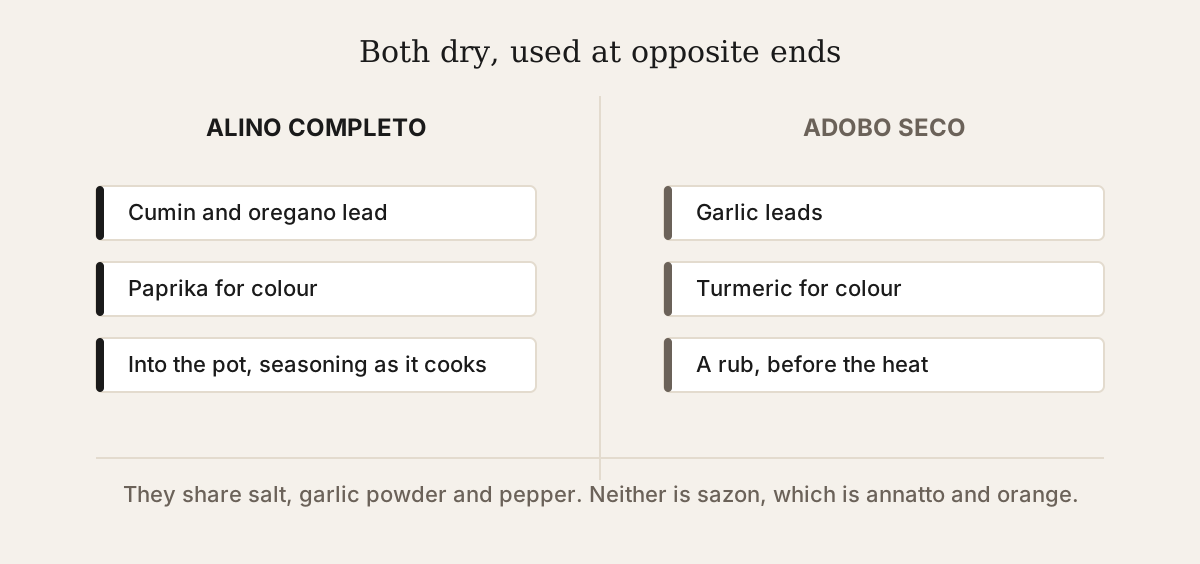
Aliño completo is the Chilean all-purpose dry blend, typically cumin, oregano, paprika, garlic and pepper with salt, and adobo seco is a garlic-led dry rub used more widely across the region, usually with oregano and turmeric. Both are cupboard blends rather than table condiments.
They are the least glamorous preparations on this site and among the most used, which is exactly why nobody writes about them carefully.
What aliño completo actually is
Aliño completo is a ground Chilean blend of cumin, oregano, paprika, garlic powder, black or white pepper and salt, sold in jars and sachets and used as a default seasoning across most savoury cooking. The name means complete seasoning and describes the intent accurately.
Cumin does most of the identifying work. Chilean home cooking leans on cumin more heavily than most of the region, and a blend where cumin is faint is not really aliño completo.
There is no fixed formula. Producers vary the paprika and the pepper, some add coriander seed, and salt proportion swings widely, which is the main thing to check on a jar.
What it is for
It goes into cazuela, into stews, onto meat before grilling, into rice and into the aliño that starts a Chilean pot. It is a general-purpose seasoning in the way a household salt-and-pepper mix might be elsewhere, rather than a blend tied to a dish.
It is also often the dry component of a wet base. The aliño that starts a cazuela is onion and fat plus this blend, which is how a dry blend and a base connect.
What adobo seco actually is
Adobo seco is a dry rub led by garlic powder, usually with oregano, salt, black pepper and often turmeric for colour, used on meat before cooking. Seco means dry, distinguishing it from wet adobo marinades.
Turmeric rather than annatto is the usual colouring agent here, which gives adobo seco a yellower cast than sazón’s orange. That is the quickest way to tell the two apart in a jar.
It carries no cumin in most versions, which is the clearest compositional difference from aliño completo.
Adobo seco is used across a wide area rather than belonging to one country, and its formula varies accordingly. Some versions are close to a garlic salt with oregano; better ones carry real aromatic weight.
How the two differ, and when to use which
Aliño completo is cumin-led and general purpose; adobo seco is garlic-led and aimed at meat. That is the whole distinction and it holds up in practice.
Use aliño completo when seasoning a pot: stews, soups, rice, beans, and anything where the seasoning cooks in over time. Its cumin and oregano need heat and moisture to open.
Use adobo seco as a rub before grilling, roasting or frying, where garlic powder browns and the salt draws moisture to the surface.
They overlap enough to substitute in an emergency, with the understanding that aliño on a grill gives a cumin-forward crust and adobo in a stew reads flatter than expected.
Neither is sazón. Sazón is defined by annatto and its orange colour, and it is covered separately.
What to check on the jar
Where salt sits, whether the garlic is powder or granulated, and whether anything is doing the job of a spice without being one.
Salt position is the main check, as with any commercial blend. Salt first means you are buying seasoned salt. In a good aliño completo salt sits below at least one or two aromatics.
Anti-caking agents are normal and not a fault. Silicon dioxide or calcium silicate appear in most ground blends and prevent clumping.
MSG appears in some commercial versions of both. As with sazón, that is a legitimate choice rather than a defect, but a blend leaning on it usually carries less of the aromatics.
Colour additives are worth noticing in adobo seco. Turmeric is traditional; a synthetic yellow doing the same job is not.
Checked on 13 August 2026, the first page of United States results for alino completo returned a marketplace listing, a Chilean products seller and reference material rather than a broad retail category, which describes that search on that date. The practical reading is that aliño completo is a specialist import in the United States rather than a supermarket item.
Making them
Aliño completo and adobo seco are both five-minute blends if you have the ground spices, and both benefit substantially from toasting and grinding the whole seeds yourself.
For aliño completo, combine ground cumin, dried oregano, paprika, garlic powder, pepper and salt, weighting cumin and oregano most heavily. Toast and grind the cumin from whole seed if you can; the difference is larger than for anything else in the mix.
For adobo seco, combine garlic powder, dried oregano, salt, black pepper and a little turmeric. Granulated garlic holds up better than fine powder in a rub, because it browns rather than burning.
Leave the salt out and season separately if you want control, accepting that the blend will taste flat straight from the jar.
Make small quantities. Ground blends flatten within months.
Storage
Sealed, dark and dry, and expect six months to a year of useful life from a homemade blend.
The cumin and oregano fade first. Paprika and turmeric hold their colour long after their flavour has gone, which is why an old jar looks fine and tastes of nothing.
Keep them away from the stove. Heat and steam are the fastest route to a clumped, flat blend, and the cupboard above the hob is the worst place in the kitchen for them.
Frequently asked questions
Is aliño completo the same as adobo?
No. Aliño completo is Chilean and cumin-led, intended as a general-purpose seasoning for pots and stews. Adobo seco is garlic-led, usually carries turmeric, and is aimed at meat before cooking. They overlap enough to substitute at a pinch, but they are built around different aromatics for different jobs.
Does aliño completo contain chilli?
Usually not, or only paprika for colour and mild warmth. It is a savoury aromatic blend rather than a hot one. Chilean heat generally arrives through a separate preparation such as merkén or a fresh ají in a pebre, rather than through the all-purpose blend.
Can I use adobo seco as a marinade?
It is a dry rub rather than a marinade, but you can make a wet marinade by combining it with oil, vinegar or citrus. Applied dry it draws moisture to the surface and forms a crust during cooking, which is a different effect from marinating and generally the one it is intended for.
Why does my blend taste of nothing?
Almost always age. Ground cumin and dried oregano lose their volatile aromatics within months, while paprika and turmeric keep their colour for far longer, so an old blend looks correct and tastes flat. Storing it above the stove accelerates this considerably.
Is turmeric traditional in adobo seco?
It is common and widely used, supplying the yellow colour that distinguishes adobo from annatto-coloured blends. Formulas vary by producer and by country, and some versions omit it entirely. Its presence is not a quality signal either way; a synthetic colouring doing the same job would be.
The pairing
“Run Run Se Fue Pa’l Norte”, Violeta Parra, 1966, Chile.
Regional. Parra collected and rebuilt Chilean forms that were considered too ordinary to write down, which is roughly the position these two blends occupy in the kitchen: used constantly, documented almost never.
We write about South and Central American seasoning preparations, what separates the regional variants, and where to buy them in the United States.