Annatto Oil: The Fat That Colours a Base
Achiote steeped in warm oil is the step that makes a refrito orange. How to make it, how long it keeps, and why the colour is doing more than decoration.
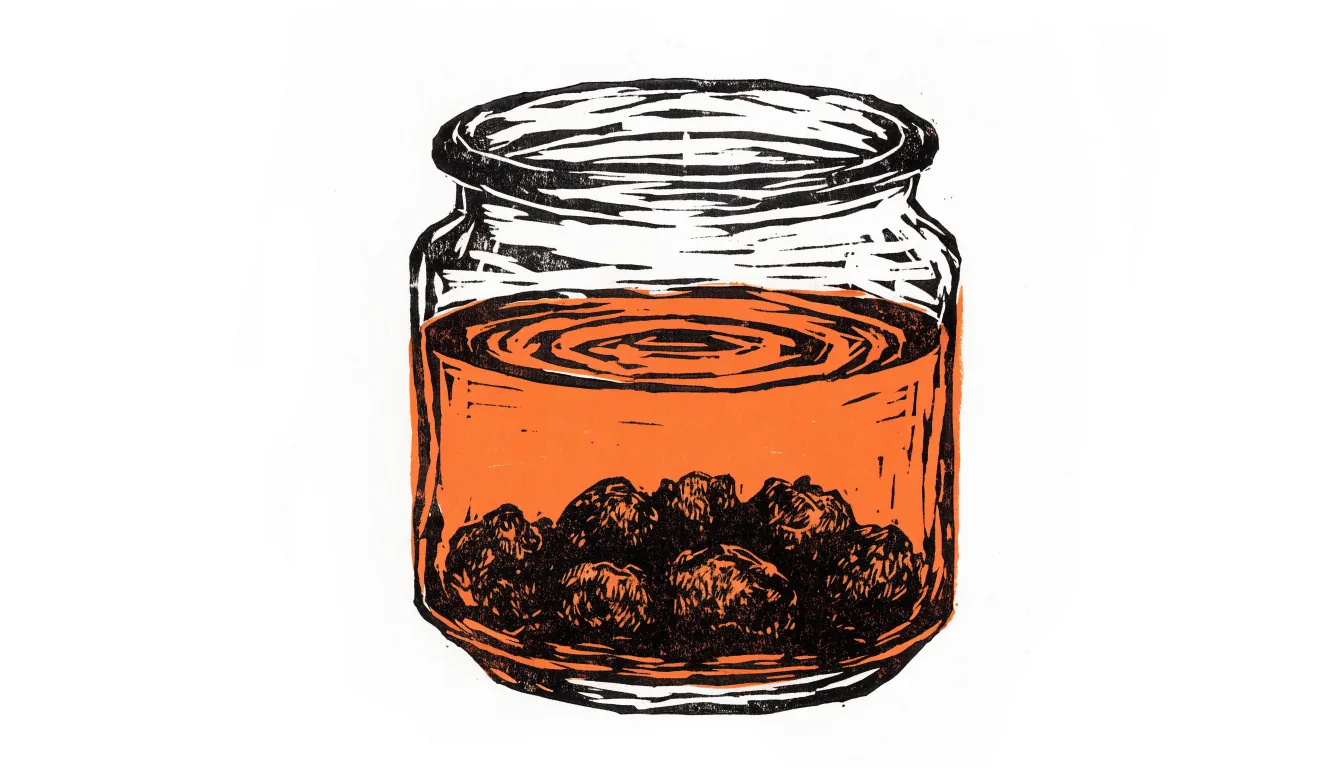
Annatto oil, also called achiote oil, is neutral oil in which annatto seeds have been steeped over low heat until the fat turns deep orange, and it is the colouring step that begins an Ecuadorian refrito and a great deal of other cooking across the region. It takes five minutes and keeps for months.
The head on this page is annatto oil rather than achiote oil, because the two names describe the same thing and the English-language search for the second returns almost nothing usable. The preparation is identical.
What annatto oil actually is
Annatto oil is a neutral cooking oil infused with the pigment from annatto seeds, produced by warming the two together gently and then straining the seeds out. Two ingredients and one technique.
The seed comes from the achiote tree and is hard, brick red and almost flavourless when raw. Its pigment is fat-soluble rather than water-soluble, which is the entire reason this preparation exists: you cannot get the colour out with water, and you can get it out easily with warm oil.
The result is a cooking fat rather than a finishing oil. It goes into the pan at the start, not over the plate at the end.
Achiote and annatto are the same thing
Achiote is the Spanish name, annatto the English one, and both refer to the seed of Bixa orellana. Recipes use them interchangeably.
Achiote paste is a different product. That is a wet blend carrying acid, garlic and other seasonings, associated with Yucatecan cooking. It is in border and covered separately; it is not a substitute for annatto oil, because it brings acid and seasoning the oil does not. The dry seed and the oil made from it are used widely across South and Central America and in Mexico.
What the colour is actually doing
The colour is the visible part and the reason for the technique, and annatto also contributes a mild peppery earthiness that a dye cannot.
On flavour, honestly: it is subtle. Annatto is not a strong seasoning and anyone expecting a pronounced taste will be disappointed. What it contributes is a faint earthy warmth and a slight bitterness at the edges, which reads as depth rather than as a distinct flavour.
On colour, it is doing real work. A refrito built on annatto oil is orange throughout, and that colour carries into the rice, the stew or the braise built on top. It is a visual signature of a whole style of cooking rather than a garnish.
This is why a synthetic dye is not a substitute in a base, even though it produces a similar colour. The dye sits in the dish; the annatto has passed through the fat and taken the fat’s distribution with it.
How to make it
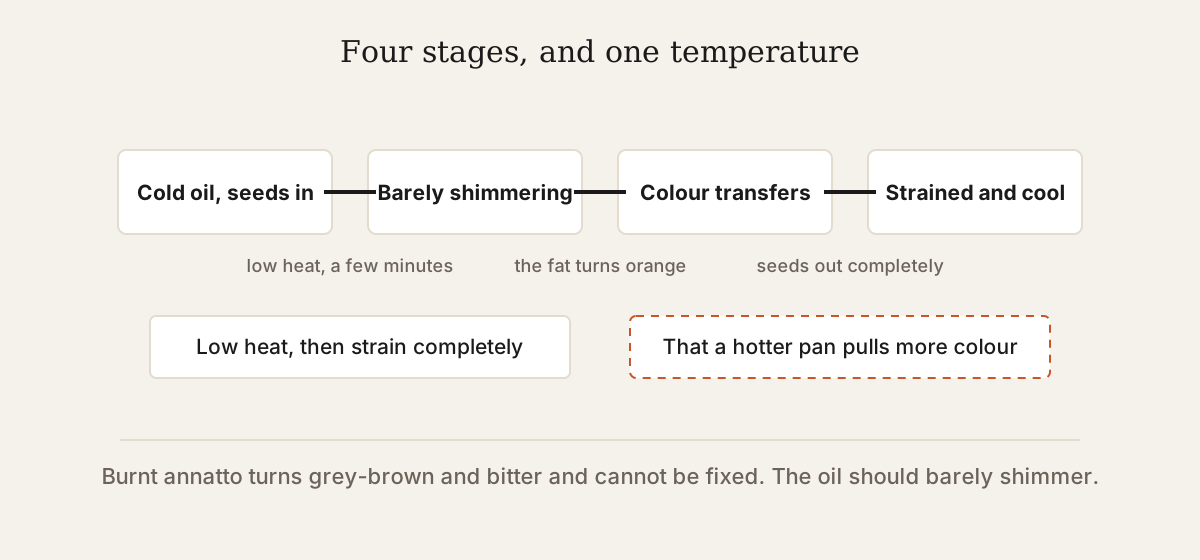
Warm the oil with the seeds over low heat until the oil turns deep orange, which takes about five minutes, then take it off and strain.
Proportions are forgiving. Roughly one part seeds to four or five parts oil by volume gives a strong colour. More seeds do not give proportionally more colour once the oil is saturated.
Low heat, and watch it. The oil should barely shimmer. Annatto scorches quickly and burnt annatto turns grey-brown and bitter, which cannot be fixed and is the only real failure mode here.
Strain the seeds out completely. Seeds left in the finished oil continue to leach and eventually turn the oil bitter, and they scorch when the oil is next heated.
Cool before bottling, and use a jar rather than a plastic container, since the pigment stains plastic permanently.
Ground annatto instead of whole seed
Ground annatto works and is faster, but it does not strain cleanly, so the finished oil carries sediment. That is acceptable in a base, where the oil goes straight into a pan with vegetables, and unacceptable where you want a clear coloured oil.
Whole seed is the better default for that reason alone.
Where to buy the seed
Latin American grocers carry annatto seed reliably and cheaply, and general supermarkets increasingly stock it in the spice aisle under either name.
Checked on 13 August 2026, the first page of United States results for annatto oil returned recipe publishers and general retailers rather than a dedicated product category, which describes that search on that date rather than recommending any seller. The practical reading is that annatto oil is made at home rather than bought, while the seed itself is widely available.
Bottled annatto oil does exist commercially and is fine, though it is one of the least worthwhile things to buy ready-made given that the preparation takes five minutes and the seed is inexpensive.
Buy whole seed rather than ground where you have the choice, for the straining reason above and because whole seed keeps its colour far longer.
What to use it in
Use it anywhere a recipe calls for oil and wants colour, which in practice means the start of a base, a pot of rice, or a marinade.
In a base it replaces the plain oil entirely. An Ecuadorian refrito is built on it, and a Colombian hogao made with it becomes a slightly different and perfectly good preparation, which is one of the easier ways to see how much the fat contributes to regional identity.
In rice a spoonful at the start turns the whole pot warm orange and adds a faint earthiness under whatever else is seasoning it. This is probably the most common single use across the region.
In a marinade it carries colour onto the surface of meat before grilling or roasting, where it browns rather than dyeing. The effect is subtler than in a wet dish.
Where it does not belong is anywhere the colour would be confusing or the oil would sit raw on the plate. It is a cooking fat, and used as a finishing oil it reads as an odd orange slick without contributing flavour to justify it.
Do not treat it as a substitute for a seasoning. A dish seasoned only with annatto oil will look correct and taste underseasoned, which is a common first mistake with it.
Why the colour is fat-soluble and what follows from it
Annatto’s pigment dissolves in fat and barely at all in water, which is the single fact that explains why the oil exists as a preparation rather than the seed being used directly.
Bixin is the pigment and it is carried in the seed coat. Warming the seed in oil draws it out into the fat, where it stays evenly dispersed.
Water-based extraction gives a weaker, duller result, which is why annatto is not simply simmered into a stew whole.
The oil therefore carries colour into anything it touches, including rice, dough and the surface of meat, in a way a ground powder stirred into liquid does not.
It also means the colour survives cooking. A fat-borne pigment is not driven off by heat the way a volatile aroma compound is.
Storage
Strained and bottled in glass, kept cool and dark, annatto oil holds its colour and its usefulness for several months.
The oil itself is the limiting factor rather than the pigment. A neutral oil will eventually go rancid, and warmth and light accelerate it, so a cupboard away from the stove is better than a shelf above it.
Refrigeration extends it and may cloud the oil, which is cosmetic and reverses at room temperature.
Whole annatto seed, kept dry and sealed, holds for a year or more. Ground annatto fades much faster.
Frequently asked questions
Does annatto oil taste of anything?
Faintly. It carries a mild peppery earthiness and a slight bitterness, and it is far weaker than most people expect from something so vividly coloured. Its main contribution is colour distributed evenly through a dish via the fat. Anyone using it expecting a pronounced flavour has the wrong expectation of the ingredient.
Can I substitute paprika or turmeric?
For colour alone, partly. Paprika gives a redder result and contributes its own distinct flavour; turmeric gives a yellower colour and a much more assertive taste that will change the dish. Neither reproduces annatto’s specific combination of strong colour and near-neutral flavour, which is precisely why annatto is used.
Is achiote paste the same as annatto oil?
No. Achiote paste is a wet blend of annatto with acid, garlic and other seasonings, associated with Yucatecan cooking. Annatto oil is only oil and the seed’s pigment. Substituting the paste into a South American base introduces flavours from a different tradition along with the colour.
Why did my annatto oil turn bitter?
Almost always scorching. Annatto burns at a much lower temperature than most spices, and burnt seed turns the oil grey-brown and bitter irreversibly. The other cause is leaving the seeds in the finished oil, where they continue to leach over weeks and eventually make it harsh.
How much annatto oil does a base need?
Enough to cook the aromatics in, typically two or three tablespoons for a pan of base, which is the same quantity of fat you would use anyway. It replaces the plain oil rather than being added to it. Using more will not deepen the colour of the finished dish much, since the limiting factor is how much colour the vegetables can take up.
The pairing
“Nuestro Juramento”, Julio Jaramillo, 1957, Ecuador.
Regional. Jaramillo is the voice most associated with the coastal Ecuadorian cooking this oil belongs to, and like the preparation itself he is everywhere in that kitchen without ever being the thing anyone announces.
We write about South and Central American seasoning preparations, what separates the regional variants, and where to buy them in the United States.