Chile de Árbol: The Thin Red One That Brings the Heat
Clean, sharp heat with little sweetness. What chile de árbol is, how hot it actually is, and why it is the standard heat chile in a Mexican kitchen.
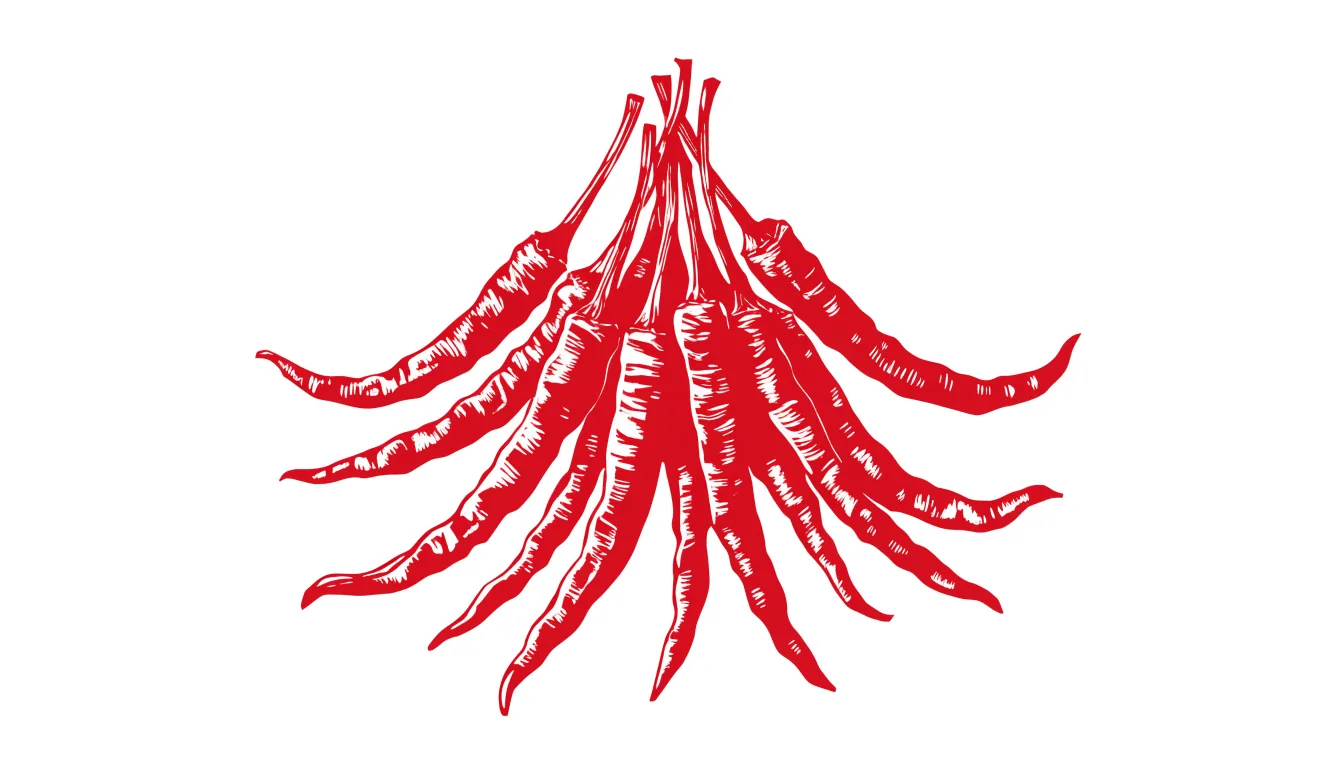
Chile de árbol is a thin, narrow, bright red dried chile with clean sharp heat, little sweetness and a slightly smoky, nutty edge.
It is the standard heat chile of Mexican cooking, added to sauces built on milder chiles rather than used as a base itself.
Coverage of Mexican ingredients on this site is researched rather than first-hand, written from published sources and supplier documentation.
What it is
Chile de árbol is a small, slender chile dried to a bright red, related to cayenne and to the pequín.
The name means tree chile, from the woody appearance of the plant, and the chile does not grow on a tree.
Pods are five to eight centimetres, thin and pointed, with a smooth skin.
It keeps its bright red colour when dried, unlike ancho and mulato which darken.
Colour is a freshness indicator here. A faded, brownish árbol is old.
How hot it actually is
Chile de árbol runs roughly 15,000 to 30,000 Scoville units, several times a jalapeño and well below a habanero.
That places it in the genuinely hot range for everyday cooking without being extreme.
The heat is clean and forward rather than creeping, and it fades reasonably quickly.
There is little sweetness to balance it, which is why it is rarely used alone in a sauce.
Heat varies by batch, as it does with all chiles, so taste before committing a quantity.
Where it belongs
Chile de árbol belongs in table salsas, in oils and in adding heat to sauces built on milder chiles.
Salsa de árbol is the classic, toasted chiles blended with tomato or tomatillo, garlic and salt.
Chile oil and salsa macha use it fried in oil.
Added to guajillo or ancho sauces in small numbers to bring the heat up without changing the colour.
Whole in broths for pozole and birria, removed before serving.
Crushed as a table condiment, in the way dried chilli flakes are used elsewhere.
Using it
Toast very briefly, and be careful with both the smoke and the quantity.
Toast for a second or two. Thin flesh scorches instantly and burnt árbol is acrid.
Frying in oil is the other standard method, and gives a rounder heat.
Seed it to moderate the heat, which removes a good deal without losing the flavour.
Ventilate. Toasting árbol produces capsaicin-laden smoke that will make a kitchen cough.
Start with fewer than you think. Two or three pods season a large salsa.
Making salsa de árbol
A basic salsa de árbol is a small number of chiles, tomatillos or tomato, garlic and salt, toasted and blended.
Toast six to ten chiles briefly, seeded if you want it manageable, watching them constantly.
Char tomatillos or tomatoes on a dry comal until blistered, along with two garlic cloves in their skins.
Blend everything with a little water and salt, keeping it slightly coarse.
Taste before adding more chiles. Heat builds as the salsa sits, and a salsa that is right on making will be hotter in an hour.
Thin with water rather than oil for a table salsa, and with oil if you want a salsa macha direction.
It keeps a week refrigerated and the heat continues to develop for the first day or two.
Handling it safely
Chile de árbol carries enough capsaicin to cause real discomfort, and a few precautions are worth taking.
Wash your hands after handling, and be aware that capsaicin is not water-soluble, so soap matters.
Do not touch your eyes for a while afterwards, which is the injury people actually sustain.
Ventilate when toasting or frying. The airborne capsaicin from a pan of árbol will empty a kitchen.
Milk or yoghurt relieves the burn better than water, since capsaicin dissolves in fat.
Buying it
Look for bright red, unbroken, flexible pods, and buy small quantities since a little goes far.
Bright red is the freshness test. Dull brown means old.
Whole pods keep better than crushed, and crushed árbol is often sold as generic hot chile flakes.
Checked on 13 August 2026, a United States search for the term returned grocery and spice retailers alongside recipe publishers on the first page. Counting rule: a result counts as a seller when it offers chile de árbol for purchase. Sellers were present on that rule, which describes that search on that date and is not a recommendation of any seller.
Why it is the salsa chile rather than the sauce chile
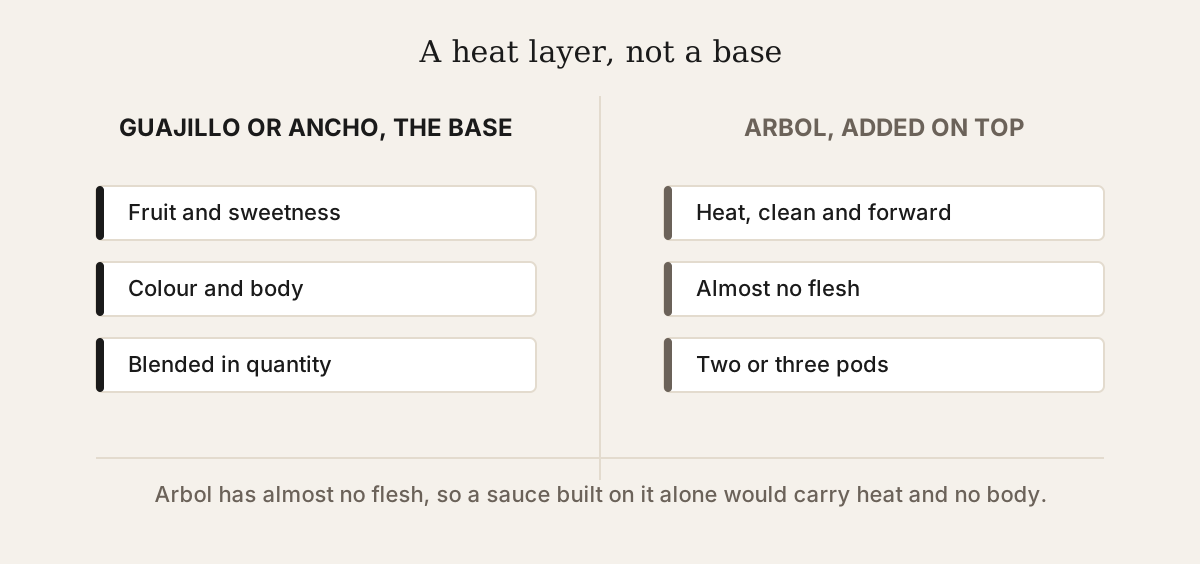
Chile de árbol is used where heat is the point and body is not, which is a narrower job than guajillo or ancho do and explains where it turns up.
It has almost no flesh. The pod is thin-walled and slender, so rehydrating a handful yields very little pulp and contributes nothing to the thickness of a sauce.
So it is a heat source rather than a base. Where guajillo and ancho are blended in quantity to build a sauce, árbol goes in as a few pods to set the heat level of one already built.
Toasted and blended dry it makes a salsa in minutes. Árbol, garlic, a little oil and salt, blended without rehydrating, is the standard taquería table salsa and needs nothing else.
It holds its colour well. A bright orange-red that survives blending, which is why árbol salsas look as hot as they are rather than going brown.
Whole pods fried in oil flavour the oil, which is then used as the cooking fat, a technique that distributes heat evenly without the pods appearing in the dish.
Substituting
Cayenne and pequín are the closest, and crushed red pepper flakes will do at a pinch.
Pequín is hotter and fruitier, and works in smaller quantity.
Cayenne is close on heat and flatter in flavour.
Crushed red pepper flakes give heat and no character, which is acceptable when árbol is a heat addition rather than the point.
Guajillo is not a substitute. It is a different order of heat entirely.
Storage
Airtight and dark, six to twelve months, and colour tells you when it has gone.
Thin pods dry out and go brittle, which is normal rather than a fault.
Freezing extends them.
They fade in light, so a clear jar on a windowsill is the fastest way to lose them.
Frequently asked questions
How hot is chile de árbol?
Roughly 15,000 to 30,000 Scoville units, which is several times hotter than a jalapeño and well below a habanero. It is a genuinely hot chile used in small numbers rather than a mild base chile used in handfuls.
Can I substitute cayenne?
Yes, for heat. Cayenne is close in intensity and flatter in flavour, missing the slight nuttiness and smoke of árbol. Where the chile is supplying heat to a sauce already built on guajillo or ancho, the substitution is barely noticeable.
Why does my salsa de árbol taste bitter?
Almost always because the chiles were over-toasted. Árbol is thin and scorches in a second or two, and burnt chile is bitter beyond correction. Toast briefly, watch constantly, and pull them the moment they smell fragrant.
Do I remove the seeds?
You can, and it reduces the heat considerably while keeping most of the flavour. For a table salsa many cooks leave them in. For adding heat to a larger sauce, seeding gives more control over how hot the finished dish becomes.
Is chile de árbol the same as cayenne?
They are different chiles with similar heat, both in the same species. Árbol carries a slightly nutty, smoky note and holds its bright red colour when dried. They substitute for one another reasonably well and are not the same variety.
The pairing
“Cucurrucucú Paloma”, Tomás Méndez, 1954, Mexico.
Regional. A huapango by a composer from Zacatecas, a state in the dry central north where this chile is grown and dried in the sun.
We write about seasoning preparations across Latin America, what separates the regional variants, and where to buy them in the United States.