Chile Piquín: The Tiny Wild One
A pea-sized chile that grows wild across northern Mexico and Texas, hot, fruity and fast-fading. What it is, why it is expensive, and how to use it.
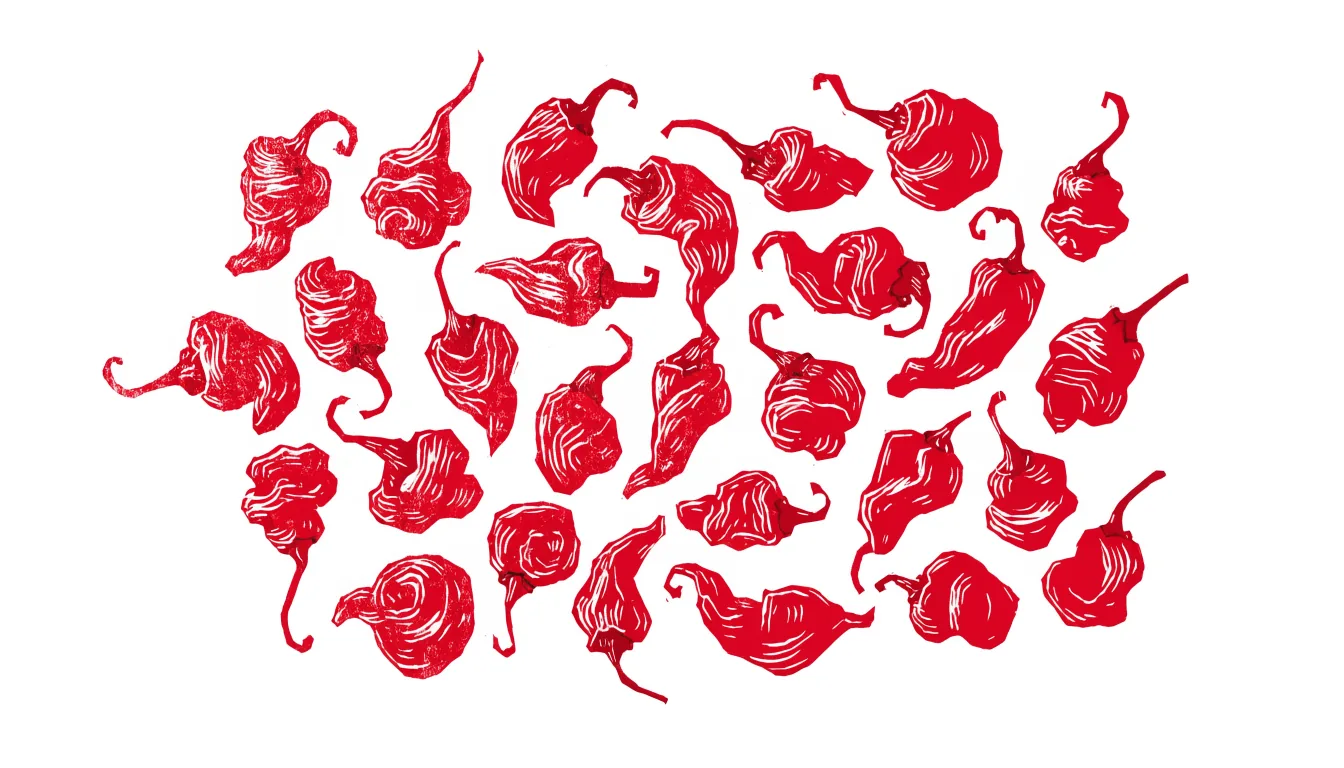
Chile piquín is a tiny wild or semi-wild chile, roughly the size of a pea, carrying sharp fruity heat that arrives fast and fades faster than most chiles.
It is picked by hand from wild plants across northern Mexico and the Texas borderlands, which is why a small bag costs what it does.
Coverage of Mexican ingredients on this site is researched rather than first-hand, written from published sources and supplier documentation.
What chile piquín is
Chile piquín is a small round or oval chile, red when ripe and dried, growing wild on a perennial shrub.
The pods are five to ten millimetres, which makes it the smallest chile in common Mexican use.
It is closely related to the chiltepín and the two names are frequently used interchangeably. Where a distinction is drawn, chiltepín is the rounder wild form and piquín the slightly elongated one.
Many plants are genuinely wild rather than cultivated, harvested from shrubs growing under trees in the northern scrub.
It is a perennial, unlike most cultivated chiles, and a single bush produces for years.
The name is thought to derive from pequeño, small.
What it tastes of
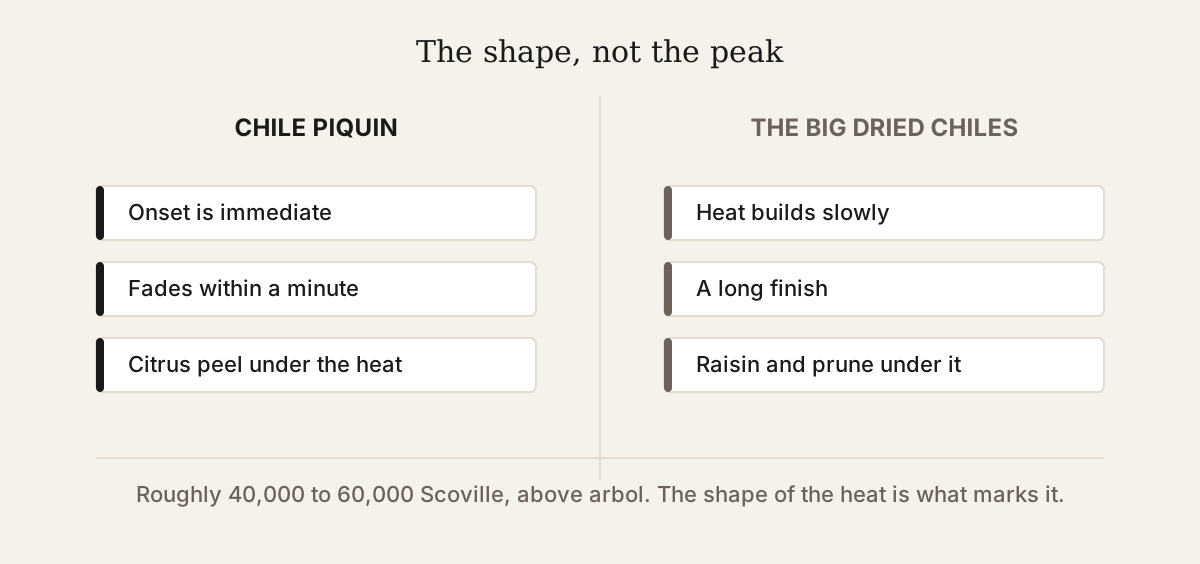
Chile piquín is intensely hot with a bright citrus and fruit note, and the heat leaves quickly.
Heat runs roughly 40,000 to 60,000 Scoville units, which puts it well above chile de árbol and in cayenne territory.
The onset is immediate rather than building.
It fades within a minute or two, which is unusual and is the characteristic people remember.
Underneath the heat there is real fruit, closer to citrus peel than to the raisin and prune of the big dried chiles.
Why it is expensive
Hand harvesting from wild plants makes chile piquín the most expensive chile by weight in most Mexican markets.
Wild plants do not fruit uniformly, so pickers return repeatedly over a season.
The pods are tiny, so a kilogram represents an enormous amount of picking.
Cultivation exists and has not displaced wild harvesting, partly because the wild fruit is preferred.
Prices per gram exceed the large dried chiles substantially, which surprises buyers expecting price to track size or fame.
Where it belongs
Chile piquín belongs crushed over food at the table, in salsas, in vinegars and in the fruit-and-chile snack tradition of northern Mexico.
Crushed as a table condiment is the most common use.
Sprinkled on fruit with lime and salt, which is the everyday northern Mexican street snack.
Salsas use it for clean sharp heat.
Infused vinegars and oils take whole pods.
It is rarely a cooking chile in the way ancho or guajillo are, being used to finish rather than to build.
Buying it
Buy small quantities, look for bright colour, and expect to pay per gram rather than per bag.
Bright red is fresh. Dull brown pods have been sitting.
Whole beats ground. Ground piquín loses its citrus note quickly and is easy to adulterate.
Checked on 13 August 2026, a United States search for the term returned spice retailers and reference material on the first page. Counting rule: a result counts as a seller when it offers chile piquin for purchase. Sellers were present on that rule, which describes that search on that date and is not a recommendation of any seller.
It is sold under several names, including chiltepin, chile del monte and bird pepper, and the last of those reflects that wild birds spread the seed.
Using it
Crush between the fingers rather than grinding, and use far less than instinct suggests.
One or two pods season a bowl of food.
Crush rather than chop. The pods are too small to cut usefully and crumble easily when dry.
Toasting is optional and brief. A second on a hot surface is enough and it burns almost instantly.
Wash your hands afterwards. At this heat level the capsaicin transfers readily.
Storage
Airtight, dark and dry, and it holds its heat longer than its aroma.
The citrus note fades first, within a few months.
Heat persists for a year or more.
Freezing preserves the aroma and is worth doing given the price.
Keep it whole. Crushed piquín loses what makes it distinctive very quickly.
Frequently asked questions
Is chile piquín the same as chiltepín?
The two names are used interchangeably in most contexts, and where a distinction is drawn, chiltepín refers to the rounder wild form and piquín to the slightly elongated one. Both are the same species growing wild across northern Mexico and the southwestern United States, and either name on a bag will get you the right chile.
How hot is chile piquín?
Roughly 40,000 to 60,000 Scoville units, which places it well above chile de árbol and in the range of cayenne. What distinguishes it is the shape of the heat rather than the peak: it arrives immediately and fades within a minute or two, where most chiles build more slowly and linger.
Why does such a small chile cost so much?
Because it is largely harvested by hand from wild plants that fruit unevenly across a season, and the pods are tiny. A kilogram represents a great deal of picking. Cultivated piquín exists and has not displaced the wild harvest, so prices per gram stay well above the large dried chiles.
Can I substitute something for chile piquín?
Cayenne is closest on heat and misses the citrus note. Chile de árbol is milder and nuttier. Thai bird chiles are close in size and heat and carry a different fruit character. None reproduces the fast-onset, fast-fade quality, which is much of what piquín is for.
What is the fruit and chile snack it is used in?
Sliced fruit, commonly mango, jicama, cucumber or watermelon, dressed with lime juice, salt and crushed piquín. It is standard street food across northern Mexico and the border region, and it is the context in which most people first encounter the chile.
The pairing
“El Querreque”, Trío Armonía Huasteca, 1957, Mexico.
Regional. A huapango from the Huasteca in Mexico’s northeast, the scrubland region where this chile grows wild under the trees.
We write about seasoning preparations across Latin America, what separates the regional variants, and where to buy them in the United States.