Chilean Pebre: What It Is and When It Is Used
The Chilean table finish that appears at almost every meal. What goes in it, the versions that carry ají and the versions that do not, and how it differs from chimichurri.
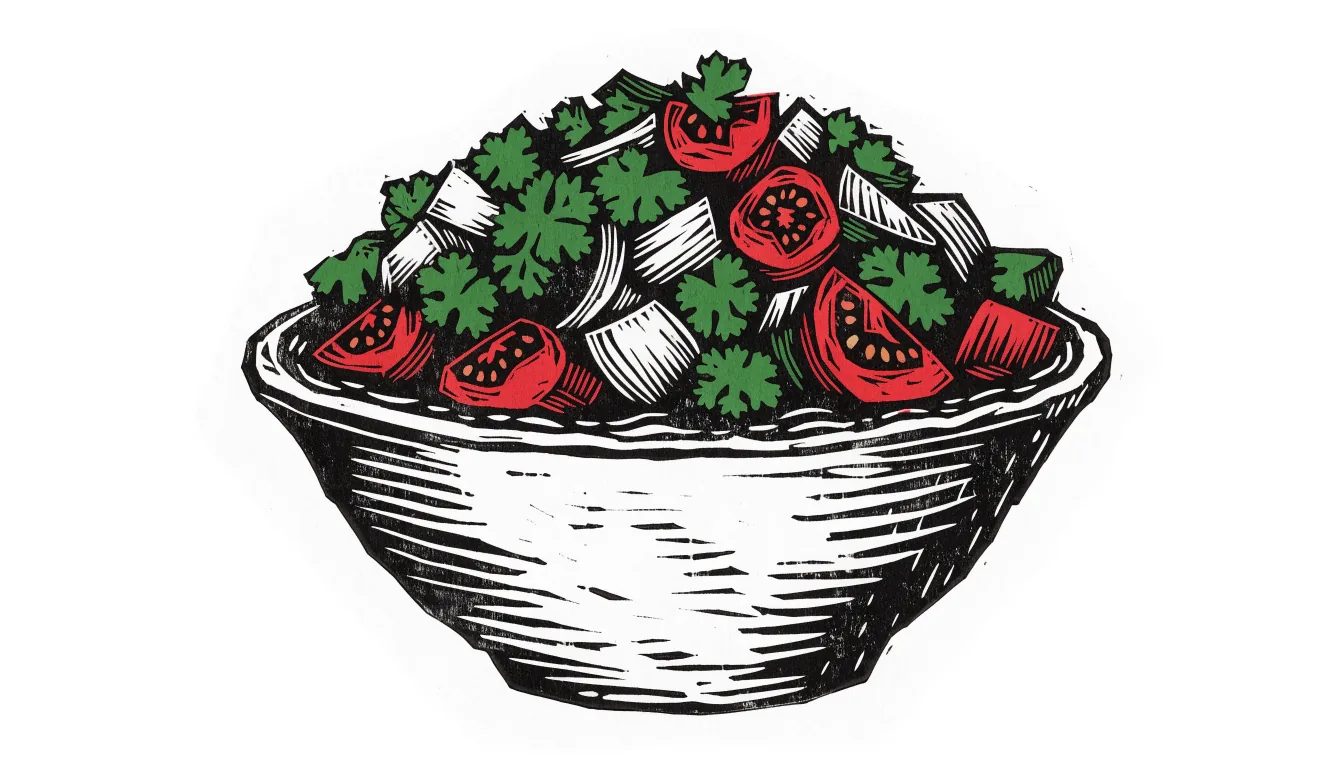
Pebre is a raw Chilean condiment of finely chopped onion, coriander, tomato and ají, dressed with oil, vinegar and water, and it sits on the table at almost every Chilean meal rather than belonging to any one dish. It is a finish in the strict sense: never cooked, always added by the eater.
Where chimichurri is built around dried oregano and parsley, pebre is built around fresh coriander and raw onion, and the two are not variations of each other despite occupying the same position at the table.
What pebre actually is
Pebre is raw onion and fresh coriander chopped fine, usually with tomato and ají, loosened with oil, vinegar and a little water, and salted. Everything is raw and everything is cut rather than blended.
The water is the detail most non-Chilean recipes drop, and it matters. Pebre is meant to be loose and spoonable rather than thick, and a small amount of water carries the seasoning without adding more oil or more acid than the balance can take.
The onion is usually rinsed or briefly soaked before it goes in, which pulls the harshest edge off it while leaving the crunch. That step is what separates a pebre that tastes fresh from one that tastes aggressively of raw onion.
Its position at the table
Pebre is not tied to a dish. It appears with bread before a meal, alongside grilled meat, with empanadas, on a plate of beans. Its job is to add acid, freshness and a little heat to whatever is in front of you, which is why a Chilean table often carries it by default rather than by request.
The versions, and what actually varies
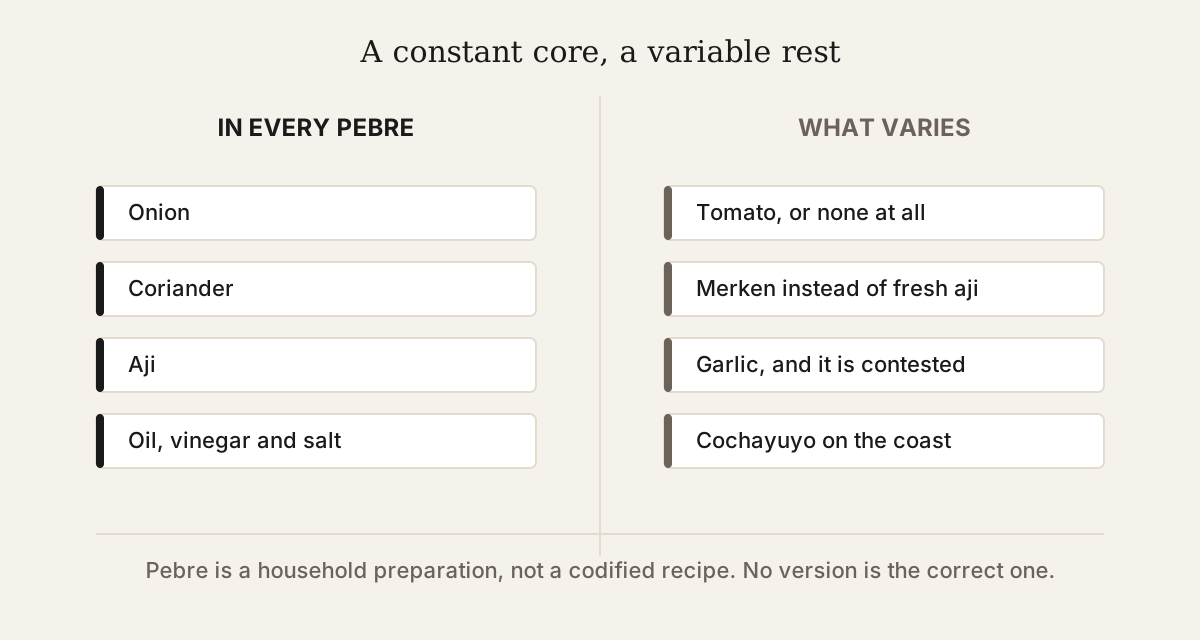
The variation sits in whether tomato is present, how much ají goes in, and whether the ají is fresh or dried. The coriander and onion are constant.
Pebre with tomato is the most familiar version outside Chile and the most common in summer. Finely diced tomato adds sweetness and more liquid, and the result is closer to a fresh salsa in appearance while remaining distinctly Chilean in seasoning.
Pebre without tomato is at least as common inside Chile and is the older form. Onion, coriander, ají, oil, vinegar and water. It is sharper and more direct, and it keeps better because there is less water from the fruit.
Ají chileno versions carry fresh green or red ají chopped in. Merkén versions use the smoked dried blend instead, which changes the character substantially: less bright heat, more smoke and depth. A pebre made with merkén is a different experience and worth trying if you have the blend.
Garlic is optional and contested. Some households include it, many do not, and its absence is not an error.
On proportions, since sources rarely state any. Onion and coriander are roughly equal by volume in most versions, with tomato added to taste where it is used at all, and the oil, vinegar and water together making just enough liquid to let a spoon move through it. Chileans do not measure this and neither should you after the first attempt.
How it differs from chimichurri
Pebre and chimichurri occupy the same position and share almost nothing in their ingredient lists, which is the clearest way to see that position and composition are separate things.
Chimichurri is parsley, dried oregano, garlic and vinegar in oil, with the dried aromatic doing much of the work. Pebre is fresh coriander, raw onion and fresh ají, with the raw vegetable doing the work and the herbs staying fresh throughout.
Practically, the difference shows up in what they suit. Chimichurri cuts fat, which is why it belongs with grilled beef. Pebre refreshes, which is why it works with bread, beans and lighter grilled food as readily as with meat.
Neither substitutes for the other well. Using pebre where a recipe expects chimichurri leaves the dish without the oregano backbone, and using chimichurri where pebre belongs makes the plate heavier rather than brighter.
Judging a jarred one
Read for water position and for whether the coriander is fresh or dried, because a jarred pebre with dried coriander is a fundamentally different product.
Fresh coriander does not survive jarring well, which is the honest problem with commercial pebre. Producers solve it by using more vinegar, by dehydrating the herb, or by pasteurising, and all three change the preparation. A jarred pebre is therefore a convenience version rather than a preserved version of the fresh one.
What to look for anyway. Coriander named as fresh or as a paste rather than as dried flake. Onion high in the list. Water and thickener low or absent. A short list overall.
Checked on 13 August 2026, the first page of United States results for chilean pebre returned recipe publishers rather than sellers, which describes that search on that date. The practical consequence is that pebre is a preparation to make rather than to buy in the United States, and it takes about ten minutes.
Making it
Chop everything fine and by hand, rinse the onion, then dress and rest it for twenty minutes before serving. The knife work is the whole technique.
Fineness matters more here than in most preparations, because pebre is eaten by the spoonful on bread and a coarse chop makes it awkward. Aim for pieces small enough that a spoonful carries all the components at once.
Rest it, but not for too long. Twenty to thirty minutes lets the onion soften and the salt draw out the tomato, and beyond a few hours the coriander begins to go limp and dark. Pebre is at its best the day it is made, which is the opposite of chimichurri.
What to serve it with, and the one pairing that surprises people
Pebre goes with bread first and with almost everything after, and the pairing people find unexpected is that it works better on plain starch than on rich meat.
The classic opening is bread and pebre before a meal, which is close to universal in Chilean restaurants. From there it belongs beside grilled meat, with empanadas, on boiled or roast potatoes, over beans, and alongside fish.
The surprise is potatoes and beans. Pebre is often described as a meat condiment because of where visitors encounter it, but its acid and freshness do more work against plain starch than against fat, where a chimichurri or a chilli oil would serve better. A bowl of beans with pebre spooned over is a more complete demonstration of the preparation than a steak is.
Where it works least well is anything already acidic. A dish finished with lemon or vinegar does not want pebre as well, and the two acids flatten each other rather than compounding.
Quantity is a real variable. Pebre is used generously in Chile, by the spoonful rather than the drop, which is worth knowing if you have calibrated your expectations on hotter condiments used sparingly.
The versions, and which one is standard
Pebre exists in several household versions and the disagreement about which is standard is itself part of the picture.
The plainest version is onion, coriander, ají, oil, vinegar and salt. No tomato. Many Chilean cooks consider this the real one.
The tomato version is at least as common and is what most restaurants serve, closer in appearance to a salsa.
Pebre de cochayuyo replaces the fresh elements with rehydrated seaweed and belongs to the coast.
None of these is the correct one. Pebre is a household preparation rather than a codified recipe, and a Chilean kitchen’s version is the one that kitchen makes.
Storage
Refrigerated, pebre keeps two to three days, and the tomato version keeps least well because the fruit continues to release water.
There is no useful way to extend it. Freezing destroys the raw onion and the fresh coriander entirely. Since the preparation takes ten minutes and its ingredients are ordinary, making a small quantity often is the sensible approach.
A pebre that has separated is not spoiled; stir it. A pebre where the coriander has gone dark and slippery is past its best.
Frequently asked questions
Is pebre spicy?
Pebre varies by household and by how much ají goes in, and it is usually mild to moderate rather than fierce. Many versions carry very little heat and function mainly as a fresh, acidic condiment. If you are making it, add the ají last and to taste, since the heat of fresh pods is unpredictable.
Is pebre the same as salsa?
No, though the tomato version looks similar. Pebre is built on coriander and onion with ají as a secondary component, dressed with oil, vinegar and water, and its balance is acidic and herbal rather than tomato-led. A fresh Mexican salsa is a different preparation from a different tradition, and reading pebre as a salsa variant misses what it is doing.
Can I use dried coriander?
No. Dried coriander leaf has almost none of the character of the fresh herb, and pebre is built around that character. Toasted ground coriander seed is a different ingredient again and does not substitute either. If you cannot get fresh coriander, make something else.
What is pebre served with?
Almost anything savoury, and most characteristically with bread at the start of a meal. It is standard alongside grilled meat, empanadas, beans and boiled potatoes. Because it is a table condiment rather than a dish component, there is no fixed pairing and no wrong one.
Can I make pebre with merkén instead of fresh ají?
Yes, and it is a recognised version rather than an improvisation. Merkén brings smoke and a rounder heat in place of the bright sharpness of a fresh pod, which makes the pebre deeper and less refreshing. Use less than you would of fresh ají, since merkén also carries salt.
The pairing
“Gracias a la Vida”, Violeta Parra, 1966, Chile.
Lyrical. The song is a catalogue of ordinary things named one at a time and found sufficient, which is close to what pebre does on a Chilean table: onion, coriander, ají, and nothing that needed inventing.
We write about South and Central American seasoning preparations, what separates the regional variants, and where to buy them in the United States.