Chipotles in Adobo: What Is In the Tin and How to Use It
Smoked jalapeños stewed in a vinegar and chile sauce. The two chipotle types, why the sauce matters as much as the chiles, and how to store an opened tin.
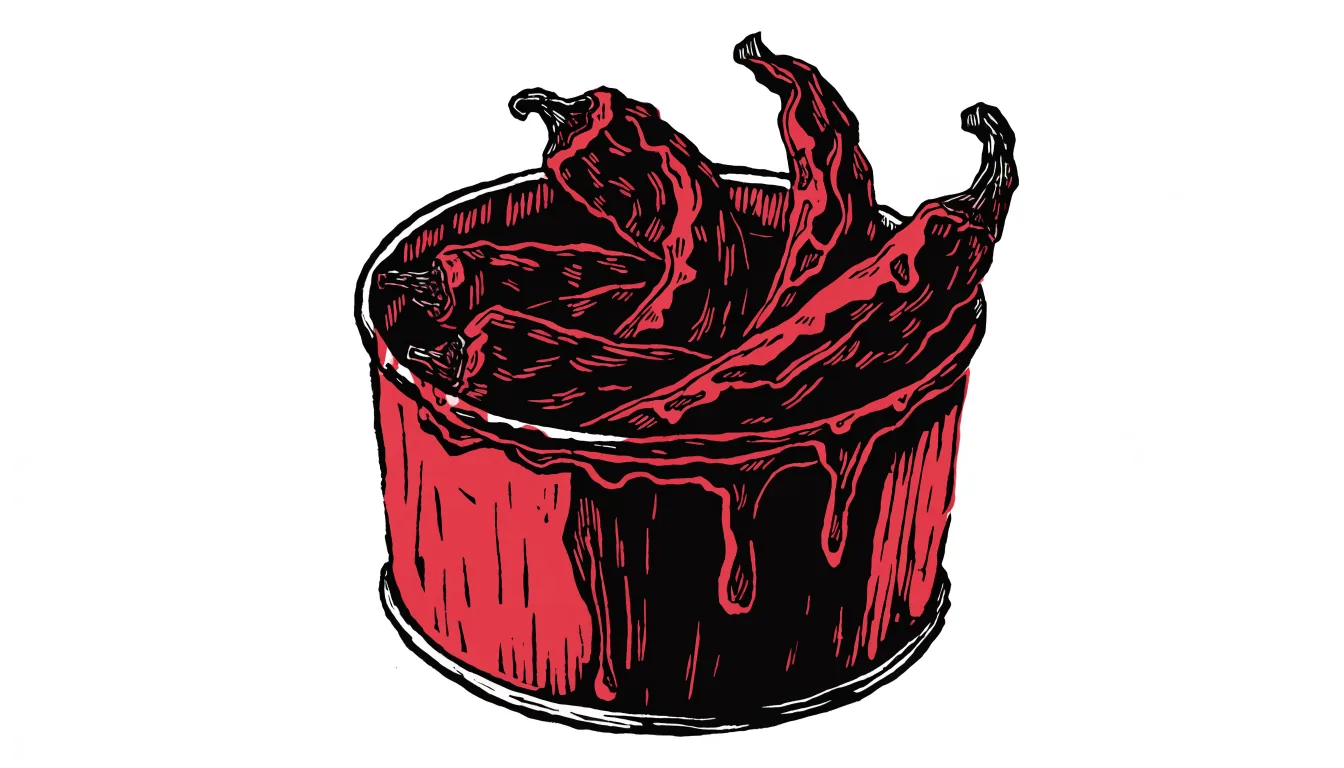
Chipotles in adobo are smoke-dried jalapeños rehydrated and stewed in a sauce of vinegar, tomato, garlic and ground chiles, sold in small tins.
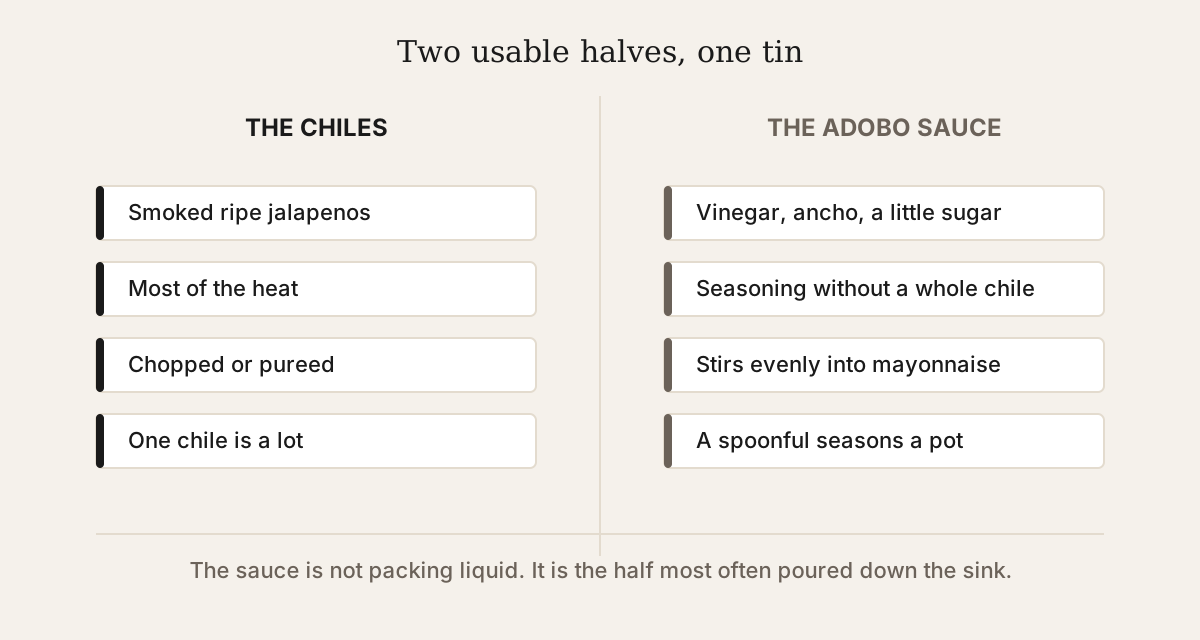
The sauce is not packing liquid. It is a seasoned preparation in its own right and is frequently the more useful half of the tin.
Coverage of Mexican preparations on this site is researched rather than first-hand, written from published sources and supplier documentation.
What a chipotle is
A chipotle is a jalapeño that has been ripened to red and then smoke-dried, and it is a process rather than a variety.
The jalapeño is left on the plant to redden rather than picked green, which concentrates its sugars.
It is then dried over smoke, traditionally wood smoke, which is where the flavour that defines a chipotle comes from.
Two named types exist. Chipotle meco is tan or grey-brown, smokier and drier. Chipotle morita is smaller, darker red, smoked for less time and fruitier.
Morita is what goes into most tins, and meco is more often sold dry.
Any red jalapeño can become a chipotle, so the name describes what was done to the chile, not a distinct cultivar.
What the adobo sauce is
The adobo is a cooked sauce of vinegar, tomato, garlic, onion and ground dried chiles, and it is a seasoning rather than a brine.
Vinegar is the backbone and gives the tin its characteristic sharpness.
Ancho or guajillo is usually ground into it, which is why the sauce tastes of chile beyond the chipotles sitting in it.
Sugar or piloncillo appears in many formulas, balancing the vinegar.
It is the half most often wasted, drained down the sink by cooks treating the tin as a jar of chiles in liquid.
A spoonful of the sauce alone seasons a pot of beans, a marinade or a mayonnaise without adding a whole chile’s heat.
How to use the tin
Use the chiles for heat and smoke, the sauce for background seasoning, and treat both as concentrated.
Chop or purée the chiles rather than adding them whole unless you want a pocket of intense heat.
Scrape the seeds out if you want the smoke without the full heat, since most of the capsaicin sits in the seeds and veins.
One chile is a lot. A single chipotle will season a pot of chilli or a pound of meat noticeably.
Purée the whole tin and keep it as a paste, which is the most practical form for a cook who uses it occasionally.
It goes in during cooking, not at the table.
Where it belongs
Chipotles in adobo belong in braises, marinades, beans, salsas and anywhere a dish wants smoke and heat at the same time.
Tinga is the clearest single use, shredded chicken or pork braised in tomato with chipotle, and it is the dish most Americans first meet the ingredient through.
Adobo marinades for grilled meat use the chiles puréed with citrus and garlic.
Beans and lentils take a spoonful of the sauce rather than a whole chile.
Salsas built on roasted tomato take one chipotle for depth without turning the salsa into a chipotle salsa.
Mayonnaise, crema and dressings take the sauce, which disperses evenly where a chopped chile would not.
It is not traditional in mole, where the dried chiles are chosen for fruit and depth rather than smoke.
Making it at home
Chipotles in adobo are made by rehydrating dried chipotles and simmering them in a sauce of vinegar, tomato, garlic and ground dried chile until thick.
Start from dried chipotles, meco or morita, and rinse them.
Rehydrate in hot water for twenty to thirty minutes until pliable, and keep some of the soaking liquid.
Build the sauce separately. Toast and rehydrate a few ancho or guajillo chiles, then blend with garlic, onion, tomato, vinegar, a little piloncillo or brown sugar, salt and oregano.
Simmer the chipotles in the sauce for thirty to forty-five minutes over low heat until the chiles are soft and the sauce has thickened to a coating consistency.
Adjust the vinegar at the end. The sharpness should be present but not dominant, and it mellows further over a day in the refrigerator.
It improves after resting. A batch made and used immediately tastes noticeably rawer than the same batch two days later.
Substituting, honestly
There is no clean substitute for chipotles in adobo, and the nearest approximations cover either the smoke or the heat rather than both.
Dried chipotle plus a little vinegar gets closest, since it carries the same chile, and it lacks the tomato and aromatics the adobo supplies.
Chipotle powder gives smoke and heat and no body, and it is much easier to overdo. Start at a quarter of what a recipe asks for in whole chiles.
Smoked paprika plus a fresh hot chile covers the two components separately for a cook who has neither chipotle form. It is an approximation and not an equivalence, and it will not taste Mexican.
Do not substitute plain jalapeño. A fresh green jalapeño has none of the smoke, none of the concentration and none of the ripened sweetness, and it is a different ingredient entirely despite being the same plant.
Storage
An opened tin should be transferred out of the tin immediately and keeps a week or two refrigerated, or months frozen.
Do not store it in the opened tin. The metal reacts with the acid.
Refrigerated in a glass jar it keeps one to two weeks.
Freeze in single-chile portions on a lined tray, then bag them. This is the standard solution to the fact that a recipe wants one chile and a tin holds a dozen.
Puréed and frozen in an ice cube tray works equally well and is easier to portion.
Buying it
Tinned chipotles in adobo are stocked by mainstream American supermarkets as well as Latin grocers, and the brands differ mostly in heat and sweetness.
Checked on 13 August 2026, a United States search for the term returned grocery retailers and recipe publishers on the first page. Counting rule: a result counts as a seller when it offers tinned chipotles in adobo for purchase. Sellers were present on that rule, which describes that search on that date and is not a recommendation of any seller.
Mexican brands tend to be hotter and less sweet than the versions formulated for American supermarkets.
Tin sizes are small, typically around 200 grams, and a tin holds far more than a single recipe needs.
Dried chipotle is a different product and is not interchangeable with the tinned preparation, since it carries none of the adobo.
Morita against meco, and which tin you have
Two different smoked jalapeños are sold as chipotle, and which one is in the tin changes the result noticeably.
Chipotle morita is the smaller, darker, redder pod, smoked for less time and retaining more fruit. Nearly all canned chipotle in adobo sold in the United States is morita.
Chipotle meco is larger, tan-grey and smoked far longer, giving a drier, more intensely smoky and less fruity pod. It is mostly sold loose and dried rather than canned.
The tin rarely says which. If it is canned in adobo it is almost certainly morita, so a recipe developed around meco will read as sweeter and less smoky.
Substituting is not symmetrical. Morita can stand in for meco with a loss of smoke; meco standing in for morita will dominate a sauce.
Frequently asked questions
Are chipotles a type of chile plant?
No. A chipotle is a jalapeño that has been ripened to red and smoke-dried, so it is a preparation rather than a variety. Two named styles exist, meco and morita, and they differ in how long they were smoked rather than in the plant they came from.
Can I use the sauce on its own?
Yes, and it is one of the most useful things in the tin. The adobo is a cooked sauce of vinegar, tomato, garlic and ground chiles, and a spoonful seasons beans, a marinade or a dressing without the full heat of a whole chipotle. Draining it away wastes half of what you bought.
How hot are they?
Hotter than a fresh jalapeño, because drying concentrates them, and moderate by the standards of the chile world. The heat sits mainly in the seeds and veins, so scraping a chile out reduces it substantially while keeping the smoke, which is usually the reason you wanted it.
How do I store an opened tin?
Take the contents out of the tin straight away, because the metal reacts with the acid in the adobo. Refrigerated in a glass jar it keeps one to two weeks. For longer, freeze the chiles individually or purée the whole tin and freeze it in an ice cube tray, which solves the problem of a recipe wanting one chile from a tin of twelve.
What is the difference between morita and meco?
Smoking time and appearance. Morita is smaller, dark red and smoked for less time, leaving it fruitier and slightly softer. Meco is tan to grey-brown, smoked longer, drier and more intensely smoky. Morita is what most tins contain, and meco is more commonly sold as a dried chile.
The pairing
“México Lindo y Querido”, Jesús Monge Ramírez, 1945, Mexico.
Regional. A ranchera that functions as an unofficial anthem, from the country where the chipotle is an everyday pantry item rather than a speciality.
We write about seasoning preparations across Latin America, what separates the regional variants, and where to buy them in the United States.