Chirmol: The Guatemalan and Salvadoran Charred Tomato Relish
Roasted tomato chopped with onion, coriander and lime. The one finish on this site with a cooked component, and why that does not make it a base.
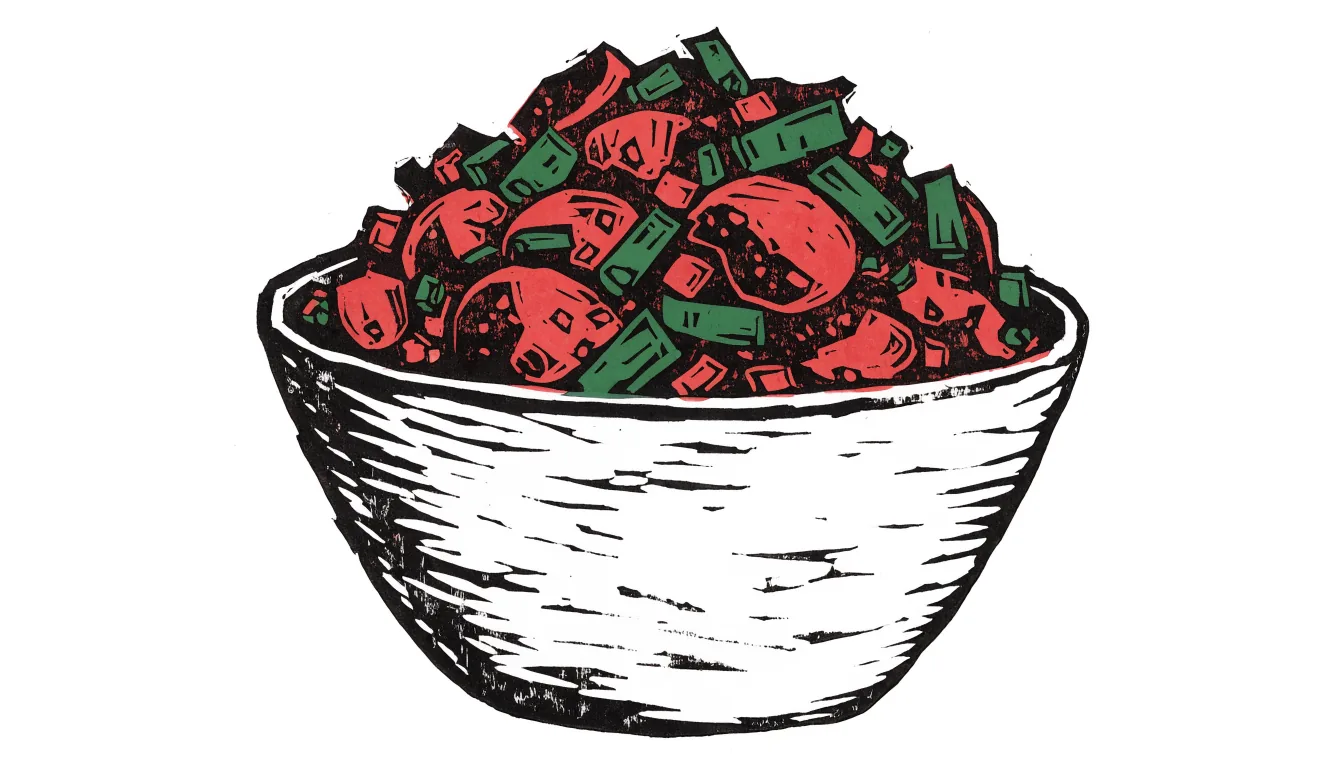
Chirmol is a Guatemalan and Salvadoran table relish of charred or roasted tomato chopped with onion, coriander and lime, served alongside grilled meat. It is the one preparation in the finish family with a genuinely cooked component, and it is still a finish.
That apparent contradiction is worth resolving first, because it is the clearest test of what the three families actually mean.
What chirmol actually is
Chirmol is tomato charred over direct heat or on a comal, then chopped or lightly crushed with white onion, coriander, lime and salt, sometimes with a little chile. It is served in a bowl beside grilled meat rather than on it.
The char is the defining step. Tomatoes are blistered until the skins blacken in patches, which concentrates them and adds a smoky bitterness that raw tomato cannot supply.
Everything after the char is raw. Onion, coriander and lime go in uncooked, so the finished relish is a mixture of a cooked element and raw ones.
It is chopped rather than blended, leaving visible pieces, in the same register as ají picado.
Mint appears in some Guatemalan versions and is the component most likely to surprise anyone approaching it from the Mexican salsa direction.
Why it is a finish and not a base
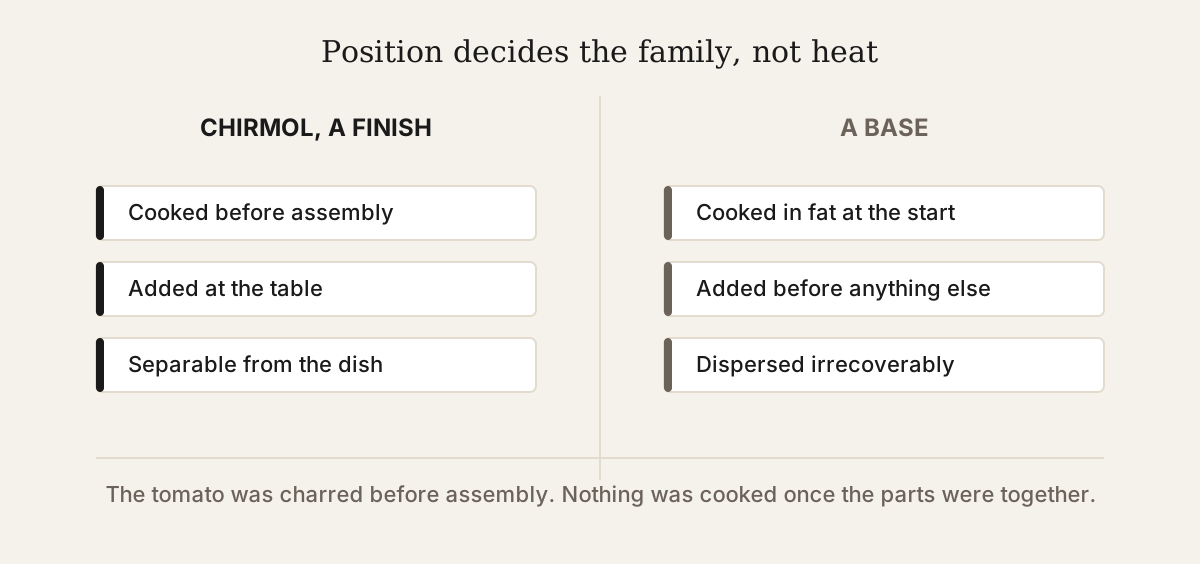
Apply the three tests the families rest on and chirmol answers as a finish on all three.
Was it cooked into the dish? No. The tomato was cooked separately, before the relish was assembled, and nothing was cooked once the components were together.
When is it added? At the table, by the eater, after the food is cooked.
Is it separable? Yes. It sits beside or on the meat and can be pushed aside.
A base fails all three in the opposite direction, being cooked in fat at the start and dispersed irrecoverably through the dish.
So the family is defined by position rather than by whether heat was ever involved, which is what chirmol usefully demonstrates. Charring an ingredient before assembling a raw relish does not convert it into a base.
How it relates to Mexican salsas
Chirmol sits close to a Mexican salsa asada or salsa roja in method and is a distinct preparation, and both traditions are in border on this site.
The shared technique is the char. Roasting tomato and sometimes chile on a comal before making a table sauce is common across the region and is not exclusive to any one country.
The differences are in what joins it. Chirmol leans on lime and fresh coriander with the tomato left chunky, and the Guatemalan versions carrying mint have no close Mexican parallel.
Chile is optional in chirmol and frequently absent or minimal, where most Mexican roasted salsas are built around it. Chirmol is a tomato relish that may carry chile rather than a chile sauce carrying tomato.
Naming overlaps regionally. Chirmol, chimol and chismol all appear for closely related preparations across Guatemala, El Salvador and Honduras, and the spellings do not track a consistent difference in the recipe.
Making it
Char the tomatoes until blistered, let them cool enough to handle, then chop with everything else and dress with lime and salt.
Char over direct heat. A dry comal, a grill or a gas flame all work. The skins should blacken in patches rather than uniformly, and burning them through makes the relish acrid.
Do not peel them. The charred skin is part of the flavour and chopping distributes it.
Let them cool before chopping, or the residual heat will wilt the coriander and soften the onion, which turns the relish flat.
Dress at the end and rest it briefly. Twenty minutes is enough.
Keep it chunky. A blended chirmol becomes a soup-like sauce and loses the texture that makes it a relish.
Buying it
Chirmol is a made preparation and there is very little commercial presence for it in the United States.
Checked on 13 August 2026, the first page of United States results for chirmol returned recipe publishers and reference material rather than sellers, which describes that search on that date rather than recommending any seller. Counting rule: a result counts as a seller when it offers the finished relish for purchase. On that rule there were none on the first page.
Nothing in it needs specialist sourcing. Tomato, onion, coriander and lime are in any supermarket, which makes chirmol one of the most accessible preparations on this site for an American cook.
Central American grocers are the place to look if you want a specific regional chile or the fresh mint variant.
Storage
Refrigerated, two to three days, and it is best the day it is made.
The charred tomato holds up better than raw would, so chirmol keeps slightly longer than a pebre, and the coriander is still the limiting factor.
It does not freeze. The raw onion collapses and the herb turns to sludge.
Liquid will separate as it sits. Stir rather than discard, since that liquid carries the char flavour.
Frequently asked questions
Is chirmol the same as pico de gallo?
No. Chirmol is built on charred tomato, which gives it a smoky depth that a raw preparation cannot have, and it is Guatemalan and Salvadoran rather than Mexican. Pico de gallo is entirely raw and balanced between tomato, onion, coriander and chile. Both are chopped table relishes and the char is the clearest difference.
Why is chirmol a finish if the tomato is cooked?
Because the family is defined by position rather than by whether heat was ever applied. The tomato is charred separately before assembly, nothing is cooked once the components are together, it is added at the table by the eater and it stays separable from the dish. A base fails all three of those tests in the opposite direction.
Do I have to char the tomatoes?
Yes, in the sense that the char is what makes it chirmol rather than a chopped tomato salad. The blistering concentrates the tomato and adds a smoky bitterness that raw fruit cannot supply. Charring in patches rather than burning through is the target, since fully blackened skins make the relish acrid.
Is chirmol spicy?
Often not, and where chile appears it is usually modest. Chirmol is a tomato relish that may carry chile rather than a chile sauce carrying tomato, which is the reverse of most Mexican roasted salsas. Household versions vary and adding a fresh chile is entirely normal.
What is the difference between chirmol, chimol and chismol?
Mostly spelling and region, across Guatemala, El Salvador and Honduras, and the variants do not track a consistent difference in the recipe. All describe a chopped relish built on tomato with onion, coriander and lime. Any recipe found under one spelling will generally work under another.
The pairing
“Luna de Xelajú”, Paco Pérez, 1944, Guatemala.
Regional. A vals written about Quetzaltenango that functions as an unofficial second anthem, from the country where this relish is domestic and rarely remarked on.
We write about seasoning preparations across Latin America, what separates the regional variants, and where to buy them in the United States.