Colombian Hogao: The Two-Ingredient Base Everything Sits On
Tomato and long onion cooked down in oil. What makes it Colombian rather than generic, how long it actually takes, and how to judge a jarred one.
Hogao is Colombian tomato and long onion cooked slowly in oil until both collapse, and its defining quality is restraint: it is the narrowest of the four mainland bases and it is built to sit under a dish without arguing with it. Two vegetables, one fat, and a great deal of patience.
The comparison across the four bases is covered separately. This page is about hogao on its own terms, because it is the one most people meet first and the one most often rushed.
What hogao actually is
Hogao is tomato and cebolla larga, the long green onion, cooked in oil over low heat until the tomato has broken down completely and the mixture has darkened and thickened. Salt, and in many households a little cumin and garlic.
The onion is the part that is usually got wrong outside Colombia. Cebolla larga is a long green onion, closer to a spring onion than to a bulb onion, and it brings a mild grassy sweetness rather than the sulphurous bite of a white or yellow onion. Substituting a bulb onion produces something perfectly edible that does not taste like hogao.
The tomato should be ripe and is usually peeled, or at least chopped fine enough that the skins disappear into the mixture. Colombian cooks frequently grate the tomato, which skips the peeling entirely.
Nothing else is required. A recipe calling for peppers, carrot, celery, stock or herbs has drifted toward a generic soffritto.
Why restraint is the point
Hogao is designed to disappear. That is a deliberate property rather than a limitation, and it explains most of what separates it from its neighbours.
A Venezuelan sofrito carries ají dulce and reads more aromatic. A Peruvian aderezo is cooked down hard with ají paste and is dense enough to stand as a flavour in its own right. Hogao is the quietest of them, and that is why it turns up under almost everything in Colombian cooking rather than being reserved for particular dishes.
The practical consequence. If your hogao tastes like a distinct sauce when you eat it from the spoon, it is probably fine, and if it dominates the finished dish, there is too much of it or it was seasoned as though it were a sauce.
How long it takes, honestly
Twenty-five to forty minutes over low heat, which is considerably longer than most written recipes suggest and is the single most common reason a homemade hogao disappoints.
The sequence is oil first, then the onion until it has softened and released its water, then the tomato, then a long slow reduction. Garlic, where used, goes in near the end because it burns first.
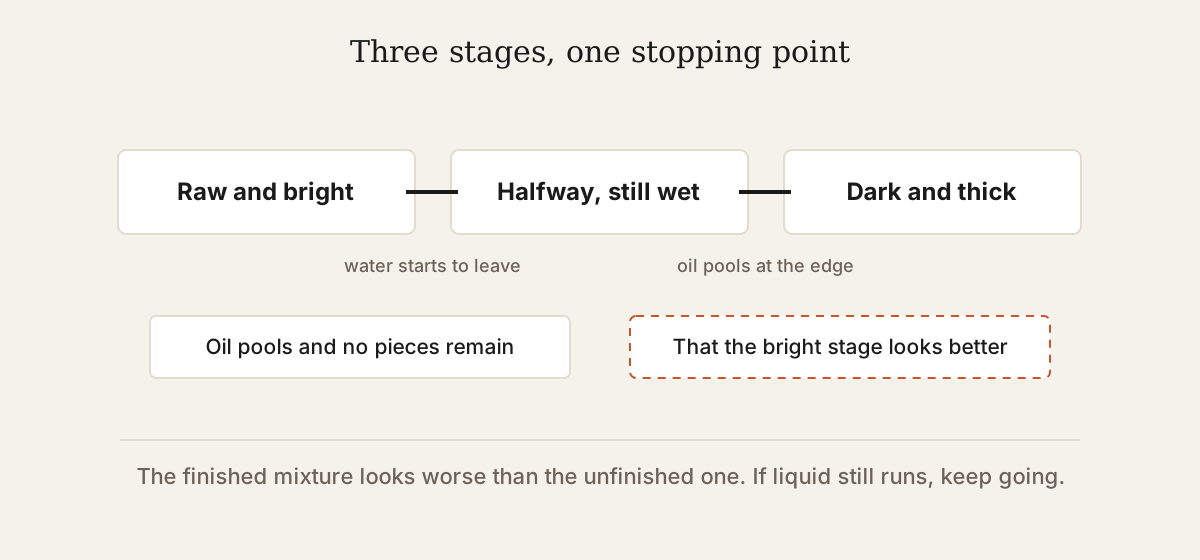
The finished mixture looks worse than the unfinished one. It is darker, thicker and duller in the pan, and the oil has separated slightly and taken on colour. An attractive bright red hogao is an unfinished one.
Three signals it is done. The mixture briefly holds a shape when pushed aside. Oil has pooled at the edges carrying colour. No individual pieces of onion or tomato remain identifiable.
If liquid still runs freely, keep going. Adding a splash of water and continuing is better than raising the heat.
How to judge a jarred one
Read the first three ingredients and check where the oil sits, because a jarred hogao that skimped on fat cannot have been cooked properly.
Tomato and onion should lead, with oil high enough to have done the work. A jar leading with water has been extended.
Look for cebolla larga or green onion named specifically. A jar listing only onion has probably used a bulb onion, which is cheaper and is not the same preparation.
Thickener is the signal to avoid. A properly reduced hogao is thick because the water left, not because starch was added.
Checked on 13 August 2026, the first page of United States results for colombian hogao returned Colombian recipe sites and a Latin food retailer alongside reference material, which describes that search on that date rather than recommending any seller. The practical reading is that hogao is better served by English-language sources than most preparations on this site, and that a jarred product does exist commercially.
What to do with it
Hogao goes under, into and over a very wide range of Colombian food, and the same jar does all three jobs.
It is spooned over arepas, patacones and yuca. It goes into beans, rice and soups. It is the base under stewed meats. On the coast it turns up beside fried fish.
A spoonful is usually enough. Because it is concentrated and because it was built to be quiet, a heavy hand makes the dish taste of hogao rather than of what the hogao was supporting.
It is also the easiest of the four bases to keep on hand, which is most of why it is used so widely. A batch made on a Sunday covers a week of cooking with no further thought.
Storage
Refrigerated in a sealed jar under a thin film of its own oil, about a week. Frozen in single-dish portions, several months with very little loss.
Hogao freezes better than almost anything else on this site because it has already been cooked and reduced, so there is little fresh water left to damage. Ice cube trays are the practical format.
A hogao that smells sharp or fermented rather than sweet has gone. Darkening on its own is normal and is not a spoilage sign.
Frequently asked questions
What onion should I use for hogao?
Cebolla larga, the long green onion, which is closer to a spring onion than to a bulb onion. It brings a mild grassy sweetness that a white or yellow onion does not. If you cannot find it, spring onions including their green parts are the nearest substitute, and a bulb onion will make something good that is not hogao.
How is hogao different from sofrito?
They are the same kind of preparation with different aromatics, and hogao is the narrower of the two. Hogao is tomato and long onion in oil. The Venezuelan sofrito adds ají dulce, which brings a perfume tomato and onion alone do not have. Note that in United States search results the word sofrito usually returns Puerto Rican or Dominican versions, which are a separate tradition again.
Can I make hogao with canned tomatoes?
Yes, hogao can be made with canned tomatoes, and it works well, particularly out of season when fresh tomatoes are pale and watery. Drain them first so you are not spending twenty minutes evaporating packing liquid. The result is slightly deeper and less fresh than a version made with ripe fresh tomato, which is a fair trade in winter.
Why is my hogao watery?
Almost always because it was stopped too early. Hogao is finished when the water has left and the oil has separated slightly, which takes twenty-five to forty minutes over low heat rather than the ten most recipes suggest. Raising the heat to speed it up fries the mixture instead of reducing it, which is a different and worse outcome.
Is hogao spicy?
No. Hogao carries no chilli in its standard form, and heat in Colombian cooking generally arrives separately through an ají picado at the table rather than through the base. A hogao recipe with chilli in it has borrowed from somewhere else.
The pairing
“La Piragua”, José Barros, 1969, Colombia.
Regional. Barros wrote from the Magdalena river country where this base is domestic rather than notable, and the song has the same quality hogao does: it sits underneath a great deal of Colombian life without ever announcing itself.
We write about seasoning preparations across Latin America, what separates the regional variants, and where to buy them in the United States.