Costeño Chile: The Coastal Chile in Two Colours
A thin-skinned Oaxacan and Guerrero chile sold as red or yellow, brighter and hotter than guajillo. What each colour does and where to find them.
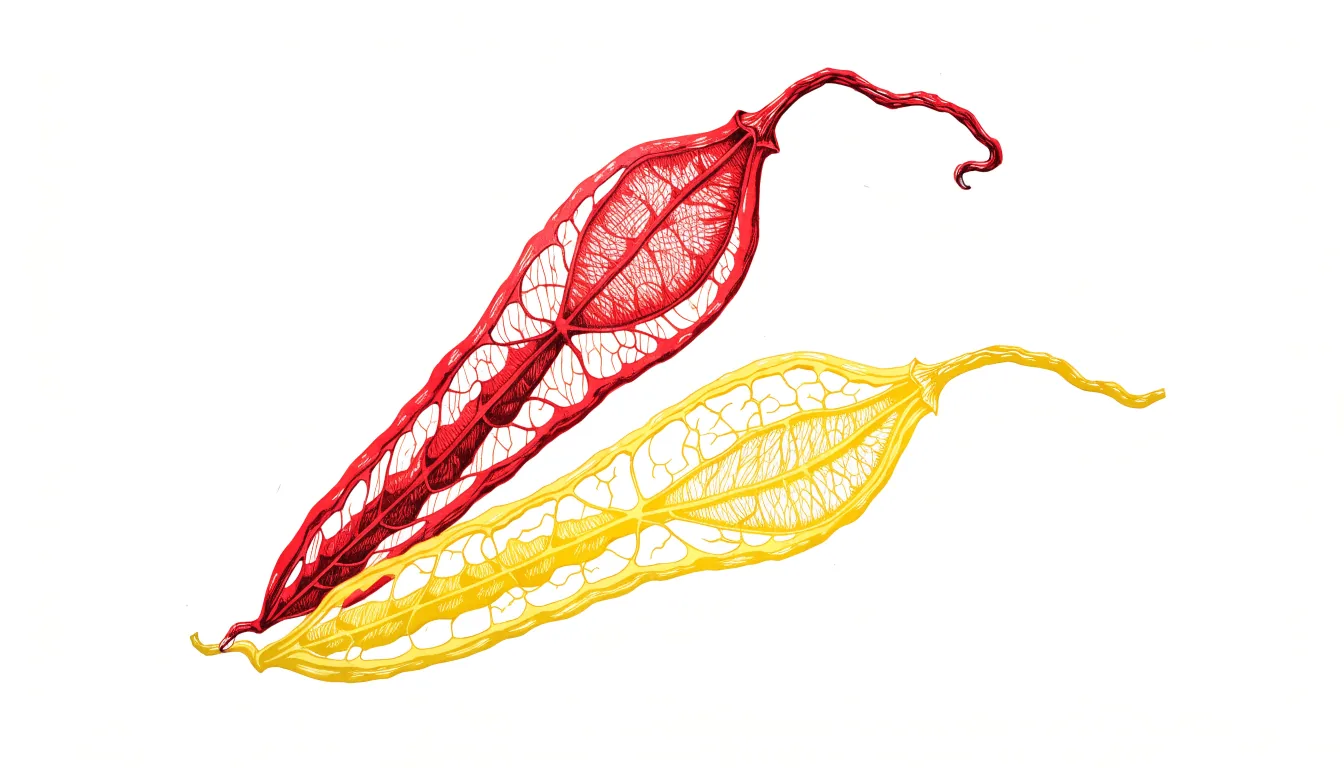
Costeño is a thin-skinned dried chile from the Pacific coast of Oaxaca and Guerrero, sold as costeño rojo and costeño amarillo, with bright acidity and moderate to hot heat.
The two colours are used differently, and the yellow is the one that defines several Oaxacan moles.
Coverage of Mexican ingredients on this site is researched rather than first-hand, written from published sources and supplier documentation.
What costeño is
Costeño means coastal, and the name covers thin-walled chiles grown along the Pacific coast of southern Mexico.
The pods are small and narrow, five to eight centimetres, and noticeably thin-fleshed.
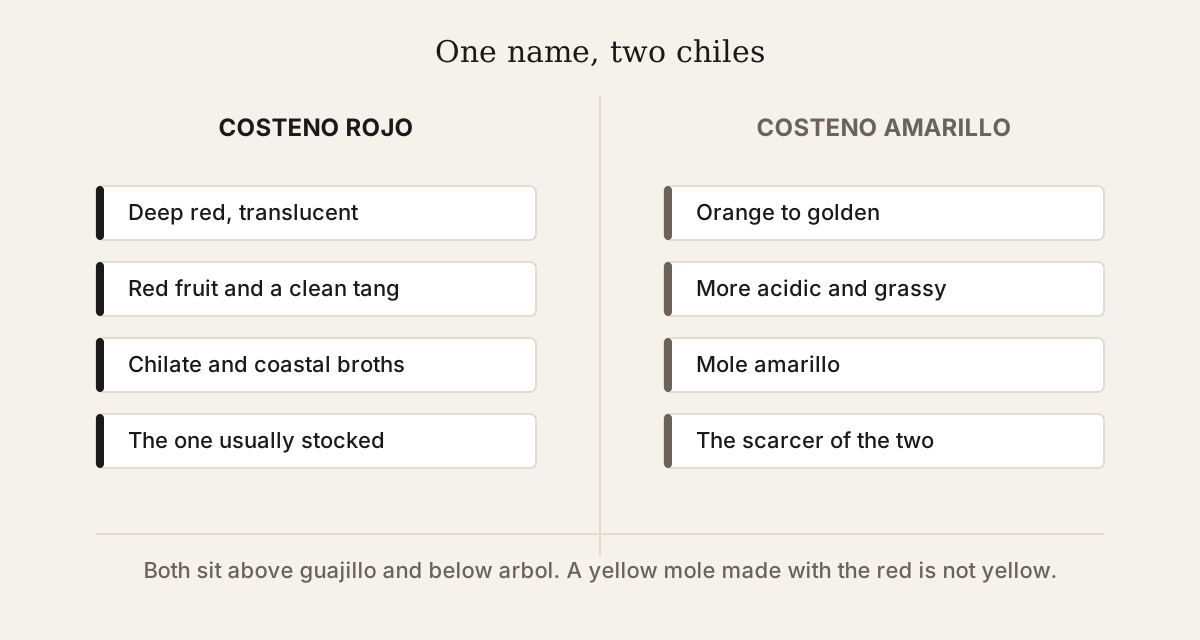
Costeño rojo is deep red and translucent held to a light.
Costeño amarillo is orange to golden, and is the scarcer of the two.
Thin flesh means fast toasting, which matters when using them.
Naming is loose regionally, and chile costeño overlaps with several local names along that coast.
What each colour does
The red is brighter and fruitier, the yellow is sharper and more acidic, and both are hotter than guajillo.
Costeño rojo carries red fruit and a clean tang, with heat in the 5,000 to 15,000 Scoville range depending on the source.
Costeño amarillo is more acidic and slightly grassy, and it is what gives mole amarillo its colour and its edge.
Both are hotter than guajillo and milder than chile de árbol.
They are not interchangeable where colour matters, since a yellow mole made with red costeño is no longer a yellow mole.
Where it belongs
Costeño belongs in Oaxacan and Guerrero cooking: in moles, in salsas and in coastal seafood dishes.
Mole amarillo is built on costeño amarillo.
Chilate and coastal broths from Guerrero use the red.
Table salsas use either, toasted and blended.
Seafood is the coastal context, and the chile’s brightness suits it.
Buying it
Costeño is scarce in United States retail and is stocked mainly by specialist Mexican importers.
Checked on 13 August 2026, a United States search for the term returned specialist chile retailers and reference material on the first page, with the yellow considerably less represented than the red. Counting rule: a result counts as a seller when it offers costeño chiles for purchase. Sellers were present on that rule, which describes that search on that date and is not a recommendation of any seller.
Specify the colour when ordering, since a listing reading simply costeño is usually the red.
Thin pods break easily in shipping, and some breakage is normal rather than a defect.
Using it
Toast very briefly, rehydrate, and expect a thinner sauce than a meaty chile gives.
Toast for two or three seconds a side. Thin flesh scorches almost instantly and burnt costeño is sharply bitter.
Rehydrate ten to fifteen minutes, less than a thick-walled chile needs.
It gives less body than ancho, so a sauce built on costeño alone will be thin and usually wants a thickener or a second chile.
Seed it to reduce heat, which matters more here than with the mild chiles.
Storage
Airtight and dark, six months, and thin-skinned chiles fade faster than thick ones.
They become brittle quickly, which is normal for the type rather than a sign of age alone.
Freezing helps considerably and is worth doing given how hard they are to replace.
Handle gently. Brittle thin pods shatter into fragments that are still perfectly usable.
Frequently asked questions
What is the difference between costeño rojo and amarillo?
Colour, heat and use. The red is fruitier and slightly milder, the yellow sharper and more acidic. Mole amarillo depends on the yellow for both its colour and its character, so the two are not interchangeable in that dish. For a general salsa either works.
How hot is costeño?
Moderate to hot, roughly 5,000 to 15,000 Scoville units, which puts it above guajillo and well below chile de árbol. Sources vary and the range is wide, since these are landrace chiles rather than a standardised commercial variety.
Can I substitute guajillo for costeño?
For colour and general brightness, reasonably well, accepting less heat and a slightly different fruit note. For mole amarillo specifically the substitution does not work, because guajillo is red and the dish is defined by being yellow.
Why is costeño so hard to find?
It is a regional landrace chile grown along one stretch of the Pacific coast, produced in small quantities, and it has never entered the export supply chain the way ancho and guajillo have. Specialist chile importers carry it and mainstream retail does not.
Does the thin skin need straining?
Less than guajillo does. Costeño skin is thin enough to break down reasonably well in a blender. Straining still gives a finer sauce and is worth it for a mole, less so for a rough table salsa.
The pairing
“La Sandunga”, Máximo Ramón Ortiz, 1853, Mexico.
Regional. A son from the Isthmus of Tehuantepec in Oaxaca, the state whose coast gives this chile its name.
We write about seasoning preparations across Latin America, what separates the regional variants, and where to buy them in the United States.