Ecuadorian Refrito: The Base That Starts With Coloured Oil
Achiote-tinted oil, onion and tomato with cumin. What the annatto step does, and why it is the one base defined by its fat.
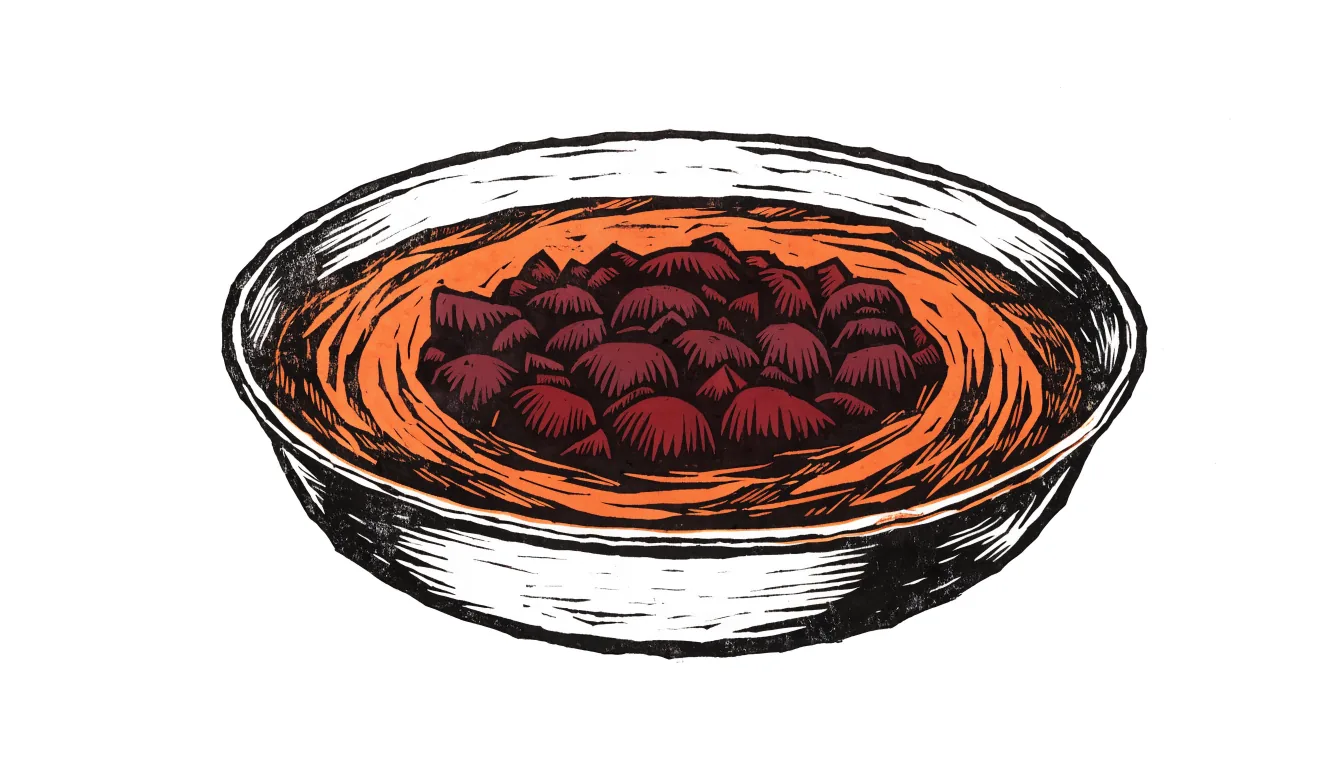
Refrito is the Ecuadorian base, built on oil coloured with achiote before anything else goes in, then onion, tomato and usually cumin, cooked down until it collapses. It is the one mainland base whose identity sits in the fat rather than in the vegetables.
That is worth stating first because it explains the whole technique: the colouring step happens before the cooking rather than during it, and skipping it produces a different preparation that happens to share an ingredient list.
What refrito actually is
Refrito is achiote-coloured oil, white or red onion, tomato, garlic and cumin, cooked slowly until the vegetables collapse into the fat. The word means refried, which describes the method rather than any second frying.
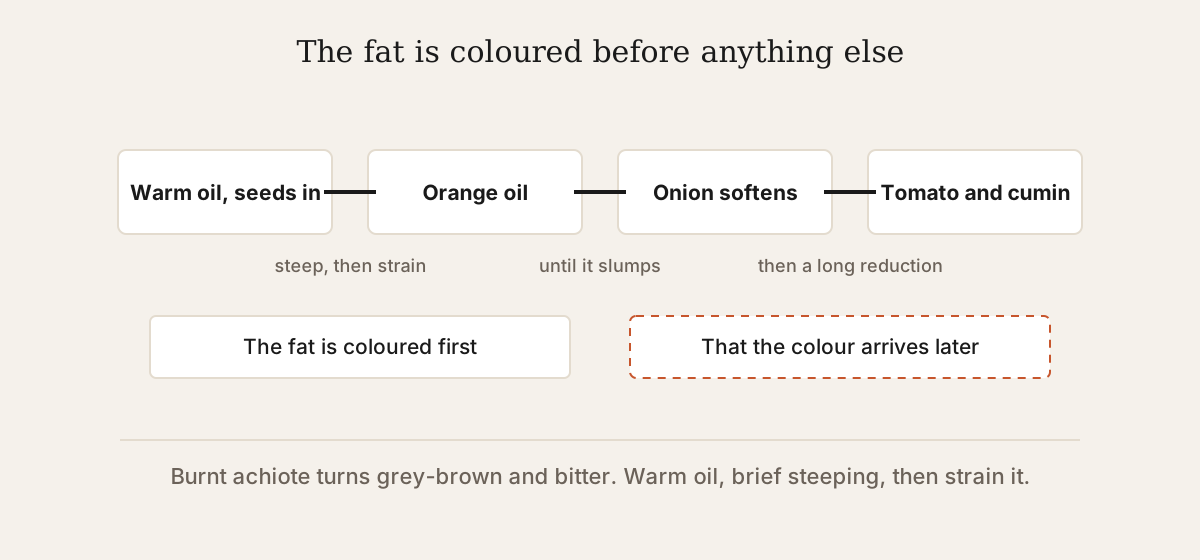
The achiote comes first and alone. Whole annatto seeds or ground annatto steep in warm oil until it turns deep orange, and the seeds are strained out before the onion goes in. That coloured oil is the base’s starting point.
Cumin appears more consistently here than in the other three bases, and it is part of why refrito reads earthier than a Colombian hogao made from broadly similar vegetables.
Regional versions vary in the aromatics. Coastal Ecuadorian refrito often carries more pepper and sometimes a little ají; highland versions lean plainer.
What the achiote is doing
The colour is real work rather than decoration, and understanding why explains a large part of Ecuadorian and coastal South American cooking.
Annatto’s pigment is fat-soluble rather than water-soluble, so it cannot be extracted with water and comes out readily into warm oil. Colouring the fat first means the colour distributes through the entire dish, since the fat is what carries flavour and colour through everything cooked in it.
It also contributes a mild peppery earthiness, which is subtle enough that people expecting a strong flavour are disappointed and pronounced enough that a synthetic dye is not a substitute in a base.
Burnt achiote is the one real failure. It scorches at a low temperature and turns grey-brown and bitter, which cannot be fixed. Warm oil, brief steeping, and strain promptly.
How it differs from the other three
Refrito is defined by its fat, hogao by its restraint, aderezo by its reduction, and Venezuelan sofrito by its ají dulce.
Against Colombian hogao, refrito adds achiote and cumin to a broadly similar onion and tomato base. The result is more orange, earthier and slightly heavier.
Against Peruvian aderezo, refrito is considerably lighter and is not reduced nearly as far. A refrito stays spoonable and wet where an aderezo becomes almost a paste.
The instructive point is that a Colombian hogao made in achiote oil reads Ecuadorian even when the vegetables are unchanged, which is the clearest demonstration on this site that the fat carries regional identity more reliably than the aromatics do.
Making it
Steep the achiote in warm oil, strain, then cook the onion, then the tomato, then reduce over low heat for twenty-five to thirty-five minutes.
Whole seed rather than ground is the better default, because ground annatto does not strain cleanly and leaves sediment. In a base that sediment is tolerable; in a clear coloured oil it is not.
Do not let the oil get hot. It should barely shimmer during the steep. Five minutes is usually enough for a deep colour, and more time at higher heat gains nothing and risks bitterness.
The rest is the standard base method. Onion until it has released its water and softened, then tomato, then a long low reduction until the mixture darkens and the oil separates.
Cumin goes in with the tomato, where it has enough time and fat to open up without scorching.
Buying it, and the component to buy instead
Jarred refrito exists and is uncommon in the United States. The component worth buying is the annatto seed, which is cheap and widely available.
Checked on 13 August 2026, the first page of United States results for ecuadorian refrito returned Ecuadorian cooking sites and recipe publishers rather than sellers, which describes that search on that date rather than recommending any seller. The practical reading is that this is a preparation made at home, and that the barrier is knowing the technique rather than sourcing anything.
Annatto seed is stocked by Latin American grocers and increasingly by general supermarkets, under either annatto or achiote. Whole seed keeps a year or more; ground fades faster.
A batch of achiote oil made separately covers several refritos and is worth doing on its own, since the steeping step is the only fiddly part.
Storage
Refrigerated under a film of its own oil, about a week. Frozen in portions, several months.
Refrito freezes well for the same reason every cooked base does: the water has already left and the vegetables have already collapsed, so there is little structure left for freezing to damage.
The colour holds better than the flavour. A frozen refrito thawed after three months looks exactly as it did going in and will have lost a little of the cumin and the achiote’s aroma, which is worth knowing before assuming a jar is fine because it looks fine.
Frequently asked questions
What does refrito mean?
It means refried, and it describes the general method of cooking aromatics in fat rather than any literal second frying. The same word is used loosely across Spanish-speaking cooking for a fried aromatic base, which is why English-language recipes sometimes use refrito and sofrito interchangeably when the Ecuadorian preparation is specifically the achiote-based one.
Can I make refrito without achiote?
You can make a base, and it will not read as Ecuadorian. Achiote supplies the colour that carries through the finished dish and a mild earthiness that nothing else reproduces at the same subtlety. Without it you have made something closer to a Colombian hogao with cumin in it, which is a perfectly good preparation under a different name.
Is annatto the same as achiote?
Yes, annatto and achiote are the same thing. Annatto is the English name and achiote the Spanish one, both for the seed of Bixa orellana. Achiote paste is a separate product, a wet blend carrying acid and other seasonings associated with Yucatecan cooking, and it is not a substitute for the seed or for oil made from it.
Why did my refrito turn out bitter?
Almost always burnt achiote, which scorches at a much lower temperature than most spices and turns grey-brown and harsh. The oil should barely shimmer during the steep and the seeds should be strained out promptly. The other common cause is garlic added too early and browned hard.
How much refrito does a dish need?
More than an aderezo and about the same as a hogao, typically two or three generous spoonfuls for a pot serving four. It is a light base rather than a concentrate, so it is used in quantity. If a dish tastes flat, the answer is usually more base rather than more salt.
The pairing
“Nuestro Juramento”, Julio Jaramillo, 1957, Ecuador.
Regional. Jaramillo is the voice of coastal Ecuador where this base is domestic, and like the refrito he is present in so much of the country’s daily life that he is rarely singled out for comment.
We write about seasoning preparations across Latin America, what separates the regional variants, and where to buy them in the United States.