Epazote: The Herb That Goes in the Bean Pot
Pungent, resinous and unlike anything European. What epazote tastes of, why it is paired with beans, and what the safety discussion is actually about.
Epazote is a pungent Mexican herb, Dysphania ambrosioides, with a resinous and slightly medicinal flavour, added to beans, quesadillas and soups during cooking.
Nothing in European cooking tastes like it, which is why descriptions of it reach for petroleum, oregano, mint and citrus all at once.
Coverage of Mexican ingredients on this site is researched rather than first-hand, written from published sources and supplier documentation.
What epazote is
Epazote is an annual herb native to Central America, southern Mexico and South America, with jagged pointed leaves and a strong smell.
The botanical name is Dysphania ambrosioides, reclassified from Chenopodium ambrosioides, so older sources use the earlier name.
It grows readily and widely, and is treated as a weed across much of the United States where it has naturalised.
The leaves are jagged and slender, mid-green, on a branching stem that can reach a metre.
Paico is the same plant under its South American name, and this site covers that overlap in its own node.
What it tastes of
Epazote is pungent and resinous, with notes people describe as petroleum, oregano, mint, citrus and camphor, and no two descriptions agree.
The disagreement is informative. An herb this unusual does not map onto familiar reference points.
It is much stronger raw than cooked. Heat rounds it substantially.
A single sprig is enough for a large pot of beans.
Dried is milder than fresh, and dried is what most United States retail stocks.
Why it goes in beans
Epazote is added to pot beans for flavour and for a traditional carminative purpose, and the pairing is standard across Mexican home cooking.
The flavour reason is straightforward. Its resinous pungency cuts the starchy heaviness of a long-cooked bean pot.
The digestive reason is traditional, widely held and repeated, and this site does not evaluate it as a medical claim.
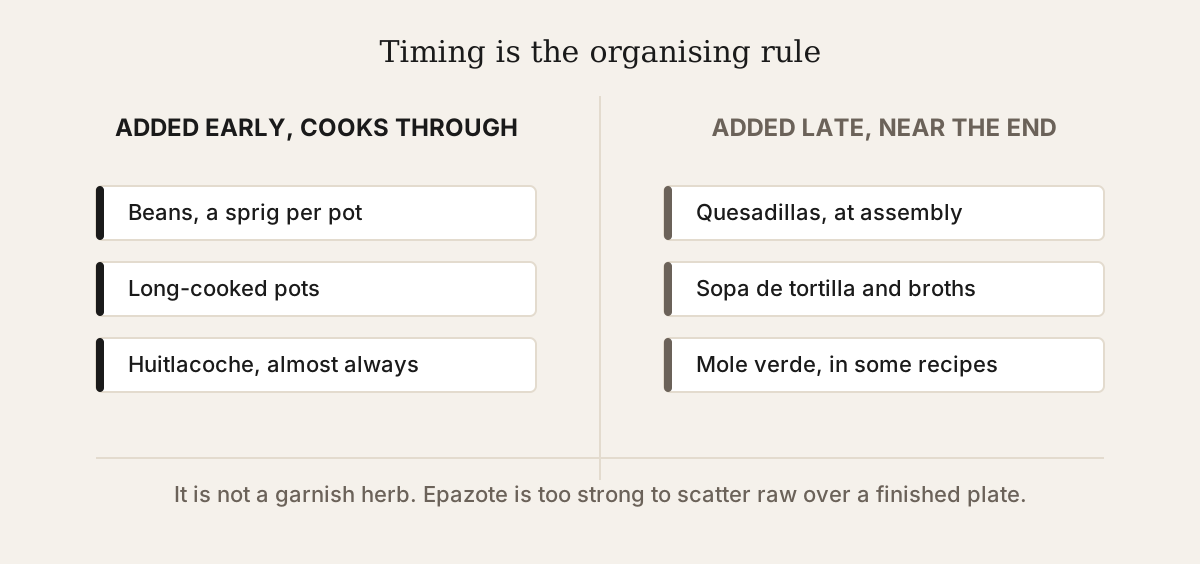
It goes in early, with the beans, and cooks for the duration.
A sprig per pot is the usual quantity, removed before serving or left in.
Where else it belongs
Beyond beans, epazote belongs in quesadillas, in soups, in some moles and with corn fungus.
Quesadillas with squash blossom or huitlacoche take a leaf or two, added at assembly.
Sopa de tortilla and other broths take it late.
Mole verde uses it in some recipes.
Huitlacoche, the corn fungus, is almost always cooked with it.
It is not a garnish herb. Epazote is too strong to scatter raw over a finished plate the way coriander is.
The safety discussion, stated plainly
Concentrated epazote oil is toxic, and culinary quantities of the leaf are the traditional and ordinary use.
The compound concerned is ascaridole, present in the plant’s essential oil and toxic at concentrated doses.
A sprig in a bean pot is not a concentrated dose, and that is the quantity the tradition has used for centuries.
Extracts, oils and medicinal preparations are a different matter from cooking, and this site does not evaluate dosing or therapeutic use.
Pregnancy is the case most often flagged in the literature, and that question belongs with a clinician rather than a cooking site.
Buying it
Dried epazote is stocked by Latin grocers and online, and fresh is seasonal and regional.
Checked on 13 August 2026, a United States search for the term returned grocers, spice retailers and recipe publishers on the first page. Counting rule: a result counts as a seller when it offers epazote in any culinary form for purchase. Sellers were present on that rule, which describes that search on that date and is not a recommendation of any seller.
Dried is the reliable form and works perfectly well for beans.
Fresh appears in Mexican grocers in warm months and at farmers markets.
It grows easily from seed and self-seeds enthusiastically, which is worth knowing before planting it in a small garden.
Storage
Dried epazote keeps six to twelve months airtight and dark; fresh keeps a few days refrigerated.
Dried loses aroma before it loses colour.
Fresh wilts fast and does not revive well in water.
Freezing fresh leaves works and is better than drying them at home.
Keep dried epazote sealed, since its aroma transfers to everything stored near it.
Frequently asked questions
What does epazote taste like?
Descriptions vary widely because nothing in European cooking resembles it. The notes most often named are resinous, petroleum-like, oregano, mint, citrus and camphor, and different people fix on different ones. It is strongly pungent raw and considerably rounder once cooked.
Is epazote safe?
In culinary quantities it is the ordinary seasoning it has been for centuries. The safety literature concerns ascaridole in the concentrated essential oil rather than a sprig of leaf in a pot of beans. Concentrated extracts and medicinal preparations are a separate matter, and specific questions, including in pregnancy, belong with a clinician.
Why is epazote always paired with beans?
For two reasons given side by side in Mexican cooking. Its resinous pungency cuts the heaviness of a long-cooked bean pot, which is a flavour argument. And it is traditionally held to reduce the gas beans produce, which is a traditional claim this site reports rather than evaluates.
Can I substitute something for epazote?
Nothing reproduces it. A bay leaf with a little dried oregano covers some of the savoury background and none of the resinous character. Many cooks simply leave it out, which gives a good pot of beans that tastes different rather than deficient.
Is dried epazote as good as fresh?
For beans, yes, and it is the standard form outside Mexico. Dried is milder and loses some of the sharper top notes, which for a long-simmered pot matters little. For quesadillas, where the leaf is added at assembly and barely cooked, fresh is noticeably better.
The pairing
“La Bruja”, traditional son jarocho, arranged 1950s, Mexico.
Regional. A son from Veracruz, the Gulf coast region where epazote grows wild and goes into the pot without anyone thinking about it.
We write about seasoning preparations across Latin America, what separates the regional variants, and where to buy them in the United States.