Guajillo Chile: The Most Used Dried Chile in Mexico
Bright, tangy and mildly hot, with a tough skin that has to be dealt with. What guajillo is, what it does that ancho cannot, and how to get a smooth sauce from it.
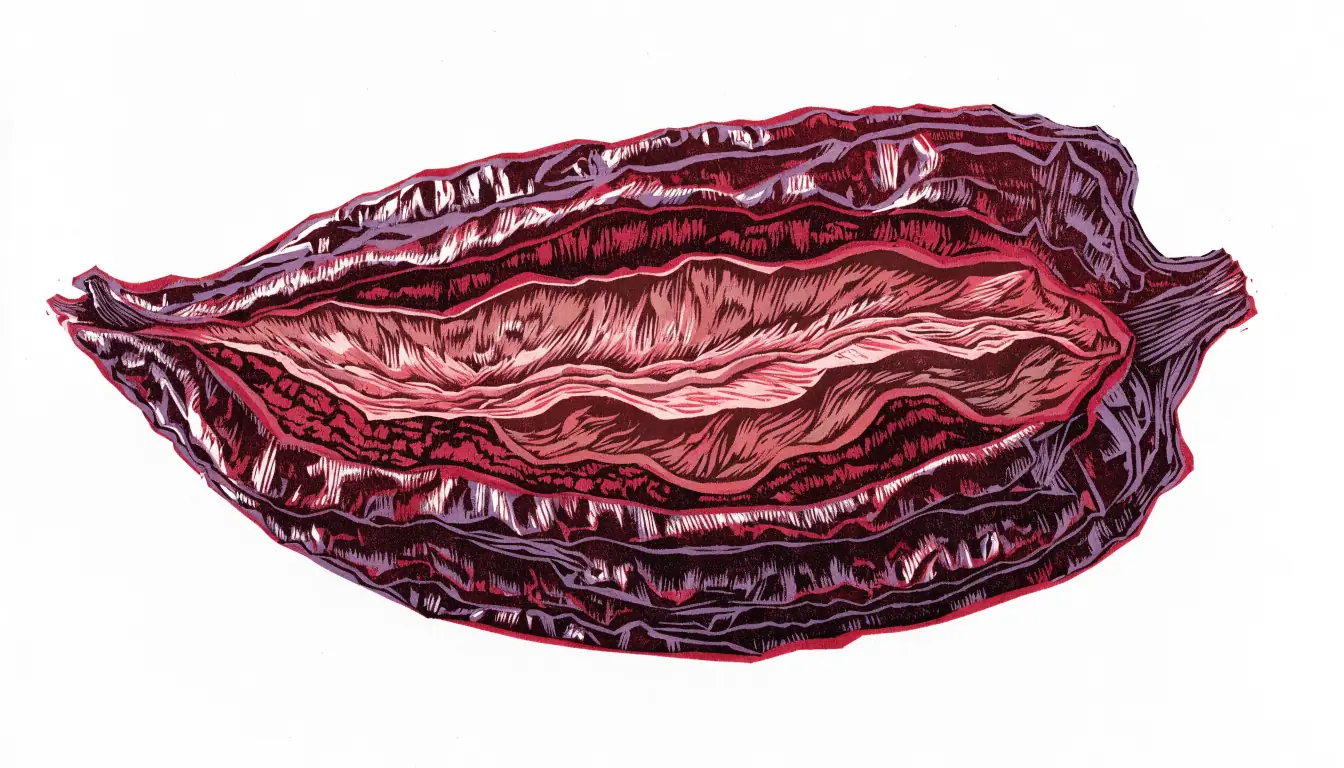
Guajillo is the dried mirasol chile, smooth-skinned, deep translucent red, tasting of berry, green tea and tang, with mild to moderate heat.
It is the most widely used dried chile in Mexican cooking, and it is the one that supplies brightness and colour where ancho supplies sweetness and body.
Coverage of Mexican ingredients on this site is researched rather than first-hand, written from published sources and supplier documentation.
What guajillo is
Guajillo is the dried form of the mirasol chile, a long tapering pod that grows pointing upward on the plant.
Mirasol means looking at the sun, which describes how the fresh chile is held on the bush.
The pod is long and tapering, roughly 10 to 15 centimetres, narrower than an ancho and broader than a pasilla.
The skin is smooth and taut rather than wrinkled, which is the fastest visual identifier.
It is deep red and translucent when held to a light.
Guajillo puya is a smaller, hotter relative sold under its own name and covered separately on this site.
What it tastes of
Guajillo is bright and tangy, with berry, green tea and a faint pine note, and moderate heat.
Acidity is the defining quality. Guajillo tastes tangy in a way that ancho does not, and that brightness is why the two are so often used together.
Berry and cranberry are the fruit notes most commonly named.
Heat is mild to moderate, roughly 2,500 to 5,000 Scoville units, so noticeably hotter than ancho but not a hot chile.
Colour contribution is large. Guajillo gives sauces a clear red that ancho, being browner, cannot.
The skin problem
Guajillo skin is tough and does not break down, and it is the reason a guajillo sauce needs straining.
The skin stays leathery even after long soaking, unlike the meatier flesh of ancho.
Blending alone will not solve it. Even a high-powered blender leaves flecks that read as grit.
Strain through a fine sieve and press the solids, which is the standard step in any guajillo-based sauce.
Some cooks scrape the flesh from the skin after soaking, which is more work and gives the smoothest result.
This is the single most common complaint about guajillo sauces and it is a technique problem rather than a chile problem.
Where it belongs
Guajillo belongs in adobos, in birria and pozole, in enchilada sauces, in salsas and in moles alongside darker chiles.
Birria and pozole rojo are built on it.
Adobo for al pastor and adobada uses guajillo with ancho.
Red enchilada sauce is most often guajillo-based.
Moles use it for brightness against ancho and mulato.
Salsas use it toasted and blended with tomato or tomatillo.
Buying it
Look for pliable pods with taut smooth skin and a deep translucent red, and avoid brittle or dusty ones.
Pliable, not brittle. A guajillo that snaps has dried out too far.
Smooth skin is correct. Deep wrinkling suggests age or a different chile.
Hold it to the light. It should glow red.
Whole beats ground, as with any dried chile, and guajillo powder fades fast.
Checked on 13 August 2026, a United States search for the term returned grocery and spice retailers alongside recipe publishers on the first page. Counting rule: a result counts as a seller when it offers guajillo chiles for purchase. Sellers were present on that rule, which describes that search on that date and is not a recommendation of any seller.
Using it
Toast for seconds, rehydrate for twenty minutes, blend, and strain without exception.
Toast on a dry comal briefly, until fragrant. Guajillo burns quickly because the skin is thin.
Remove stems and seeds before soaking.
Rehydrate in hot water twenty minutes until fully pliable.
Keep the soaking liquid. Guajillo’s is usually pleasant rather than bitter, unlike pasilla’s, and it carries colour.
Strain the blend. This is not optional if you want a smooth sauce.
A basic guajillo sauce
A working guajillo sauce is eight to ten chiles, garlic, a little onion, stock and salt, blended and strained.
Stem and seed eight to ten guajillos, which makes roughly enough sauce for a kilogram of meat.
Toast them briefly on a dry comal, seconds a side, until they smell fragrant and darken very slightly.
Soak in hot water for twenty minutes with two or three garlic cloves and a piece of white onion added to the water.
Blend with a cup of the soaking liquid, the softened garlic and onion, half a teaspoon of Mexican oregano, a pinch of cumin and salt.
Strain through a fine sieve, pressing hard on the solids and discarding the skins.
Fry the strained sauce in a little fat for five to ten minutes until it darkens and thickens. This step is what separates a finished sauce from a blended one, and it is the step most often skipped.
Adjust at the end with salt, and a splash of vinegar if it needs lifting.
The chile trio in practice
Most red Mexican sauces are built from two or three dried chiles rather than one, and the combinations follow a logic.
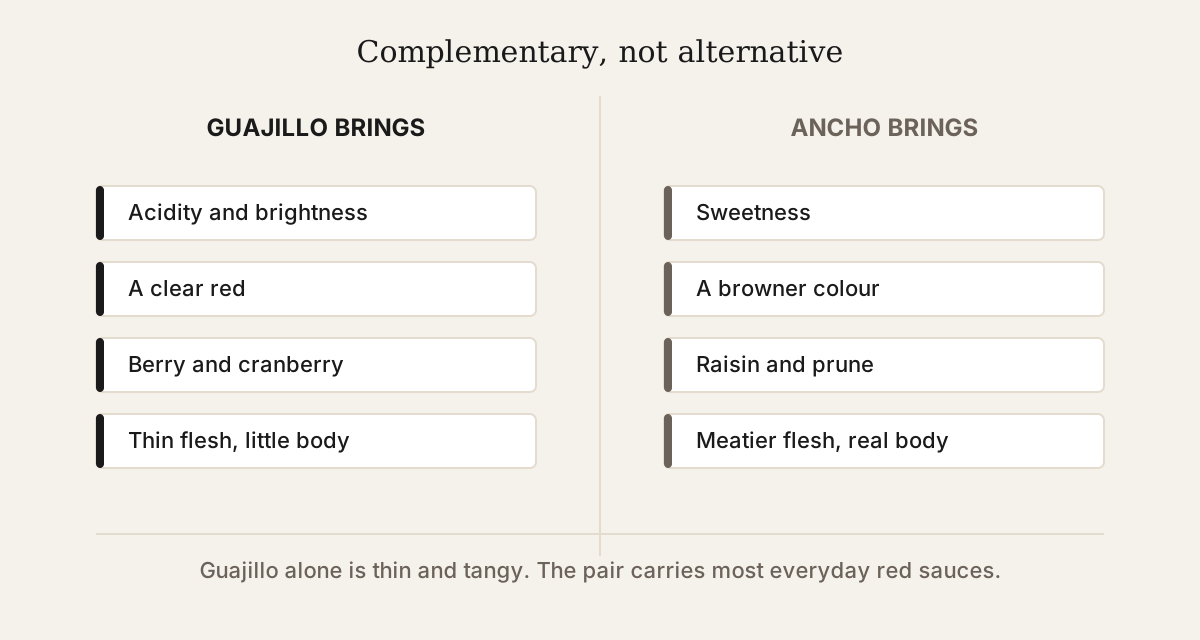
Guajillo plus ancho is the workhorse pair, brightness plus body, and it covers adobos, enchilada sauces and most everyday red sauces.
Guajillo plus ancho plus pasilla adds herbaceous bitterness and is the mole direction.
Guajillo plus chile de árbol is the heat direction, keeping the colour and adding real fire.
Guajillo plus morita adds smoke without much extra heat.
Guajillo alone is thin and tangy, which is why it is rarely used by itself outside a light table salsa.
Mirasol, and the pod it is before it is dried
Guajillo is the dried form of the mirasol chile, and knowing that resolves a naming overlap that catches people out.
Mirasol is the fresh pod, guajillo the dried one. The name changes on drying, which is normal in Mexican usage and is the same convention that gives poblano and ancho, or jalapeño and chipotle, two names for one plant.
The convention is general in Mexican usage. Poblano becomes ancho, jalapeño becomes chipotle, chilaca becomes pasilla. A shopper meeting two names for what appears to be one chile is usually meeting a fresh pod and its dried form rather than two varieties.
It also means recipes can disagree without conflicting. A recipe calling for mirasol and one calling for guajillo may want the same dried pod, and the only way to tell is whether it also asks you to rehydrate it.
This is not the Peruvian ají mirasol. That is a dried ají amarillo, a different species in a different country, and the shared word is a coincidence rather than a relationship. Anyone cooking from both traditions will meet the collision.
A guajillo by any other label is still a guajillo. Some packaging says mirasol for the dried pod, particularly from smaller producers, and the pods are the same thing.
Substituting
Ancho substitutes for body and not for brightness, and New Mexico chile is the closer match on character.
New Mexico or California dried chiles are the nearest widely available substitute, being similarly bright and mild, though less complex.
Ancho gives sweetness and body and none of the tang, so a substitution shifts the sauce noticeably.
Puya is the same family and hotter, and works where more heat is wanted.
Paprika is not a substitute in any serious sense, giving colour and no chile character.
Storage
Airtight and dark, six to twelve months, and the thin skin makes guajillo dry out faster than ancho.
Pliability is the freshness test and guajillo loses it sooner than the meatier chiles.
Freezing extends it well.
Buy in the quantity you will use, since a large bag of guajillo will be brittle before it is finished.
Frequently asked questions
Is guajillo hot?
Mild to moderate, roughly 2,500 to 5,000 Scoville units. That places it above ancho and below a typical serrano. Most people find it warm rather than hot, and it is used as much for colour and tang as for heat.
Why is my guajillo sauce gritty?
Because guajillo skin does not break down, however long you soak or however hard you blend. The fix is to strain the blended sauce through a fine sieve, pressing the solids to get the flesh through and leaving the skin behind. This is a standard step rather than a sign anything went wrong.
What is the difference between guajillo and puya?
Puya is a smaller, hotter chile from the same family, sometimes called guajillo puya. It carries a similar bright fruit character with substantially more heat. Where a recipe wants guajillo flavour with more fire, puya is the intended substitution.
Can I use guajillo instead of ancho?
Not as a straight swap. Guajillo is brighter, tangier and thinner in body; ancho is sweeter, darker and meatier. Most classic sauces use both precisely because they do different jobs. Substituting one for the other gives a recognisably different sauce rather than a spoiled one.
Should I keep the soaking water?
Usually yes. Guajillo soaking liquid is generally pleasant and carries useful colour, unlike pasilla’s, which is frequently bitter. Taste it first, as always, and use stock instead if the chiles were old or scorched.
The pairing
“Camino de Guanajuato”, José Alfredo Jiménez, 1954, Mexico.
Regional. A ranchera about the roads of Guanajuato in central Mexico, the kind of country where the mirasol is grown and dried on the ground.
We write about seasoning preparations across Latin America, what separates the regional variants, and where to buy them in the United States.