Hogao, Aderezo, Refrito and Sofrito Are One Preparation
Four names across four countries for the same cooked aromatic base. What actually changes between them, what does not, and why the differences are smaller than the names suggest.
Hogao, aderezo, refrito and sofrito are four regional names for the same preparation: aromatics cooked slowly in fat at the start of a dish, with everything else built on top of them. The differences between them are real but narrow, and they sit almost entirely in which aromatics go in and which fat carries them.
This is the article the rest of the base family hangs from. If you understand what these four share, every other base on the continent is a variation you can read at a glance.
What a base actually is
A base is a fat, an allium and a fruit or pod, cooked together until they stop being separate ingredients and become one thing. That is the whole definition, and every preparation on this page satisfies it.
The word “base” is doing precise work. This is not a sauce you add to a finished dish and not a seasoning you sprinkle. It goes into the pan first, the dish is constructed on top of it, and by the time the food reaches the table the base cannot be separated out again. It is structural rather than decorative.
The cooking is what separates a base from a finish. Onion and tomato chopped raw and spooned over a dish is a different preparation entirely, with a different name and a different job. Cook the same two ingredients slowly in fat until they collapse and you have made a base.
Why position decides the family, not the ingredients
Position in the cooking, rather than the ingredient list, is what sorts every seasoning preparation on this site into one of three families. Change the aromatics and you have a regional variant; change the position and you have a different kind of preparation entirely.
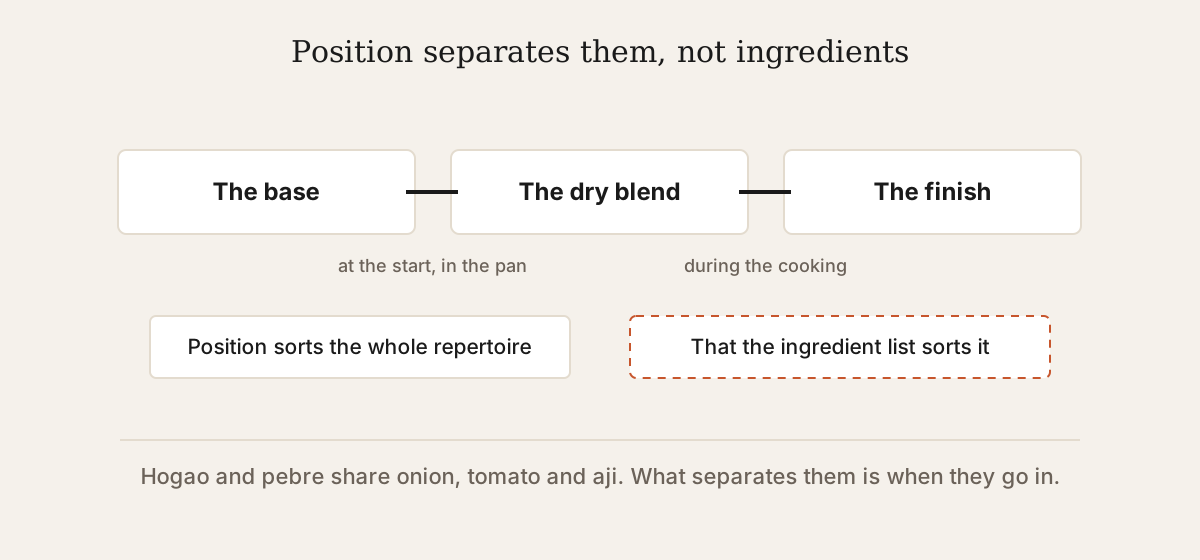
Hogao and pebre both contain onion, tomato and ají. Hogao is cooked in oil at the start and disappears into the dish. Pebre is raw, dressed with vinegar, and added at the table. They are not variants of each other.
Chimichurri and pebre share almost nothing on an ingredient list. Chimichurri is parsley and dried oregano; pebre is coriander and raw onion. Both are finishes and both do the same job on a plate.
A base is structural, which means it cannot be lifted back out. By the time the dish reaches the table the base has dispersed into it, which is the opposite of a finish that sits on top and stays separable, and different again from a dry blend that is mixed dry, keeps on a shelf and is added as a seasoning.
So the useful question about any new preparation is when it goes in, not what is in it. That question sorts the entire regional repertoire in one step, and it is the reason this site organises by preparation rather than by country.
What changes between the four
What changes is the aromatic set and the fat. What does not change is the method, the position in the dish, or the purpose.
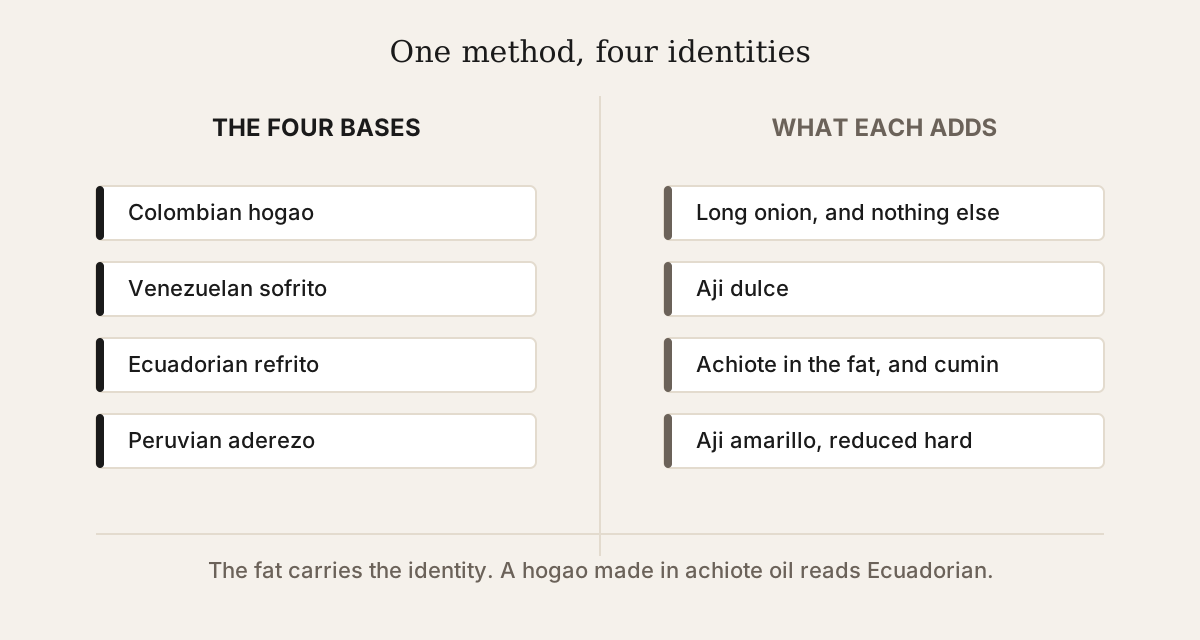
Colombian hogao is the narrowest of the four. Tomato and long onion, cooked in oil until the tomato breaks down completely. Some cooks add garlic and a little cumin, many do not. Its restraint is the point: it is built to sit under a dish without arguing with it.
Venezuelan sofrito widens the same idea with sweet peppers, usually ají dulce, which is a small aromatic pod with almost no heat. That single addition changes the character more than its size suggests, because ají dulce brings a perfume that tomato and onion alone do not have.
Ecuadorian refrito typically leans on achiote, which colours the fat before anything else goes in, giving the base an orange cast and a mild earthiness. Cumin appears more often here than in hogao.
Peruvian aderezo is the most variable of the four and often the most concentrated. Red onion, garlic and an ají paste, most commonly ají amarillo, cooked down hard until the mixture is thick and dark. Where hogao is a bed, aderezo is closer to a foundation stone.
The one thing that genuinely separates them
The fat carries the identity more than the aromatics do. A base built on achiote-coloured oil reads as Ecuadorian even when the vegetables match a Colombian hogao exactly, and a base built on a concentrated ají paste reads as Peruvian regardless of the onion. Change the aromatics and you have a variation. Change the fat and you have crossed a border.
The mechanism is that aromatics release their compounds into fat rather than into water. A base cooked in oil, lard or achiote-coloured oil carries flavour through the whole dish in a way that dropping the same vegetables into a simmering pot does not, which is why the fat is the carrier rather than merely the medium.
Why the names multiplied
The names multiplied because the preparation is older than the borders, and each national kitchen named it locally rather than adopting a neighbour’s word. Nothing about the cooking required four words.
This matters practically rather than only historically. A recipe calling for sofrito and a recipe calling for hogao are, in most cases, asking you to do the same thing, and a cook who knows one already knows the other. Reading them as four separate techniques makes the whole family harder to learn than it needs to be.
A caution about the word sofrito in the United States
Searched from the United States on 13 August 2026, the word sofrito overwhelmingly returns Puerto Rican and Dominican preparations rather than Venezuelan ones. That is a fact about English-language search results on that date, checked across the first page of results for sofrito, what is sofrito and how to make sofrito, and it is not a claim about the preparations themselves or about which is more authentic.
The practical consequence is that a recipe found by searching sofrito in English is likely to be a Caribbean island preparation, which is built on culantro and sweet peppers and is a genuinely different thing from the Venezuelan base described here. If you want the mainland version, search the country name with it.
How to build any of the four
Cook the fat first, the allium second, and the tomato or pod last, over low heat and for longer than feels necessary. The sequence matters more than the quantities.
The common failure is heat. A base cooked fast fries rather than collapses, and the result tastes of separate ingredients that happened to share a pan. Low and slow lets the onion release its water, the tomato break its structure and the fat take on the colour and perfume of everything in it. That is the transformation the preparation is named for.
The second failure is stopping early. A finished base looks darker, thicker and less appetising in the pan than an unfinished one. It is supposed to.
Which one to make
Make the one that matches the dish you are building, and if you have no dish in mind, make hogao. It is the least assertive of the four, keeps for about a week refrigerated, and improves almost anything savoury.
Choose aderezo when the dish needs a foundation with weight behind it, refrito when you want colour as well as flavour, and Venezuelan sofrito when the dish would benefit from an aromatic lift that tomato alone cannot supply.
Frequently asked questions
Is hogao the same as sofrito?
They are the same kind of preparation with different aromatics. Hogao is Colombian, built on tomato and long onion in oil, and is the more restrained of the two. Sofrito is a name used in several countries for a comparable base, and the Venezuelan version adds ají dulce. Note that in United States search results the word sofrito usually returns Puerto Rican or Dominican versions, which are a separate tradition.
Can I substitute one base for another?
In most dishes, yes, with a small loss of regional character. The four share a method and a position in the dish, so swapping hogao for refrito changes the colour and adds a little earthiness without breaking anything. The substitution that works least well is using a concentrated aderezo where a light hogao was intended, because the aderezo will dominate.
How long does a base keep?
Refrigerated in a sealed jar under a thin film of its own oil, most cooked bases keep about a week. They also freeze well in portions, and freezing costs very little because the preparation has already been cooked down. A base that smells sharp or fermented rather than sweet has gone over.
Do I need a specific ají or pepper?
For hogao, no. For Venezuelan sofrito and Peruvian aderezo the specific pod matters more, because ají dulce and ají amarillo each contribute a perfume that a generic sweet pepper does not reproduce. If you cannot source them, make the preparation anyway and accept that it will be a close relative rather than the thing itself.
Is a base the same as a mirepoix or a soffritto?
A mirepoix and a soffritto are the same idea as these four bases and not the same preparation. A French mirepoix is onion, carrot and celery, usually in butter, and an Italian soffritto is close to it. The South American bases are built on onion with tomato or pod rather than carrot and celery, and frequently on a coloured fat. The structural role is identical; the aromatics are not.
Can I use a base as a sauce?
Using a base as a sauce is the most common misuse of one. A base is concentrated and unbalanced on its own because it was built to be diluted by everything cooked on top of it, so spooned onto a finished dish it reads heavy and flat where a finish would read bright. Use a finish for that job.
Is a base the same as a seasoning blend?
No. A base is cooked, wet and built into the dish. A dry blend is mixed dry, keeps on a shelf and is added as a seasoning. They occupy different positions in the cooking and are not interchangeable.
The pairing
“Colombia Tierra Querida”, Lucho Bermúdez, 1960, Colombia.
Regional. Bermúdez did for Colombian coastal music roughly what hogao does for Colombian cooking: he took a regional form and made it the thing the whole country reaches for by default, without sanding off where it came from.
We write about South and Central American seasoning preparations, what separates the regional variants, and where to buy them in the United States.