Shelf Life by Format: Fresh, Jarred and Dry
How long each of the three families actually keeps, why a base outlasts a finish by weeks, and what the failure signs are for each.
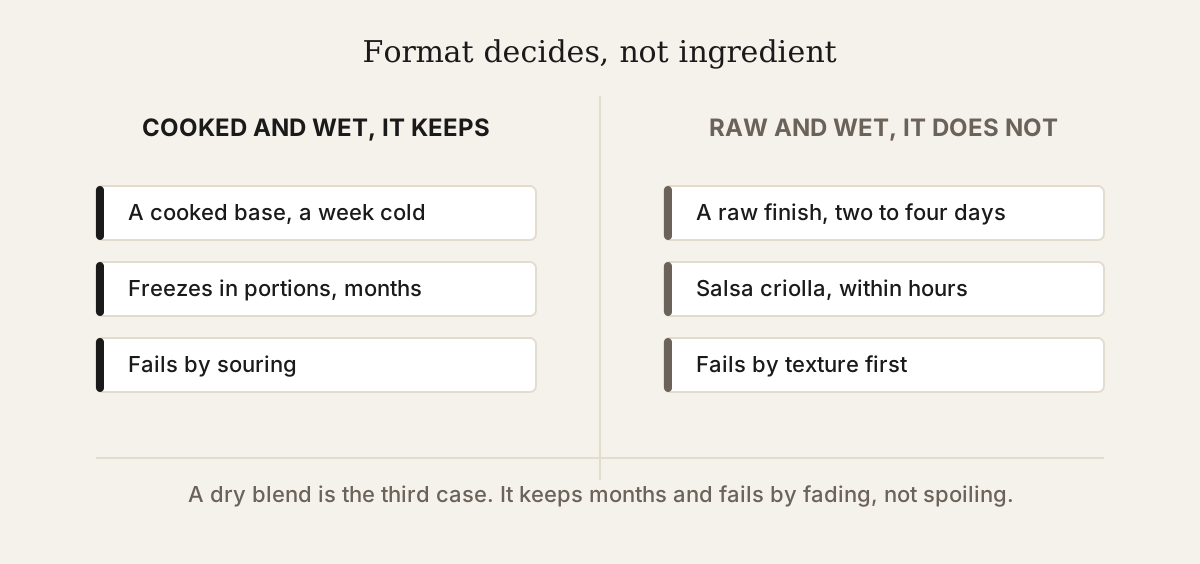
A cooked base keeps about a week refrigerated and freezes well, a raw finish keeps two to four days and does not freeze at all, and a dry blend keeps six months to a year in a cupboard. The three families fail in different ways, and knowing which one you are holding tells you almost everything.
Format decides shelf life far more than ingredient does, which is why this page is organised by family rather than by preparation.
The cooked base
A homemade base keeps about a week refrigerated and several months frozen, and it is the only one of the three families that batch cooking genuinely rewards.
The reason is that a base has already been cooked and reduced, so refrigeration and freezing cost it very little. The water has largely left, the vegetables have collapsed, and the fat is holding the flavour. None of that degrades quickly.
Keep it under a thin film of its own oil in a sealed jar. The oil layer slows oxidation at the surface, which is where a base goes first.
Freeze in single-dish portions. Thawing a large block and refreezing what is left degrades it noticeably, while small portions thaw in minutes and lose almost nothing.
Failure signs. A base that smells sharp, sour or fermented rather than sweet and cooked has gone. Surface mould means discard rather than scrape, because the moisture content is high enough for growth to have spread.
Jarred commercial bases
An unopened shelf-stable jar keeps for a year or more; once opened, one to two weeks refrigerated, and the label is the authority.
Commercial jars are acidified and heat-treated, which is what makes them shelf-stable and also what makes them taste less bright than a fresh base. After opening they behave much like a homemade base.
The raw finish
A finish keeps two to four days refrigerated and does not usefully freeze, because the raw onion and fresh herb that define it are exactly what freezing destroys.
Chimichurri is the longest-lived at one to two weeks, because its vinegar and oil content is high and its herb is comparatively robust. The parsley darkens well before it becomes unsafe.
Pebre and ají criollo run two to four days. Fresh coriander is the limiting factor and it goes limp and dark quickly.
Salsa criolla is best within hours. The point of it is the crunch of the onion, and lime removes that within a day.
Failure signs are textural before they are olfactory. A finish whose herb has gone dark and slippery is past its best even though it may smell fine. Trust appearance here.
Do not freeze any of them. Freezing collapses raw onion into water and turns fresh herb to sludge. Since every finish on this site takes ten to twenty minutes to make, freezing solves a problem that does not exist.
The dry blend
A dry blend keeps six months to a year and does not spoil so much as flatten, which is a slower and less obvious failure than the other two.
The aromatics fade before the colour does, which is the trap. Cumin and oregano lose their volatile compounds within months, while paprika, turmeric and annatto hold their colour for far longer. So an old jar looks entirely correct and tastes of very little.
Merkén fades faster than most because its smoke is volatile, and a jar much beyond a year is a weaker version of itself.
Storage is simple and usually done wrong. Sealed, dark, dry, and away from the stove. The cupboard directly above the hob is the worst place in the kitchen, because heat and steam both accelerate the fade and clump the grind.
Failure sign: smell it. If the jar smells faintly of nothing in particular, it has gone flat. Ground blends do not become unsafe; they become pointless.
Why format beats ingredient
Two preparations sharing an ingredient list can keep for wildly different lengths, and the difference is entirely whether they were cooked.
Hogao and pebre both contain onion, tomato and ají. Hogao keeps a week and freezes for months. Pebre keeps three days and cannot be frozen. The ingredients are nearly the same; the format is not.
The practical rule. Ask whether it was cooked, and whether it is wet. Cooked and wet keeps a week and freezes. Raw and wet keeps days and does not freeze. Dry keeps months and fades.
Buying with shelf life in mind
Buy dry blends small and often, buy bases in whatever size suits you, and do not buy finishes at all where you can make them.
Dry blends are the one category where a smaller jar is genuinely better value, because the second half of a large jar is usually flat by the time you reach it.
Bases are the one category where jarred is a fair product, since the format survives commercial processing better than the others.
Finishes are the category to make. The processing required to make a raw preparation shelf-stable changes it into something else, which is why a jarred pebre is a different product wearing the name.
Frequently asked questions
Can I freeze chimichurri?
You can, and it is not worth doing. Freezing collapses the parsley structure, and the sauce thaws watery and dull. Chimichurri takes ten minutes to make and keeps one to two weeks refrigerated, so freezing solves nothing. If you have too much, use it on roast vegetables and eggs rather than freezing it.
How can I tell if a base has gone off?
By smell first. A good base smells sweet and cooked; one that has gone smells sharp, sour or fermented. Any visible mould means discard the whole jar rather than scraping, because the moisture content allows growth to spread further than it appears. Colour darkening on its own is normal.
Why does my old spice blend look fine but taste of nothing?
Because colour and aroma fade at different rates. Paprika, turmeric and annatto hold their pigment for a year or more, while cumin and oregano lose their volatile aromatics within a few months. The result is a jar that looks exactly as it did when new and contributes almost nothing to a dish.
Does refrigerating a dry blend help?
Not usefully, and it can hurt. Refrigeration introduces moisture through condensation each time the jar is opened, which clumps the grind and can encourage caking. A sealed jar in a dark cupboard away from the stove is better in every respect.
How long does an opened jar of commercial base keep?
Usually one to two weeks refrigerated, and the label is the authority since formulations vary. Keeping a thin film of oil over the surface helps. If you are unlikely to finish it, portion the remainder into a freezer tray on the day you open it rather than at the end of its life.
The pairing
“Alma Llanera”, Pedro Elías Gutiérrez, 1914, Venezuela.
Regional. A piece so thoroughly absorbed into the country that it functions as a second anthem, which is roughly the position these keeping habits occupy: nobody teaches them and everybody follows them.
We write about South and Central American seasoning preparations, what separates the regional variants, and where to buy them in the United States.