How to Build a Base From Scratch
The method behind hogao, aderezo, refrito and sofrito. What order things go in, how long it actually takes, and the four mistakes that produce a fried mixture instead of a base.
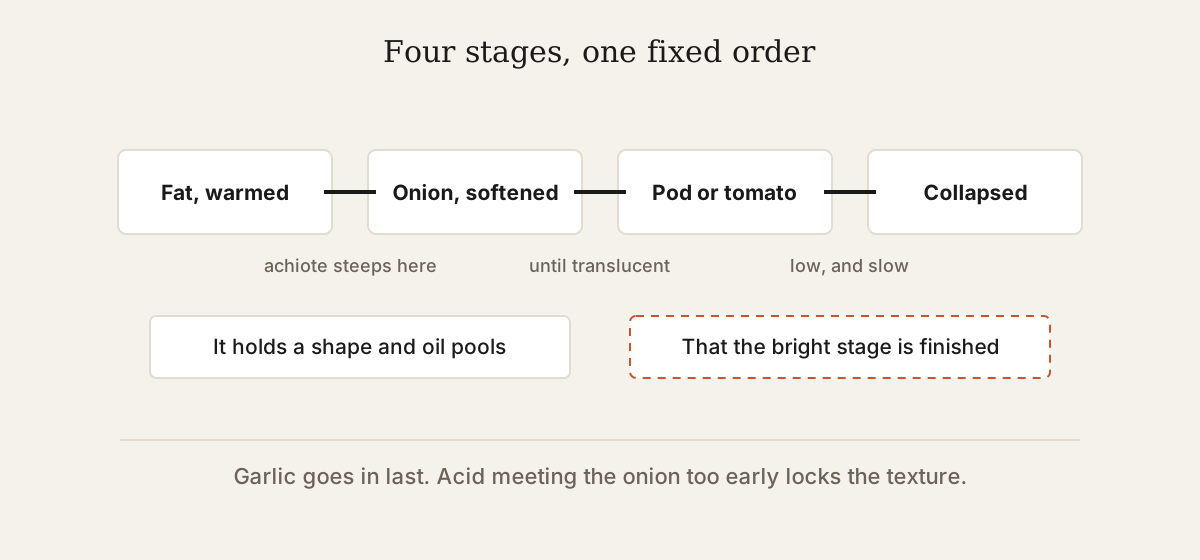
Building a base is fat first, allium second, pod or tomato third, cooked low until the mixture collapses into one thing, and it takes twenty to thirty minutes rather than the five most written recipes suggest. The sequence and the patience are the entire technique.
Every regional variant on this site uses this method. Learn it once with hogao and the Peruvian, Ecuadorian and Venezuelan versions are ingredient swaps rather than new skills.
The sequence, and why it is fixed
Fat goes in first and alone, the allium second, the pod or tomato last, and each stage waits for the one before it. The order is not arbitrary and reversing any part of it changes the result.
Fat first, warmed but not hot. If the base uses achiote, this is where it goes: the seeds or ground annatto steep in the warm oil and colour it before anything else arrives. Straining out whole seeds at this point is normal.
Allium second, and given time. Onion needs to release its water and soften before anything acidic joins it. Acid halts the softening, so onion that meets tomato too early stays firm and stays sharp for the rest of the cooking.
Pod or tomato third. Once the onion is translucent and slumped, the tomato, ají or sweet pepper goes in and the mixture cooks down together.
Garlic, where it is used, goes late. It burns faster than anything else in the pan and turns bitter, so it joins in the last five minutes rather than at the start.
Heat, and the mistake almost everyone makes
Low heat throughout, low enough that the mixture sighs rather than sizzles. This is the difference between a base and a pan of fried vegetables.
At high heat the onion’s sugars brown before its water has left, so you get colour without collapse. The pieces stay distinct, the mixture tastes fried and faintly bitter, and no amount of extra time afterwards fixes it.
At low heat the water leaves first, the cell walls give way, the vegetables slump, and the fat takes up their colour and aroma. That transfer into the fat is the point of the whole exercise, since fat is what carries flavour through the finished dish.
If it is sizzling audibly, the heat is too high. Turn it down and add a splash of water if the pan has gone dry.
How long, and how to tell it is done
Twenty to thirty minutes for a hogao or a refrito, longer for a concentrated Peruvian aderezo, which can run to forty-five. Judge by appearance rather than by the clock.
A finished base looks worse than an unfinished one, and this is the single most useful thing to know. It is darker, thicker, duller and less appetising in the pan. An unfinished base is bright, wet and attractive. Cooks stop at the attractive stage constantly.
Three signals that it is done. The mixture holds a shape briefly when you push it aside with a spoon. The fat has separated slightly and pooled at the edges, carrying colour. Individual pieces are no longer identifiable.
If liquid is still running freely, it is not finished. Keep going with the heat low.
The four mistakes, whichever base you are building
One. Too much heat, covered above, and the most common by a wide margin.
Two. Stopping early. The second most common, and it produces a base that tastes of separate vegetables rather than one thing.
Three. Adding acid too soon. Tomato, vinegar or lime meeting the onion before it has softened locks the texture. If the recipe wants vinegar, it goes in at the end.
Four. Not enough fat. A base is aromatics cooked in fat, and a base built with a spoonful of oil in a large pan dries out and browns instead of collapsing. It should look slightly too oily while cooking; that oil ends up carrying the dish.
A fifth, specific to achiote: burning it. Annatto scorches quickly and turns bitter and grey-brown rather than orange. Warm oil, brief steeping, low heat.
Adapting the method by country
The method holds and the ingredients move, which is why this page covers all four preparations rather than one.
Colombian hogao: oil, long onion, tomato. Nothing else required.
Venezuelan sofrito: oil, onion, ají dulce, tomato, often garlic. The ají dulce goes in with the tomato.
Ecuadorian refrito: achiote-coloured oil first, then onion, then tomato, usually with cumin added with the tomato.
Peruvian aderezo: oil, red onion, garlic, then ají amarillo paste, cooked much harder and longer until very thick and dark. This is the one that departs most from the others in both time and consistency.
Making it in quantity
Make more than you need, because a base freezes better than anything else in these three families and the marginal effort of a larger batch is near zero.
The cooking time barely changes with volume up to a point, so a triple batch costs a few extra minutes rather than three times the work. Use a wider pan rather than a deeper one so the water can leave.
Portion it before freezing into quantities matching a single dish, since thawing a large block and refreezing the remainder degrades it. Ice cube trays work well for small quantities.
Refrigerated it keeps about a week under a thin film of its own oil in a sealed jar.
Frequently asked questions
How do I know when a base is finished?
By appearance rather than time. The mixture should be darker and thicker than it started, the individual pieces should no longer be identifiable, the fat should have separated slightly and taken on colour, and the mixture should briefly hold a shape when pushed aside. A base that still looks bright and wet is not finished.
Can I use a food processor to chop the vegetables?
Yes for chopping, and it saves real time on a large batch. What a processor does badly is texture control: it tends to produce a wet purée rather than a dice, which releases water immediately and lengthens the cooking. Pulse rather than run it, and expect a few extra minutes in the pan.
Why did my base turn bitter?
Most often burnt garlic or burnt achiote, both of which scorch far faster than onion or tomato. Garlic should go in during the last five minutes and achiote should steep in warm rather than hot oil. The other cause is high heat browning the onion sugars before the water has left.
Can I make a base without tomato?
Yes. Peruvian aderezo is built on ají paste rather than tomato, and several regional bases use only onion, fat and a pod. Tomato adds sweetness and liquid and helps the collapse, so a base without it needs a slightly lower heat and a little added water to reach the same texture.
Does the type of fat matter?
Considerably, and it is the component that most identifies a regional version. Neutral oil is the default, achiote-coloured oil marks the Ecuadorian style, and lard appears in older recipes across the region and gives a rounder result. Olive oil is not traditional in most of these preparations and its flavour competes.
The pairing
“Cielo Rojo”, Los Kjarkas, 1981, Bolivia.
Regional. Andean music built on repetition and patience, which is what this method asks for: the same low heat for far longer than seems necessary, until the thing changes.
We write about South and Central American seasoning preparations, what separates the regional variants, and where to buy them in the United States.