How to Make Hogao
Tomato, onion and fat, cooked down slowly until it stops being two vegetables. The method, the timing, and the four mistakes that produce a sauce instead of a base.
Hogao is made by cooking chopped long onion and tomato in fat over low heat until the two collapse into a single soft mass, which takes between twenty and forty minutes.
Everything else on this page is detail on that sentence.
What you need
Hogao needs four things: long onion, ripe tomato, fat and salt.
Cebolla larga, the Colombian long onion, is the traditional allium and is closer to a large spring onion than to a bulb onion. Scallions are the usual United States substitute and a white onion is the fallback.
Ripe tomato. Underripe tomato will not break down and leaves the hogao acidic and watery.
Fat, which is oil in most home kitchens today and was historically rendered pork fat or achiote-coloured oil.
Salt, added early enough to draw water out of the vegetables.
Cumin and colour are optional and regional. A little ground cumin, and annatto oil for colour, are common and are not required for the preparation to be hogao.
The method
Cook the onion first in the fat, add the tomato, then leave it alone on low heat until it collapses.
Chop everything finely rather than dicing it coarsely. Fine pieces break down; large ones stay as pieces.
Soften the onion first, five to ten minutes in the fat over medium-low heat, without browning it.
Add the tomato and the salt together. The salt draws water out, which is what lets the tomato break rather than fry.
Drop the heat and leave it. Twenty to forty minutes depending on the tomato, stirring occasionally.
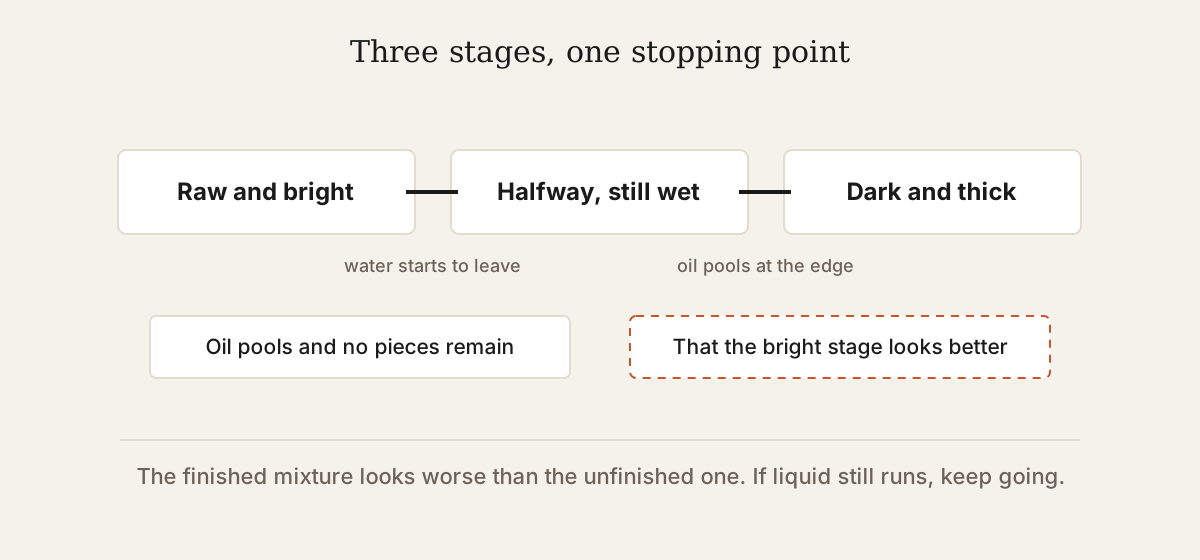
It is done when it is one thing. The test is visual: no distinguishable pieces of onion or tomato, a uniform soft mass that holds its shape on a spoon.
The four mistakes
Hogao fails in four predictable ways, and all four come from rushing it.
Heat too high. The vegetables fry and brown instead of collapsing, which gives a sharp caramelised flavour rather than a soft sweet one.
Chopped too coarsely. Large pieces never fully break down and the result reads as a chunky sauce.
Not cooked long enough. A fifteen-minute hogao still tastes of separate tomato and onion. This is the most common failure by a distance.
Too much liquid left in. If it pools water on the plate it has not reduced enough. Keep going.
How to tell it is finished
A finished hogao is uniform, glossy from the fat, and holds a spoon track that closes slowly.
Drag a spoon through it. The channel should hold for a second and then fill back in. If it fills instantly it is too wet, and if it does not fill at all it has gone too far.
There should be no free water at the edge of the pan.
The colour deepens from bright red to a darker brick as it reduces.
Taste for acidity. A finished hogao should read sweet and round rather than sharp. If it is still sharp it needs longer, not sugar.
Frequently asked questions
How long does hogao actually take?
Twenty to forty minutes of low-heat cooking after the tomato goes in, plus five to ten minutes softening the onion first. The range is wide because it depends on how watery the tomatoes are. The clock is not the test; the collapse into a single mass is.
Can I use canned tomatoes?
Yes, and drain them first. Canned tomatoes carry more liquid than fresh, so a hogao made from them needs longer reduction. Whole peeled tomatoes crushed by hand work better than pre-diced, which are treated with calcium chloride to hold their shape and therefore resist the collapse you are trying to achieve.
What if I cannot get cebolla larga?
Use scallions, including a good amount of the green. They are the closest widely available substitute in the United States. A white onion works and gives a rounder, less grassy result, which is a different hogao rather than a failed one.
Can I make it in a blender to save time?
No. Blending gives you a smooth tomato sauce, not a hogao. The texture comes from vegetables that were cooked until they broke down, and a blended raw mixture cooked briefly does not taste the same or behave the same in a dish.
Do I need annatto or cumin?
Neither annatto nor cumin is required in hogao. Annatto oil deepens the colour and adds very little flavour, and cumin is a regional and household preference. A hogao of onion, tomato, fat and salt cooked properly is complete without either.
The pairing
“La piragua”, José Barros, 1969, Colombia.
Regional. A cumbia by a composer from Banco, Magdalena, about a boat working the Colombian river country where this base is everyday cooking.
We write about seasoning preparations across Latin America, what separates the regional variants, and where to buy them in the United States.