Huacatay: Black Mint, Which Is Not Mint
The pungent Peruvian herb behind ocopa and many an ají verde. What it tastes of, why the English name misleads, and how to buy it in the United States.
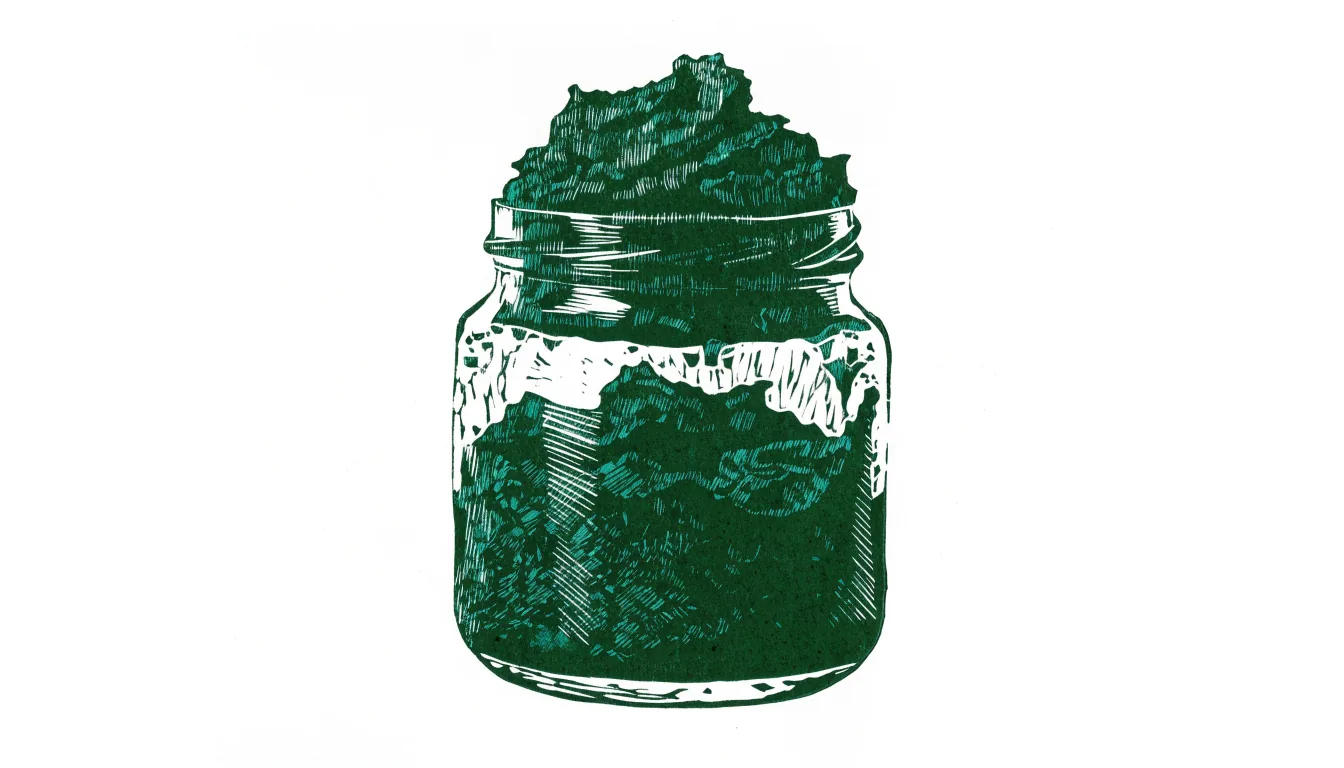
Huacatay is a pungent Peruvian herb usually sold as a dark green paste, and it tastes of aniseed, citrus and something faintly medicinal rather than of mint. Its English name, black mint, is a translation of convenience that sets the wrong expectation before anyone has tasted it.
It is the ingredient that makes a Peruvian ocopa taste like ocopa, and its absence is why most versions made outside Peru taste close but not right.
What huacatay actually is
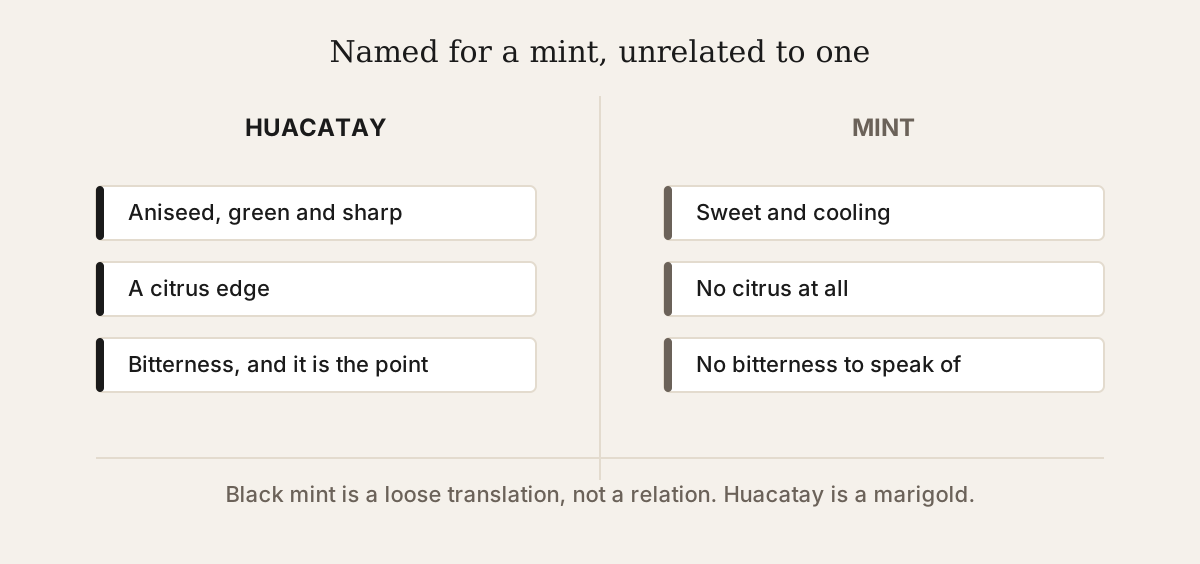
Huacatay is Tagetes minuta, a plant in the marigold family, native to the Andes and used as a culinary herb across Peru and Bolivia. It is not related to mint at all.
The marigold family is the surprise. Its relatives are the ornamental marigolds, and anyone who has crushed a marigold leaf will recognise the resinous, slightly bitter edge huacatay carries under its aniseed note.
The name black mint comes from the dark colour of the paste and from a loose translation, not from any botanical relationship. It is the same class of naming accident as Mexican oregano, where a familiar word was applied to an unfamiliar plant.
It is pungent. Huacatay is much stronger than its quantity suggests and is used in small amounts even in the dishes built around it.
What it tastes of
Aniseed first, then citrus, then a resinous bitterness at the back. It reads as unfamiliar to most people on first tasting, which is worth knowing before committing a dish to it.
The aniseed is not the aniseed of fennel or star anise. It is greener and sharper, closer to tarragon in register though not in flavour.
The bitterness is a feature. In an ocopa or an ají verde it balances the fat of the cheese or the mayonnaise, and a version without it reads flat and heavy.
The intensity is the practical issue. A tablespoon of paste is a substantial addition to a sauce for four, and doubling it will dominate everything else.
Where it belongs
Huacatay appears in a small number of Peruvian preparations where it does a great deal of work.
Ocopa is the clearest case: a Peruvian sauce of huacatay, cheese, ají, nuts and crackers, served over potatoes. Without huacatay it is a nut and cheese sauce and not ocopa.
Ají verde, the Peruvian green sauce, frequently carries it. A version with huacatay tastes distinctly more Peruvian; a version without is still ají verde.
Stews and soups in the highlands use it, generally in small quantities and generally alongside other herbs.
It does not belong everywhere. Huacatay is assertive and specific, and adding it to a preparation from another tradition produces something that tastes of huacatay rather than something improved.
Buying it in the United States
Jarred paste is the practical form and is stocked by Latin American grocers and online importers alongside ají pastes.
Checked on 13 August 2026, the first page of United States results for huacatay returned seed sellers, a herbal supplier and reference material rather than food retailers, which describes that search on that date rather than recommending any seller. Counting rule for that claim: a result counts as a food retailer when it sells a culinary product rather than seeds, plants or supplements. On that rule the food-retail presence on the first page was thin, which is a fair description of how narrow this ingredient’s commercial footprint is in English.
The paste is nonetheless easy to buy if you know to look for it in the same aisle as ají amarillo paste, or to order it alongside one.
Fresh huacatay is very difficult to source outside a Peruvian community, and dried is a poor substitute, losing most of the volatile aniseed character that defines it.
Seed is widely sold, and the plant grows readily, which is a genuine option for anyone who cooks Peruvian food regularly.
Substituting, honestly
There is no good substitute for huacatay, and the usual suggestions do not work.
Mint does not work, despite the name. It is sweet and cooling where huacatay is resinous and bitter, and using it produces a sauce that tastes of mint.
Tarragon gets closest on the aniseed axis and misses the bitterness and the citrus entirely. In an emergency it is defensible in a small quantity.
Basil and coriander are sometimes suggested and are not close. Both are already present in some of these sauces doing a different job.
The honest answer is that huacatay is a specific flavour and a dish built around it either has it or is a different dish. For ocopa in particular, it is not worth making without.
Storage
Jarred paste keeps a year or more unopened and about a month refrigerated once opened.
The paste darkens with air and loses its top notes first, so the aniseed goes before the bitterness. A jar that has gone flat still adds colour and body and no longer earns its place.
It freezes well in small portions, which is worth doing if you buy a large jar and cook Peruvian food occasionally rather than weekly.
Frequently asked questions
Is huacatay a kind of mint?
No, huacatay is Tagetes minuta, in the marigold family, and it is unrelated to mint botanically. The English name black mint comes from the dark colour of the paste and a loose translation. The naming accident is the same shape as Mexican oregano, where a familiar word was attached to an unfamiliar plant.
What can I substitute for huacatay?
Nothing that works well. Mint is the worst option despite the name, being sweet and cooling where huacatay is resinous and bitter. Tarragon comes closest on the aniseed note and misses the citrus and bitterness entirely. For a dish built around huacatay, such as ocopa, the honest answer is to source it or make something else.
How much should I use?
Less than you expect. Huacatay is pungent and a tablespoon of paste is a substantial addition to a sauce serving four. Its bitterness compounds quickly, so add it in stages and taste, particularly the first time you use a new jar, since concentration varies noticeably between producers.
Is huacatay the same as the herb in ají verde?
It is one of the herbs that may be in an ají verde, and it is not required. Ají verde is built on fresh ají, coriander, garlic, lime and an emulsifier, and huacatay is a common addition that makes the sauce taste distinctly more Peruvian. A version without it is still legitimately ají verde.
Can I grow huacatay?
Yes, huacatay can be grown, and seed is widely sold in the United States, which is more than can be said for the culinary paste in general retail. The plant grows readily in warm conditions and is vigorous to the point of being weedy in some regions. For anyone cooking Peruvian food regularly it is a practical alternative to importing paste.
The pairing
“Valicha”, Miguel Ángel Hurtado, 1945, Peru.
Regional. A Quechua huayno from Cusco, from the highlands where huacatay grows and is used, and like the herb it is far better known inside the country than outside it.
We write about seasoning preparations across Latin America, what separates the regional variants, and where to buy them in the United States.