Merkén: What It Is, and Why It Is Not a Chile
A smoked, ground Mapuche seasoning from southern Chile. What goes into it, how it is made, and why reading it through Mexican vocabulary gets it wrong.
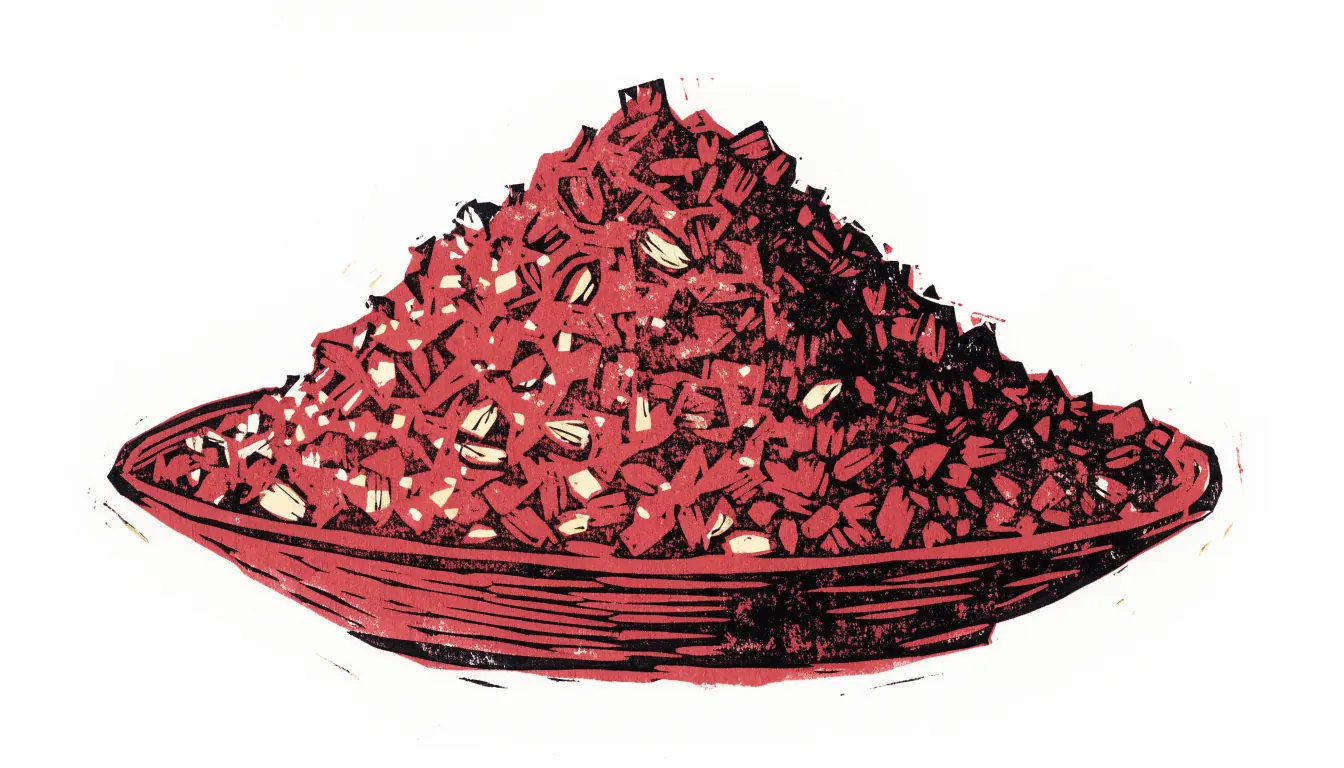
Merkén is a Chilean dry seasoning made from smoked, dried and ground ají cacho de cabra, usually with toasted coriander seed and salt, and it belongs to Mapuche cooking rather than to any pan-Latin chilli tradition. It is a finished blend, not a raw pod.
The reason this page exists is a vocabulary problem. Merkén is routinely described in English as a chile powder, and that single word puts it in the wrong tradition, gives the wrong expectation of heat, and hides what is actually distinctive about it.
What merkén actually is
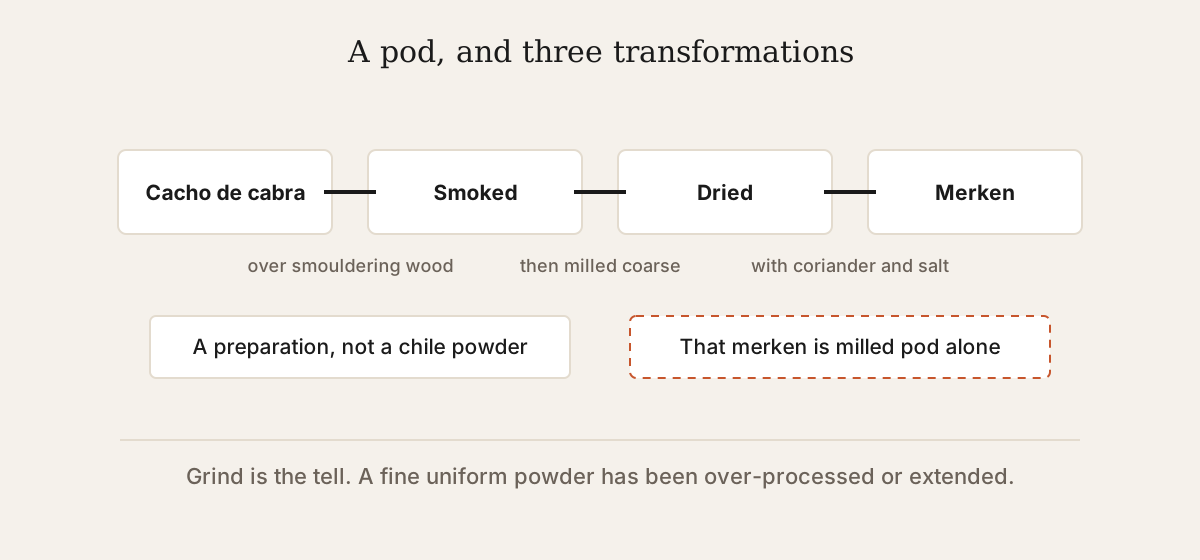
Merkén is ají cacho de cabra that has been smoke-dried and then ground with toasted coriander seed and salt into a coarse, brick-red powder. Three things are happening at once and only one of them is heat.
The pod itself, cacho de cabra, means goat’s horn and describes its long curved shape. It is dried on the plant or after picking, then smoked over wood, which is the step that gives merkén its defining character.
The coriander seed is not a garnish. Toasted and ground with the pod, it supplies a warm citrus note that sits under the smoke and is the reason merkén tastes rounder than a straight ground chilli. Salt is the third component and its proportion varies by producer.
The versions you will see
Merkén natural is the plain blend described above. Merkén especial typically adds cumin and sometimes oregano. Some producers sell a version with a higher salt proportion intended as a table seasoning rather than a cooking one, and the label rarely says so directly.
Why it is not a chile
Calling merkén a chile powder reads it through Mexican vocabulary, and the mistake is not pedantry: it produces the wrong expectations on heat, on use and on origin.
On heat. Cacho de cabra is moderate, and the smoking softens the perception further. Someone approaching merkén expecting the heat of a Mexican chile powder will overshoot the quantity badly. It is a seasoning you can use by the spoonful.
On use. Mexican chilli powders are frequently a base for a sauce that gets cooked. Merkén is most often finished onto food, on bread with oil, over eggs, on grilled meat, into a salad. Its smoke is volatile and long cooking flattens it.
On origin. The Mapuche context is not decorative. Merkén is a specific preparation from a specific people in southern Chile, and folding it into a generic Latin American chilli category erases exactly the thing that makes it worth seeking out.
The regional terms are the correct ones and this site uses them throughout. Ají, not chile. Cacho de cabra, not goat horn pepper.
How to judge one
Look for a coarse grind with visible flecks rather than a fine uniform dust, a deep brick red rather than a bright orange-red, and a short ingredient list.
Grind is the most reliable tell. Merkén should look rustic, with seed fragments and coriander visible. A fine, uniform powder has usually been over-processed or extended.
Colour that is too bright suggests either a young product with less smoking or added colouring. Properly smoked merkén is darker and duller than most people expect.
The ingredient list should be short. Ají cacho de cabra, coriander, salt. Cumin and oregano are legitimate in an especial. Anything beyond that, particularly paprika or a generic chilli powder, means the blend has been extended.
Smell it if you can. The smoke should be obvious and woody rather than acrid. An ashy or bitter smell points to over-smoking or age.
How to use it
Use it as a finishing seasoning rather than a cooking one, because the smoke that defines it is the first thing driven off by heat.
The most common Chilean uses are the simplest: sprinkled on bread with olive oil, over a fried or scrambled egg, onto grilled meat as it rests, into a pebre, or over roast potatoes. It also works stirred into softened butter, into mayonnaise, or over anything with sweetness that can take a smoky counterweight.
Where it works less well is in a long braise or a simmered sauce. It will not ruin the dish, but the smoke and citrus will fade and you will have paid for a character you cooked away.
Start with less than feels right. The salt content varies enough between producers that a spoonful of one brand is not a spoonful of another.
Where to buy it
Specialist spice sellers, South American grocers and a handful of online importers carry it; general supermarkets almost never do.
Checked on 13 August 2026, the first page of United States results for merken returned reference material alongside spice retailers and a Chilean products seller. That describes that search on that date rather than recommending any seller.
Buy from somewhere with turnover. Merkén is a smoked ground product and it fades, so a jar that has sat on a shelf for two years is a weaker version of itself even though it remains perfectly safe.
Storage
Keep it sealed, dark and dry, and expect the smoke to fade over roughly a year even under good conditions. It does not spoil so much as flatten.
Refrigeration is unnecessary and can introduce moisture, which clumps the grind. A small jar bought more often is better than a large one bought once.
Frequently asked questions
Is merkén very spicy?
Moderately, and less than most people expect from a red powder. Ají cacho de cabra is a middling heat, and the smoking and the coriander both soften the perception. Most cooks find it comfortable used by the spoonful rather than the pinch, though salt content varies enough between producers that you should taste a new jar before committing.
What can I substitute for merkén?
Nothing reproduces it, because no common substitute carries smoke, moderate heat and toasted coriander together. The closest approximation is smoked paprika with a little ground coriander seed and a pinch of a hotter ground pod, which gets the shape roughly right and misses the specific pod entirely. Treat it as a stand-in rather than a swap.
Is merkén the same as smoked paprika?
No, merkén and smoked paprika are different. Both are smoked ground pods, but paprika is made from a sweet pepper and carries little or no heat, and it contains no coriander. Merkén is hotter, coarser and more aromatic. They are not interchangeable in either direction without changing the dish.
Can I make merkén at home?
You can approximate it if you can source cacho de cabra, by smoking and drying the pods and grinding them with toasted coriander and salt. What is hard to reproduce is the specific wood smoke and the drying practice, which vary by producer and region. For most cooks buying it is both easier and closer to the real thing.
Why does my merkén taste bitter?
Usually over-smoking at the producer’s end, or age. Ground smoked products pick up an ashy edge as the aromatic compounds fade and the harsher ones remain. A bitter jar is not unsafe, but it will not improve and is worth replacing.
The pairing
“Volver a los Diecisiete”, Violeta Parra, 1966, Chile.
Lyrical. The song is about a return to an earlier self, which is the same movement merkén makes on a table: a preparation older than the modern kitchen it now sits in, still doing exactly what it always did.
We write about South and Central American seasoning preparations, what separates the regional variants, and where to buy them in the United States.