Mexican Oregano and Mediterranean Oregano Are Different Plants
Not a regional variety of the same herb. Different botanical families, different flavour, and the substitution most recipes make without saying so.
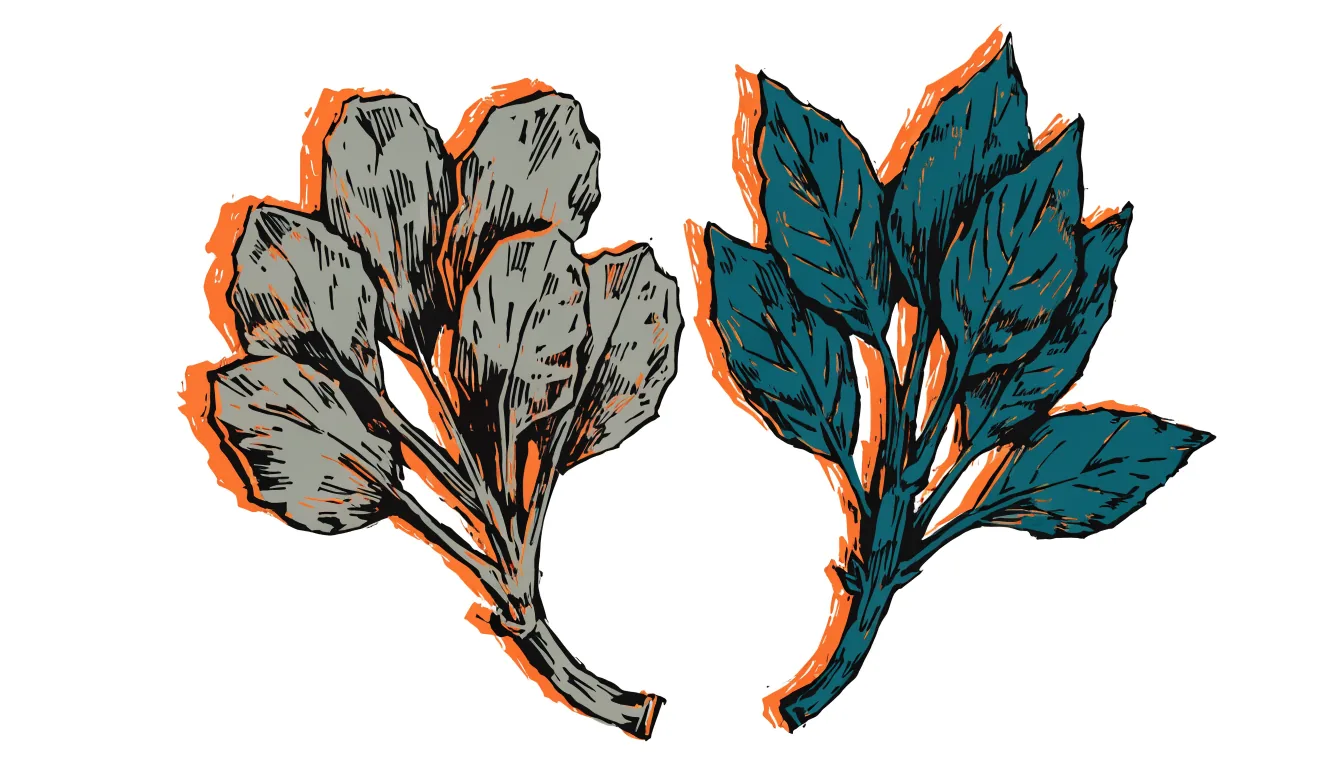
Mexican oregano and Mediterranean oregano are not two varieties of one herb; they belong to different botanical families and taste different enough that substituting one for the other changes the dish. Mediterranean oregano is in the mint family, Mexican oregano is in the verbena family, and they share a name because early Spanish speakers in the Americas found a local plant that smelled familiar.
Almost every English-language source treats them as interchangeable with a note that Mexican oregano is “stronger”. That framing is the problem this page exists to correct.
Researched rather than first-hand. The owner’s direct exposure is Chile, Colombia, Argentina, Peru and Costa Rica; Mexican material on this site is researched and is declared as such.
What each plant actually is
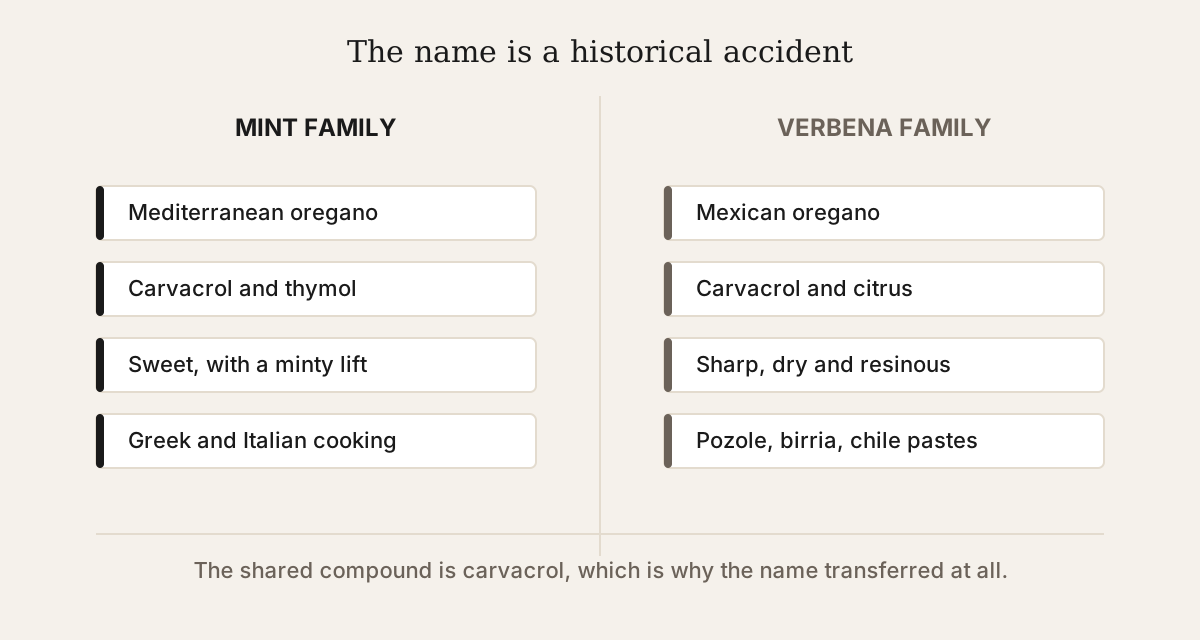
Mediterranean oregano is Origanum vulgare and its relatives, in the mint family, Lamiaceae. Mexican oregano is most commonly Lippia graveolens, in the verbena family, Verbenaceae. They are not close relatives.
The distance is real. Mediterranean oregano’s near relatives are marjoram, thyme, basil and mint. Mexican oregano’s near relatives are lemon verbena and lantana. The two plants converged on a similar aromatic compound and nothing else.
The shared compound is carvacrol, which carries most of what people recognise as “oregano”. Both plants produce it, which is why the name transferred and why the substitution seems to work at first.
What differs is everything around it. Mediterranean oregano carries thymol and a sweet, slightly minty top note. Mexican oregano carries citrus and a resinous, faintly liquorice edge from its verbena lineage.
Why the name transferred
Spanish speakers arriving in the Americas encountered a plant with a familiar smell and used the familiar word. That is the whole explanation, and it is the same mechanism that produced a great many confusing food names across both continents.
The name is a historical accident rather than a botanical claim, which is worth stating plainly because most sources present the two as a single herb with regional variants.
How they taste different
Mediterranean oregano is sweeter and more floral; Mexican oregano is more citric, more resinous and slightly bitter.
Mediterranean reads as warm and slightly sweet, with a minty lift that sits well against tomato, olive oil and lamb. It is the oregano of a Greek salad and of a Neapolitan pizza.
Mexican reads as sharper and drier, with a lemony note and a resinous back end that stands up to chile, cumin and long cooking. It is the oregano of a pozole and of a chile paste.
The practical test. Crush a little of each between your fingers. The Mediterranean smells like something you would put on tomatoes. The Mexican smells like something you would put in a stew with dried chiles, and if you know lemon verbena you will recognise the family resemblance immediately.
When the substitution works and when it does not
Substituting works where oregano is a background note and fails where it is doing structural work.
It works reasonably in a tomato sauce, a marinade with several competing aromatics, or anything where oregano is one of six dried herbs. Use about two thirds as much Mexican in place of Mediterranean, since it is more assertive.
It fails in Mexican cooking specifically. A pozole, a birria, a chile paste or a bean pot built with Mediterranean oregano tastes recognisably wrong to anyone who knows the dish, because the sweet minty note sits at odds with dried chile and cumin. This is the direction of substitution that matters, and it is the one most English-language recipes make silently by writing “oregano”.
It also fails in the other direction, more subtly. Mexican oregano in a Greek dish reads harsh and slightly medicinal.
If a recipe from a Mexican tradition says oregano and you have only Mediterranean, use less than called for and add a small strip of lemon zest, which approximates the citric note without pretending to be the same herb.
Reading a label
Most jars sold in the United States simply say oregano, and the plant is usually Mediterranean unless the label says otherwise.
Look for the word Mexican, or the botanical name. Lippia graveolens on a label is unambiguous. Jars sold in Latin American groceries are more often the Mexican plant even where the label is not specific.
Origin is a weak clue and not a reliable one. Oregano is grown commercially in many countries and the country of packing tells you nothing about the species.
Checked on 13 August 2026, the first page of United States results for mexican oregano vs oregano returned food publications and spice retailers rather than any botanical authority, which describes that search on that date. Counting rule for the claim below: a source counts as treating them as one herb when it presents Mexican oregano as a variety, strain or regional version of oregano rather than as a separate species. On that reading, most of the general-audience results did so.
A third plant complicates it further. Some products sold as Mexican oregano are Poliomintha longiflora, which is back in the mint family. It is a legitimate Mexican oregano in culinary terms and a different plant again botanically, which is worth knowing before treating the two-family split as complete.
Storage, and why the difference matters here too
Both are dried herbs that fade rather than spoil, and Mexican oregano holds its character slightly longer because its aromatics are more resinous and less volatile.
Keep both sealed, dark and dry, away from the stove. Expect six months to a year of useful life, less for the Mediterranean, which loses its sweeter top notes first and can end up tasting like dry grass while looking perfectly fine.
Buy the one you will use. For most kitchens cooking across both traditions, two small jars is the honest answer, and it is cheaper than it sounds because dried oregano is inexpensive in both forms.
Frequently asked questions
Is Mexican oregano just a stronger oregano?
No, Mexican oregano and Mediterranean oregano are plants from different botanical families, Verbenaceae and Lamiaceae, that share the aromatic compound carvacrol and little else. Describing Mexican oregano as a stronger version of the same herb is the specific error this page exists to correct, because it implies the difference is one of degree when it is one of species.
Can I substitute one for the other?
In a dish where oregano is a background note among several herbs, yes, using about two thirds as much Mexican in place of Mediterranean. In Mexican cooking where oregano works alongside dried chile and cumin, the substitution is noticeably wrong. That direction matters most because it is the one English-language recipes make silently.
Which oregano do Mexican recipes mean?
The Mexican plant, Lippia graveolens, even when the recipe simply says oregano. English-language recipes written for a general audience frequently do not specify, which is how a great many home cooks end up making pozole with the Mediterranean herb without knowing a substitution occurred.
How can I tell which one I have?
Read the label for the word Mexican or a botanical name, and if neither is present assume Mediterranean, since that is what unlabelled oregano generally is in the United States. Failing that, crush a little: the Mexican plant carries a citric, resinous note related to lemon verbena that the Mediterranean plant does not have.
Is Mexican oregano related to lemon verbena?
Yes, in the sense that both are in the verbena family, Verbenaceae, and the family resemblance is detectable in the aroma. That relationship is the clearest way to understand why the two oreganos taste different: one is a relative of mint and marjoram, the other of lemon verbena and lantana.
The pairing
“La Llorona”, Chavela Vargas, 1993, Mexico.
Lyrical. A song about mistaken and mourned identity, sung by an artist born in Costa Rica who became inseparable from Mexico, which is a fair emblem for a plant that took another plant’s name and kept it.
We write about seasoning preparations across Latin America, what separates the regional variants, and where to buy them in the United States.