Mole Paste: What You Are Actually Buying in the Jar
The concentrated base sold in jars and by weight, what separates the main colours, how to thin it, and why a jarred mole is a starting point rather than a finished sauce.
Mole paste is a concentrated seasoning base of ground chiles, seeds, nuts, spices and often chocolate, sold in jars or by weight, and thinned with stock to make a finished sauce.
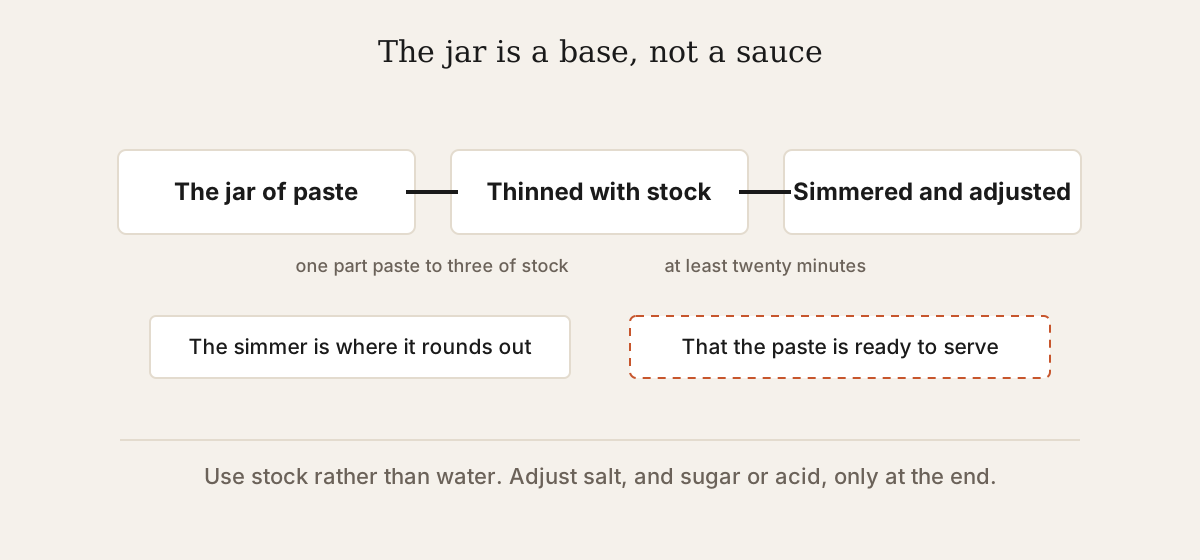
The jar is not the sauce. It is a base that expects to be diluted, cooked out and adjusted, and treating it as a ready sauce is the most common disappointment with it.
Coverage of Mexican preparations on this site is researched rather than first-hand, written from published sources and supplier documentation.
What is in a mole paste
A mole paste is a ground and fried mixture of dried chiles, seeds, nuts, aromatics and spices, reduced to a dense concentrate.
Dried chiles are the backbone, and which ones are used is what separates the colours.
Seeds and nuts thicken it, most often sesame, pumpkin seed, almonds or peanuts, and they are the reason mole has body without flour.
Spices vary widely, with cinnamon, clove and black pepper common.
Chocolate appears in some moles and not others. Mole poblano and mole negro commonly carry it; mole verde and mole amarillo do not.
Bread or tortilla is often ground in as a thickener and is invisible in the finished paste.
The colours, briefly
Mole is a family and the colour names identify members of it, distinguished mainly by the chiles used.
| Mole | Chiles that define it | Chocolate |
|---|---|---|
| Poblano | ancho, pasilla, mulato | usually |
| Negro | chilhuacle negro, charred | usually |
| Rojo | ancho, guajillo | sometimes |
| Coloradito | ancho, guajillo | a little |
| Amarillo | chilcostle, guajillo | no |
| Verde | fresh chiles and herbs | no |
Oaxaca is associated with seven moles, which is a regional formulation rather than a national rule.
Mole poblano is the one most exported and is what most jarred paste outside Mexico contains.
Turning paste into sauce
Thin the paste with hot stock, cook it out, then adjust salt and sweetness.
Use stock rather than water. Chicken or turkey stock is standard and water gives a thin, flat result.
Start at roughly one part paste to three parts stock and adjust. Jarred pastes vary in concentration and the label ratio is a starting point.
Whisk it into hot liquid gradually, the way you would loosen a roux, or it will stay lumpy.
Simmer for at least twenty minutes. This is the step people skip. Uncooked paste tastes raw and harsh, and the simmer is where it rounds out.
Adjust at the end. Salt almost always, a little sugar or chocolate if it is sharp, a little acid if it is flat.
Judging a jarred one
A good jarred paste smells of toasted chile rather than of sugar, and lists chiles before sweeteners.
Read the ingredient order. Sugar in first or second position means a sweet product rather than a chile-forward one.
Look for named chiles rather than a generic chile powder listing.
Check for hydrogenated fat, which is common in inexpensive brands and affects both texture and taste.
Price tracks nut and seed content, which is where most of the cost of real mole sits.
Buying it
Jarred mole paste is widely available from Mexican importers and in Latin grocers, and by weight from specialist sellers.
Checked on 13 August 2026, a United States search for the term returned importer and grocer listings alongside recipe publishers on the first page. Counting rule: a result counts as a seller when it offers mole paste for purchase. Sellers were present on that rule, which describes that search on that date and is not a recommendation of any seller.
Oaxacan brands are the ones to look for if you want negro or coloradito rather than poblano.
Paste sold by weight from a Mexican grocer is usually better than shelf-stable jarred, and it needs refrigeration.
Storage
Refrigerated after opening, jarred paste keeps for months, and it freezes well.
The fat and salt content are preservative.
Freeze in portions sized to one meal, since the paste is difficult to divide once frozen solid.
Finished sauce also freezes and many cooks make a large batch deliberately.
Oil separation is normal and stirring resolves it.
Frequently asked questions
Is mole always chocolate?
No, and this is the most persistent misconception about it. Chocolate appears in mole poblano and mole negro among others, and is absent from mole verde, mole amarillo and many regional moles entirely. Where it is present it is a background bitter note rather than a sweet one, and it is never the dominant flavour.
Can I use mole paste straight from the jar?
Not usefully. The paste is a concentrate that expects to be thinned with stock and simmered for at least twenty minutes. Used undiluted it is intensely salty and tastes raw and harsh, which is where most disappointment with jarred mole comes from.
How much stock do I need?
Roughly three parts stock to one part paste is a reasonable starting point, adjusted to the consistency you want and to how concentrated the particular brand is. Add it hot and gradually, whisking, then simmer and reassess. The sauce thickens as it cooks.
What is the difference between mole poblano and mole negro?
Mainly the chiles and the degree of charring. Poblano is built on ancho, pasilla and mulato and is reddish brown. Negro is built on chilhuacle negro with chiles charred nearly to black, which gives it a distinctly bitter depth and its colour. Negro is the more laborious of the two and the harder to find outside Oaxaca.
Is mole spicy?
Usually only moderately. The chiles in most moles are the mild dried ones, ancho, mulato and pasilla, chosen for fruit and depth rather than heat. A mole can be made hot and most classic ones are not, which surprises people expecting the chile count to mean fire.
The pairing
“Cielo Rojo”, Juan Záizar, 1958, Mexico.
Regional. A ranchera by a composer from Jalisco, from the country whose regional kitchens each claim their own mole.
We write about seasoning preparations across Latin America, what separates the regional variants, and where to buy them in the United States.