Mulato Chile: The Dark One in the Mole Trinity
Chocolate, liquorice and smoke, and almost always mistaken for ancho. What mulato is, how to tell the two apart, and why mole poblano needs all three.
Mulato is a dried poblano-type chile, dark brown to nearly black, tasting of chocolate, liquorice and dried fruit, with mild heat.
It is the chile most often confused with ancho, and the two come from closely related plants that ripen and dry differently.
Coverage of Mexican ingredients on this site is researched rather than first-hand, written from published sources and supplier documentation.
What mulato is
Mulato is a dried chile from a poblano-type plant, distinguished from ancho by cultivar and by how it ripens.
The fresh chile ripens to a brown-red rather than the bright red that becomes ancho.
Dried, it is dark brown to nearly black, with a slight sheen.
It is the same broad shape as ancho and roughly the same size, which is why shape is useless for telling them apart.
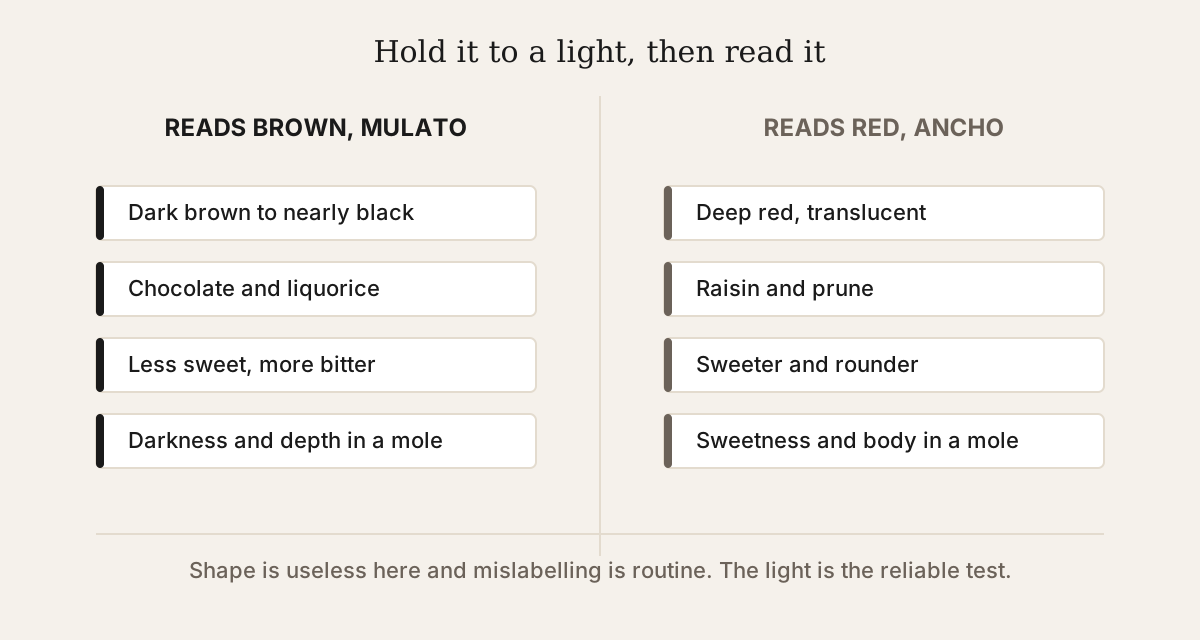
Held to the light it reads brown, where ancho reads red. This is the reliable test.
What it tastes of
Mulato is darker and less sweet than ancho, with chocolate, liquorice and a smoky edge.
Chocolate is the note people name first, and it is present without any chocolate being involved.
Liquorice and dried cherry sit underneath.
It is less sweet and slightly more bitter than ancho, which is why the two are used together rather than one replacing the other.
Heat is mild, comparable to ancho, in the 1,000 to 2,500 range.
Why mole poblano uses all three
Ancho, mulato and pasilla each contribute something the others do not, which is why classic recipes specify all three.
Ancho brings sweetness and body.
Mulato brings darkness, chocolate and depth.
Pasilla brings herbaceous bitterness and complexity.
Substituting one for another flattens the sauce rather than ruining it, and the result is recognisably a simpler mole.
Proportions vary by recipe and by cook, and there is no single authoritative ratio.
Buying it
Look for pliable pods that read brown against the light and smell of chocolate rather than raisin.
Pliable, not brittle, as with any dried chile.
Check against a light. Brown means mulato, red means ancho, whatever the bag says.
Smell the bag. Mulato is chocolate and liquorice; ancho is raisin and prune.
Mislabelling is routine. United States retail frequently sells one as the other, sometimes through genuine confusion in the supply chain.
Checked on 13 August 2026, a United States search for the term returned spice retailers and recipe publishers on the first page. Counting rule: a result counts as a seller when it offers mulato chiles for purchase. Sellers were present on that rule, which describes that search on that date and is not a recommendation of any seller.
Using it
Toast briefly, rehydrate, blend and strain, exactly as with ancho.
Seconds on the comal, not minutes. Mulato burns as fast as any dried chile and burnt is unusable.
Rehydrate twenty minutes in hot water.
Taste the soaking liquid before using it. Mulato’s soaking water can be noticeably bitter and is often better discarded.
It darkens a sauce considerably, which is worth planning for if colour matters.
Storage
Airtight and dark, six to twelve months, the same as ancho.
Aroma goes first, then pliability.
Freezing extends it and does not damage the pods.
Store away from ground spices, since dried chiles pick up other aromas readily.
Frequently asked questions
What is the difference between mulato and ancho?
Both are dried poblano-type chiles and they come from different cultivars that ripen differently. Ancho reads red when held to a light and tastes of raisin and prune. Mulato reads brown to nearly black and tastes of chocolate and liquorice. They look almost identical in a bag, which is why the light test matters.
Can I use ancho instead of mulato?
Yes, and the sauce will be sweeter and lighter. In mole poblano, where all three of ancho, mulato and pasilla are specified, substituting loses the depth mulato supplies. It produces a simpler sauce rather than a failed one.
Is mulato hot?
No, mulato is mild at most, in the same range as ancho at roughly 1,000 to 2,500 Scoville units. It is used for darkness and depth. Heat in a mole comes from other chiles added deliberately.
Why does mulato taste of chocolate when there is no chocolate in it?
Because the compounds produced as the chile ripens and dries overlap with those in roasted cacao. It is a genuine flavour association rather than suggestion, and it is part of why mole poblano pairs chocolate with these chiles so naturally.
Is the soaking liquid worth keeping?
Sometimes, and less often than with ancho. Mulato’s soaking water can carry real bitterness from the skins. Taste it before deciding, and use plain stock instead if it is sharp.
The pairing
“Dios Nunca Muere”, Macedonio Alcalá, 1868, Mexico.
Regional. A waltz that serves as the anthem of Oaxaca, the state whose seven moles depend on chiles like this one.
We write about seasoning preparations across Latin America, what separates the regional variants, and where to buy them in the United States.