Paico and Epazote: One Plant, Two Names, Two Traditions
The same herb, Dysphania ambrosioides, called paico in the Andes and epazote in Mexico. What each tradition does with it, and why English treats them as two ingredients.
Paico and epazote are the same plant, Dysphania ambrosioides, under a South American name and a Mexican one.
They are not related ingredients or close substitutes. They are one species with two regional names, and English-language sources routinely list them as separate herbs.
Coverage of Mexican use here is researched rather than first-hand, written from published sources and supplier documentation. Andean use falls within the travel and sourcing standing this site declares.
Floor note: no measured competitor floor exists on file for this head, so this article is written to the length the material supports rather than to a target. That is stated rather than hidden.
They are the same species
Dysphania ambrosioides is a single species, native to Central America, South America and southern Mexico, and both names refer to it.
It was formerly classified as Chenopodium ambrosioides, and older sources use that name, which adds a third label to the confusion.
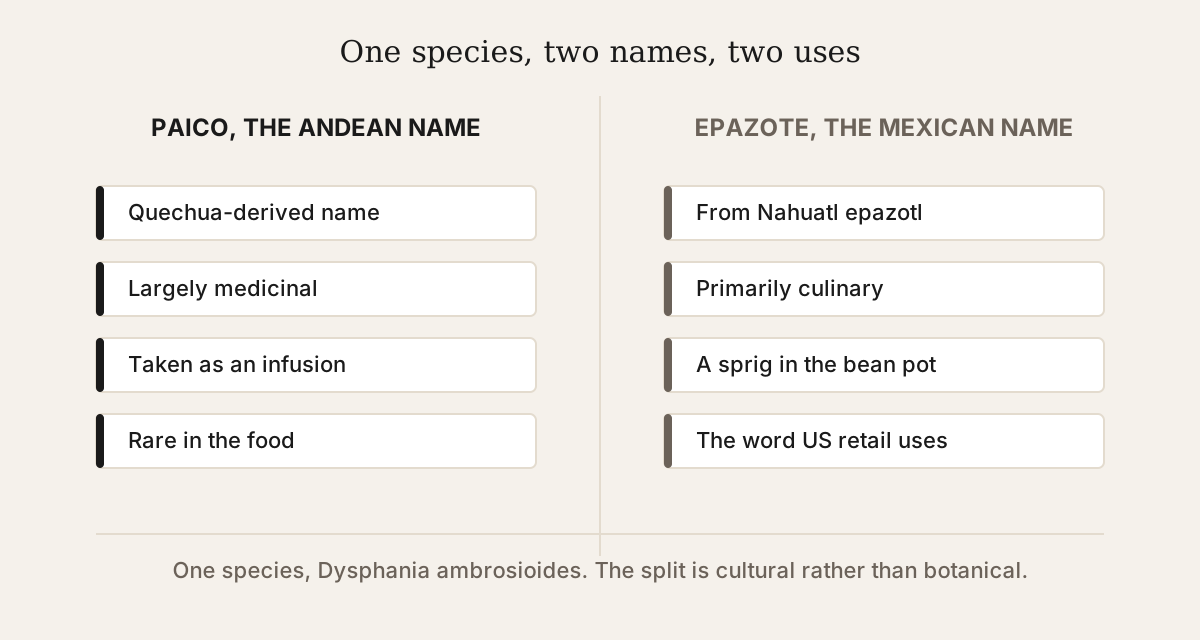
Paico is the Quechua-derived name used in Peru, Bolivia, Ecuador and parts of Argentina and Chile.
Epazote is from Nahuatl epazōtl, and is the Mexican and Central American name.
English has borrowed epazote and not paico, which is why the Mexican name is the one on most United States packaging.
Retail sometimes confirms the identity directly. Products sold as paico powder are labelled with epazote as a parenthetical gloss, which is the clearest available evidence that sellers know they are one thing.
What each tradition does with it
The plant is the same and the uses diverge sharply, which is the substance of the distinction worth keeping.
In Mexico epazote is primarily culinary. It goes into black beans, into quesadillas with squash blossom, into soups and into some moles, added late and used as a fresh or dried leaf.
In the Andes paico is primarily medicinal, taken as an infusion, and it appears in food far less often.
The bean association is Mexican and specific. Epazote is added to pot beans both for flavour and for a traditional carminative purpose, and that pairing has no real Andean equivalent.
So a recipe calling for epazote is nearly always Mexican, and a source discussing paico is nearly always discussing an infusion rather than a dish.
What it tastes of
Epazote is pungent, resinous and slightly medicinal, with notes variously described as petroleum, oregano, mint and citrus.
It is polarising and there is no consensus description, which is itself informative about how strong and unusual it is.
A little is enough. One sprig seasons a large pot of beans.
Cooking softens it. Raw epazote is much more aggressive than cooked, which is why it goes in during simmering rather than at the table.
Dried is milder than fresh and is the form most available in the United States.
Safety, stated plainly
Epazote oil is toxic in concentration, and culinary quantities of the leaf are the traditional and normal use.
The concern is ascaridole, a compound in the plant’s essential oil, which is toxic at concentrated doses.
Culinary use means a sprig in a pot, which is the quantity the tradition uses and has used for a very long time.
Concentrated extracts and oils are a different matter entirely from a leaf in a bean pot, and this site does not evaluate medicinal preparations or dosing.
Pregnancy is the case most often flagged in the literature, and any question there belongs with a clinician rather than a cooking site.
Buying it in the United States
Dried epazote is widely available in Latin grocers and online, fresh is seasonal and regional, and paico as a label is rare.
Checked on 13 August 2026, a United States search for paico returned supplement and powder listings with epazote given as a gloss on the first result. Counting rule: a result counts as a seller when it offers the herb in any culinary or infusion form for purchase. Sellers were present on that rule, which describes that search on that date and is not a recommendation of any seller.
Search on epazote rather than paico if you want the culinary herb. That is the word United States retail uses.
Fresh epazote appears in Mexican grocers in warmer months and in some farmers markets, and it grows readily as a weed in much of the United States.
Dried is the reliable form and works for beans, which is the main use.
Frequently asked questions
Are paico and epazote really the same plant?
Yes, paico and epazote are one plant. Both names refer to Dysphania ambrosioides, formerly classified as Chenopodium ambrosioides. Paico is the Quechua-derived Andean name and epazote the Nahuatl-derived Mexican one. Retail listings sometimes make this explicit by giving both names on the same package.
Can I substitute one for the other?
The question does not arise, because they are the same herb. What does differ is the form each tradition uses and what it is used for, so a recipe calling for fresh epazote in beans is not satisfied by a paico infusion product, not because the plant differs but because the preparation does.
Is epazote safe to eat?
In culinary quantities it is the traditional and normal seasoning it has been for centuries. The safety discussions concern ascaridole in the concentrated essential oil rather than a sprig in a pot of beans, and concentrated extracts are a different thing from the leaf. Specific medical questions, including in pregnancy, belong with a clinician.
What can I use instead of epazote in beans?
Nothing reproduces it. A bay leaf plus a little dried oregano covers some of the savoury background and none of the distinctive resinous note. Many cooks simply omit it, which gives a perfectly good pot of beans that tastes different rather than deficient.
Why does English treat them as two herbs?
Because English borrowed only epazote, from Mexican Spanish, and encountered paico separately through Andean botanical and herbal sources. Two entry points into the language produced two entries in reference works, and nothing forced them to be reconciled. The plant was also reclassified between genera, which left older and newer botanical names in circulation as well.
The pairing
“Ojos Azules”, Manuel Casazola Huancco, 1940s, Peru.
Regional. A huayno from the Peruvian highlands where paico grows as a common plant and is drunk as an infusion rather than cooked.
We write about seasoning preparations across Latin America, what separates the regional variants, and where to buy them in the United States.