Palillo: The Peruvian Yellow, and the Jar That Is Usually Turmeric
The powder that makes Peruvian stews yellow. What the name actually covers, why turmeric is sold under it, and what that means when you buy a jar.
Palillo is the Peruvian name for a yellow colouring powder used in stews, rice and ají sauces, and the name is applied to at least two different things, one of them turmeric.
That ambiguity is the article. A jar labelled palillo in the United States is usually turmeric, and a jar bought in a Peruvian market may not be.
What palillo actually is
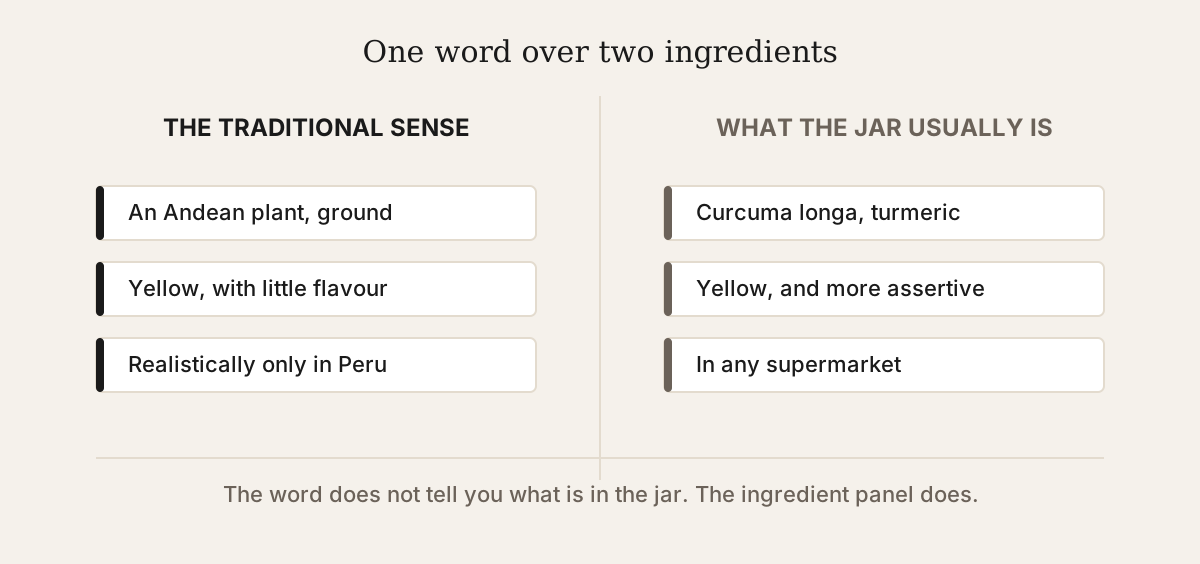
Palillo is a yellow powder used for colour in Peruvian cooking, and the name covers more than one plant.
The traditional sense refers to an Andean plant whose dried and ground root or rhizome gives a yellow colour with very little flavour of its own.
The commercial sense is very often turmeric. Curcuma longa is widely packed, sold and labelled as palillo both in Peru and in export markets.
Both are used for the same job, which is why the substitution happened and why it goes largely unremarked.
Palillo also means toothpick and drumstick in general Spanish. That is a homograph rather than a culinary ambiguity, and it is worth knowing because it clutters search results.
The word does not tell you what is in the jar. Reading the ingredient panel does.
What it contributes
Palillo is used for colour first and flavour a distant second.
The yellow is the point. It gives Peruvian stews, rice dishes and sauces their characteristic colour without adding the red that ají panca or ají colour would.
Flavour contribution is mild in the traditional sense, which is precisely why it is used where a cook wants colour without a taste.
Turmeric sold as palillo is more assertive, carrying the earthy and slightly bitter note that turmeric always has, and in quantity that is detectable in the finished dish.
It contributes no heat at all. Nothing sold as palillo is a chile.
Where it belongs
Palillo belongs in Peruvian home cooking wherever a yellow colour is wanted, most visibly in stews, rice and the yellow ají sauces.
Arroz takes it to produce yellow rice.
Stews and guisos use it alongside the aderezo at the start of cooking.
Ají sauces sometimes take a little to deepen the yellow that ají amarillo already provides.
Papa a la huancaína and related yellow sauces are where the colour matters most visibly.
It is not a finishing seasoning. It goes in during cooking, with the fat and the aromatics.
Bloom it in fat rather than in liquid. The pigment in both the traditional plant and in turmeric is more soluble in oil than in water, so adding it to the aderezo at the start gives a deeper and more even colour than stirring it into a simmering pot later. A powder added late tends to sit on the surface and taste raw.
Buying it in the United States
Jars labelled palillo are sold by Peruvian importers, and in the United States the contents are most often turmeric.
Checked on 13 August 2026, a United States search for the term returned Peruvian importer listings alongside general Spanish-language results for the non-culinary senses of the word. Counting rule: a result counts as a seller when it offers a culinary powder labelled palillo for purchase. Sellers were present on that rule, which describes that search on that date and is not a recommendation of any seller.
Read the ingredient panel. A jar declaring Curcuma longa or turmeric is turmeric, whatever the front label says, and that is not fraud so much as an established naming convention.
Plain turmeric is a fully adequate substitute for almost every use, and is cheaper and easier to buy.
If you want the traditional Andean plant specifically, a Peruvian market in Peru is realistically the only reliable source, and this page cannot verify what any given retailer ships.
Substituting, honestly
Turmeric substitutes for palillo directly, and in the United States it very often already is what you are buying.
Use turmeric one for one where a recipe calls for palillo.
Use slightly less if flavour matters, since turmeric is more assertive than the traditional plant.
Annatto is the wrong substitute. Achiote gives orange to red rather than yellow, and it changes the colour of the dish rather than matching it.
Saffron is not a substitute at any sensible price, and its flavour is entirely different.
Storage
Airtight, dark and dry, and it keeps its colour longer than it keeps any aroma.
Ground colouring powders fade with light exposure, so a clear jar on a sunny shelf is the fastest way to lose the yellow.
It does not spoil. An old jar colours less strongly rather than becoming unsafe.
It stains. Turmeric and palillo both mark cloth, plastic and wooden spoons permanently, which is worth knowing before the first use.
Frequently asked questions
Is palillo just turmeric?
Often yes, and not always. In United States retail a jar labelled palillo is most commonly turmeric, Curcuma longa. The traditional Peruvian sense refers to an Andean plant used for the same purpose with a milder flavour. The two are used interchangeably for colour, and the label alone will not tell you which you have.
Can I use turmeric instead of palillo?
Yes, turmeric substitutes for palillo one for one, and it is what many recipes assume anyway. Turmeric carries slightly more of its own earthy flavour, so a cook who wants pure colour with no taste can use a little less. No other yellow spice substitutes as directly.
Is palillo spicy?
No. Nothing sold as palillo carries capsaicin. It is a colouring agent, and any heat in a Peruvian dish comes from the ají, not from this.
Why do search results for palillo show toothpicks?
Because palillo is an ordinary Spanish word meaning toothpick, and also a drumstick. That is a homograph unrelated to the spice, and it is the main reason searching for the culinary sense in English returns mixed results.
Does palillo have the health properties turmeric is credited with?
Where the jar contains turmeric it contains turmeric, and this site does not evaluate health claims about any ingredient. Where it contains the traditional Andean plant, the two are different species and claims made about one do not transfer to the other.
The pairing
“El cóndor pasa”, Daniel Alomía Robles, 1913, Peru.
Regional. Written by a Peruvian composer who collected Andean melodies from the highlands where palillo is grown and used, and the most widely known piece of Peruvian music in the world.
We write about seasoning preparations across Latin America, what separates the regional variants, and where to buy them in the United States.