Peruvian Aderezo: The Base Cooked Down Hardest
Red onion, garlic and ají paste reduced until dark and thick. Why it is the densest of the four mainland bases, and how far to take it.
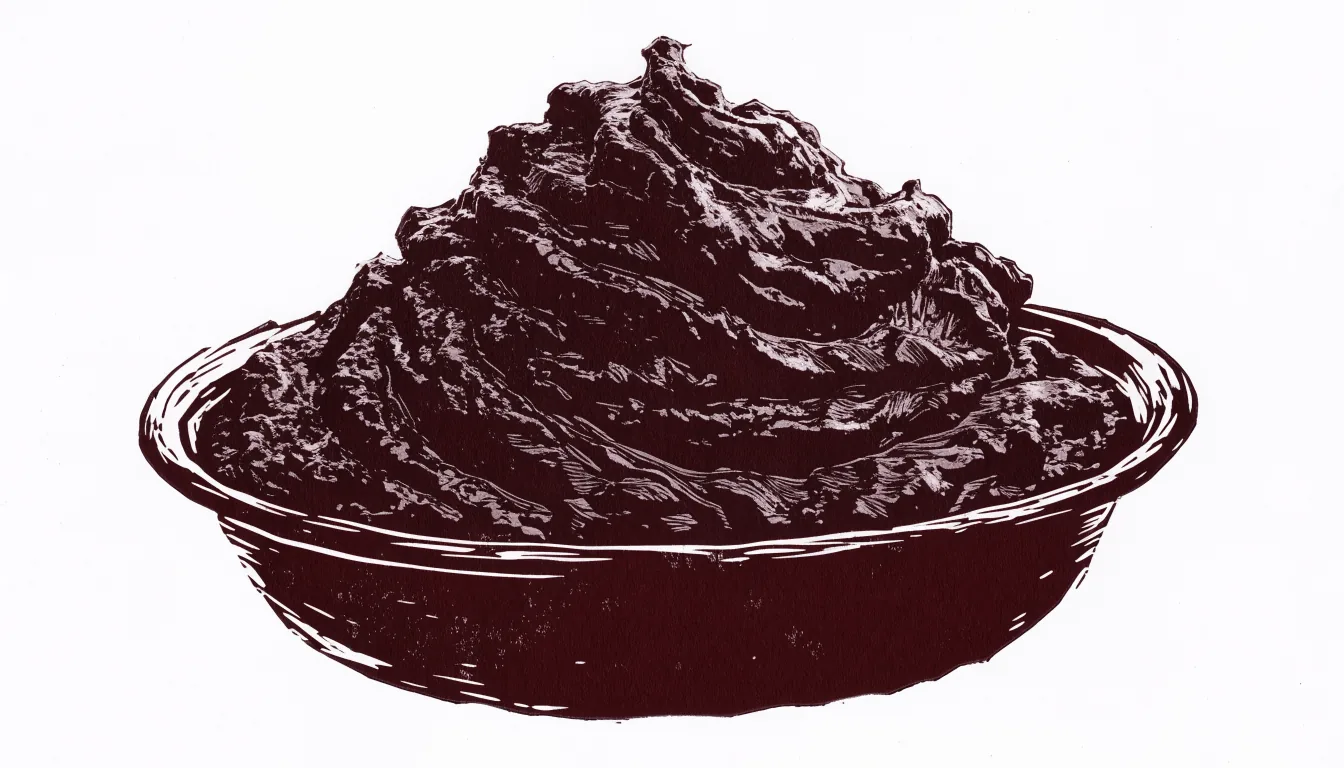
Aderezo is the Peruvian base of red onion, garlic and ají paste cooked down in oil until it is dark, thick and almost jammy, and it is taken considerably further than any of the other mainland bases. Where a Colombian hogao is a bed, an aderezo is closer to a foundation stone.
The word means seasoning or dressing in general Spanish, and in a Peruvian kitchen it means this specific cooked base. That gap causes most of the confusion in English-language recipes.
What aderezo actually is
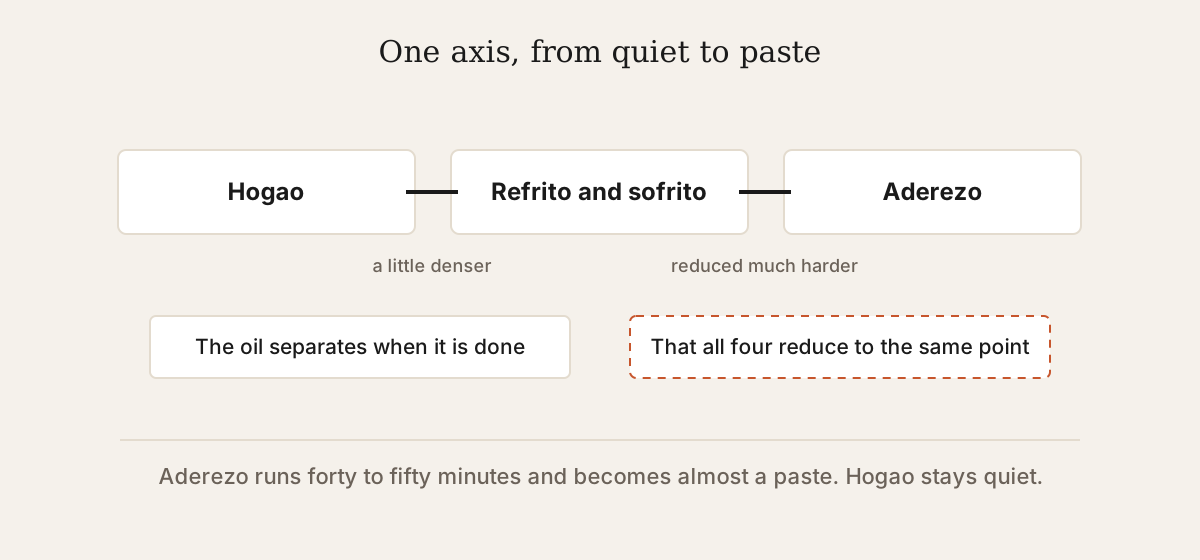
Aderezo is red onion cooked slowly in oil with garlic and ají amarillo paste until the mixture darkens, thickens and the oil separates out, taking forty minutes or more. Four components and a long reduction.
Red onion rather than white is the Peruvian default and it matters more here than in the other bases, because the long cooking concentrates whatever sweetness the onion brings and red onion brings more of it.
Ají amarillo paste is the usual pod component, sometimes with ají panca alongside it for depth and colour. Panca is milder and smokier, and a base carrying both is common in stews.
Cumin appears in many versions and oregano in some. Neither is universal.
The finished texture is the identifying feature. Aderezo should be thick enough to hold its shape on a spoon, dark reddish-brown rather than orange, and glossy with separated oil.
Why it is reduced so far
The depth is doing structural work rather than being a matter of taste. A Peruvian stew is often built on a small quantity of a very concentrated base rather than a large quantity of a light one.
That inversion explains the technique. Because the base is dense, a couple of tablespoons season a whole pot, and because it is dense it can be made ahead in quantity and used a spoonful at a time.
The practical test is the oil. When the oil separates cleanly and pools at the edges carrying colour, the water has gone and the base is finished. Stopping before that point leaves a wet mixture that behaves like a sauce rather than a foundation.
It takes longer than seems reasonable. Forty to fifty minutes over low heat is normal, and rushing it produces a fried mixture with the vegetables still distinct.
How it differs from the other three
Aderezo is the densest and the most assertive of the four, and the only one where a pod paste rather than tomato does the heavy lifting.
Against Colombian hogao, which is tomato and long onion and deliberately quiet, aderezo is a different order of concentration. Substituting one for the other changes the dish substantially in both directions.
Against Ecuadorian refrito, which leans on achiote-coloured oil for colour and earthiness, aderezo gets its colour from the pod paste and its depth from reduction.
Against Venezuelan sofrito, which carries ají dulce for perfume, aderezo carries ají amarillo for fruit and heat.
The shared method holds across all four. Fat first, allium second, pod or fruit last, low heat throughout. What changes is the aromatics, the fat and how far the reduction is taken.
How to judge a jarred one
Read for the pod position and the oil, and expect fewer commercial options than for the other bases.
Ají paste should be named specifically, amarillo or panca, rather than appearing as generic pepper. A jar naming the pod is usually from a producer who cares which one went in.
Oil should be high in the list, because a base is aromatics cooked in fat and one made with little fat cannot have reduced properly.
Colour should be dark reddish-brown. A bright orange jar has not been cooked down far enough, whatever the label says.
Checked on 13 August 2026, the first page of United States results for peruvian aderezo returned Peruvian cooking sites and recipe publishers rather than sellers, which describes that search on that date rather than recommending any seller. The practical reading is that aderezo is largely made rather than bought in the United States, while its main component, ají amarillo paste, is widely sold.
Making it
Cook the onion first and alone until it has genuinely collapsed, then add the garlic, then the paste, and reduce hard.
The onion stage is the one people cut short. Red onion carries a lot of water and needs fifteen to twenty minutes on its own before anything acidic or thick joins it. Adding the paste early stops the onion softening.
Fry the paste rather than stirring it in. Two or three minutes of the ají paste cooking in the oil deepens it noticeably, in the same way tomato paste benefits from being cooked out. This step is standard in Peru and routinely omitted in recipes written elsewhere.
Garlic goes in between the two, late enough not to burn and early enough to lose its raw edge.
Season at the end. Salt added early draws water out of the onion and slows the reduction.
Storage
Refrigerated in a sealed jar under a film of its own oil, about a week. Frozen in small portions, several months with very little loss.
Aderezo freezes better than the lighter bases because it is drier to begin with, and a frozen cube dropped into a hot pan thaws in under a minute.
Make it in quantity. The long reduction is the same work for a large batch as a small one, and the density means a batch lasts a long time in use.
Frequently asked questions
What does aderezo mean?
In general Spanish it means seasoning or dressing, which is why the word turns up in unrelated contexts. In a Peruvian kitchen it means this specific cooked base of onion, garlic and ají paste reduced in oil. English-language recipes sometimes translate it loosely as sauce, which understates how concentrated it is and how little of it a dish needs.
Can I use ají panca instead of ají amarillo?
Yes, and it produces a legitimate and different base. Panca is milder, darker and smokier, and an aderezo built on it reads deeper and less fruity. Many Peruvian stews use both together. The substitution is a choice rather than a compromise, unlike replacing the pod with something from another tradition.
How do I know when it is finished?
When the oil separates and pools at the edges carrying colour, and the mixture holds its shape briefly on a spoon. Colour should be dark reddish-brown rather than orange. If liquid still runs freely, the water has not left and it needs more time over low heat rather than higher heat.
Can I make aderezo without a pod paste?
You can make something, and it will not be aderezo. The pod paste supplies the colour, most of the flavour and much of the body, so a version without it is closer to a caramelised onion base. If you cannot get ají amarillo paste, that is the point at which to make a different base rather than a substituted one.
How much aderezo does a dish need?
Far less than the other bases, typically two or three tablespoons for a pot serving four, because the reduction concentrates it heavily. Cooks used to spooning in a light hogao routinely overdose an aderezo the first time. Start low and add.
The pairing
“Cariño Bonito”, Eva Ayllón, 1998, Peru.
Regional. Ayllón sings criollo and Afro-Peruvian forms from the coast, which is where this base belongs, and like the aderezo the music is built on a small number of elements worked hard rather than on a wide array.
We write about seasoning preparations across Latin America, what separates the regional variants, and where to buy them in the United States.