Rocoto: The Andean Pod With Black Seeds and Real Heat
Hotter than anything else in the Peruvian kitchen, juicy like an apple, and a different species from every other pod on this site.
Rocoto is a thick-walled Andean pod with distinctive black seeds, genuinely hot in a way no other pod in the Peruvian kitchen is, and botanically a different species from almost everything else in the ají family. It looks like a small apple or bell pepper and behaves like nothing of the sort.
The black seeds are the identifying feature and the quickest way to tell a real rocoto from a substitute in a market.
What rocoto actually is
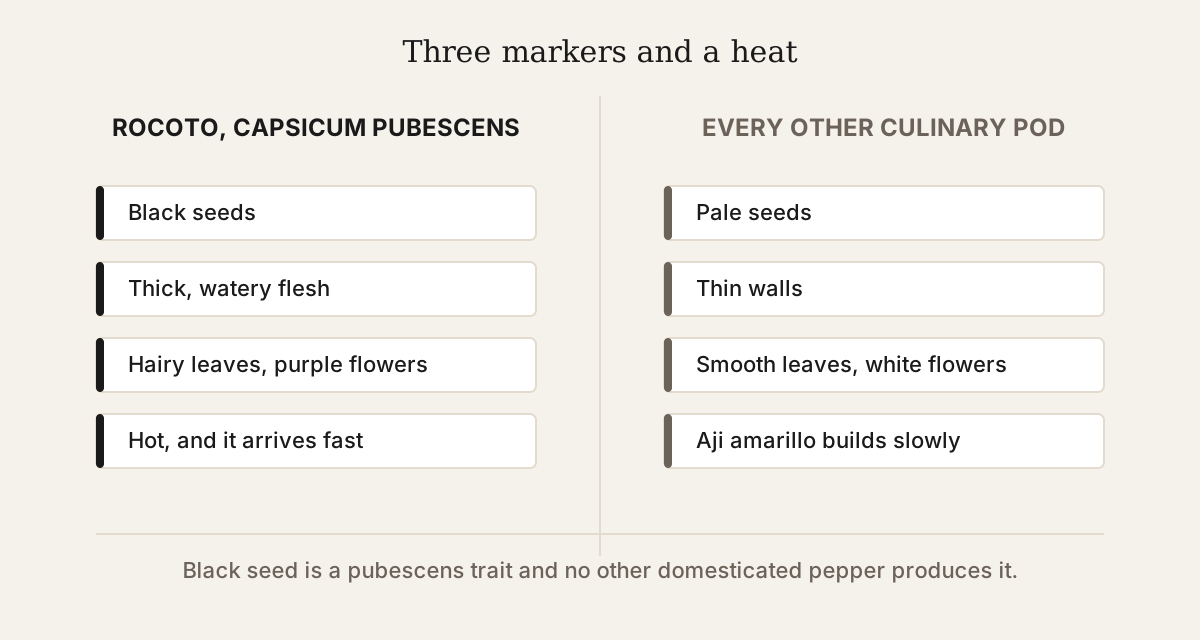
Rocoto is Capsicum pubescens, a distinct species grown in the Andes at altitude, with thick juicy flesh, black seeds and a hairy leaf that gives the species its name. It is used fresh far more than dried.
The species matters practically. Most culinary pods, including ají amarillo, ají panca and every Mexican chile, belong to a small number of other Capsicum species. Capsicum pubescens stands apart, does not cross readily with them, and does not dry well, which is why rocoto is almost never sold as a dried pod.
The flesh is the other surprise. It is thick and watery, closer to a bell pepper than to a thin-walled chile, which is why it is stuffed in rocoto relleno and why it does not behave like a pod you would grind into a paste.
Heat is high and arrives fast. Rocoto is hotter than ají amarillo by a wide margin and hits quickly rather than building.
What it tastes like beyond the heat
Fruity and grassy, with a fresh juiciness that is unusual at that heat level.
Most pods this hot are thin-walled and their flavour is dominated by the burn. Rocoto carries enough flesh and water that the fruit is still detectable, which is why it works raw in a sauce rather than only as a heat source.
It is often described as apple-like, which is a reasonable shorthand for the texture and the freshness rather than a claim about flavour.
The heat is not the whole point, though a first encounter can make it seem that way. In a Peruvian rocoto sauce the pod is doing flavour work as well.
Where it belongs
Rocoto appears in a small number of preparations where its heat is the intended effect.
Rocoto relleno is the Arequipan dish it is most associated with, where the pod is stuffed and baked, and the thick flesh is what makes that possible at all.
Salsa de rocoto and rocoto pastes are table sauces, used sparingly.
In Bolivia the same pod is called locoto and appears in llajua, the Bolivian table sauce, alongside tomato and quilquiña.
It is not a base ingredient. Rocoto is a finish and a stuffing pod. Putting it into a slow-cooked base wastes its freshness and makes the dish uniformly hot.
Buying it in the United States
Fresh rocoto is difficult to find, frozen is realistic, and jarred paste is the most practical.
Frozen whole pods are stocked by Latin American grocers with a Peruvian or Bolivian customer base. Freezing suits rocoto reasonably because it is cooked or blended in most uses.
Jarred rocoto paste is the widely available form and is what most recipes written for a United States audience assume.
Fresh pods turn up seasonally in specialist produce markets and are worth buying if you intend to stuff them, since that use genuinely needs the fresh pod.
Checked on 13 August 2026, the first page of United States results for rocoto pepper returned reference material and seed sellers alongside general retailers, which describes that search on that date rather than recommending any seller. The strong seed presence reflects that home growers are a meaningful part of the English-language market for this pod.
Seed is widely sold and the plant is growable, though it wants cool nights and a long season, which suits fewer American gardens than the marketing suggests.
Handling it
Wear gloves when seeding fresh rocoto, and be careful about the fumes.
The heat transfers readily to skin and the thick flesh means you handle more of it than with a thin pod. This is the one ingredient on this site where gloves are a genuine recommendation rather than caution.
Deseeding lowers the heat substantially, and Peruvian cooks routinely do it. The white pith carries much of the burn.
Blending it releases fumes that will catch the back of your throat in a closed kitchen. Ventilate.
Start with less than a recipe says if you are working from a source written in Peru, since tolerance and pod strength both vary widely.
Growing it, which is a real option and a demanding one
Rocoto seed is widely sold in the United States and the plant is genuinely growable, with conditions that suit fewer gardens than the seed listings suggest.
It wants cool nights and a long season, which is the opposite of what most chile plants want and a direct consequence of its Andean origin. In hot summer regions it will grow and set poorly; in cool coastal ones it does better than the heat-loving pods do.
It is a perennial where winters are mild and can crop for several years, becoming woody and more productive with age. That is unusual among culinary pods and is part of why it is a fixture of Andean smallholdings rather than a field crop.
Expect a long wait to first fruit. Rocoto is slower from seed than almost any other Capsicum, and a first-year plant may set little.
The hairy leaves are the confirmation that what came up is what you planted, along with purple flowers rather than the white of most chile species.
Regional names, and what they do and do not tell you
Rocoto carries different names across the Andes, and those names track geography rather than any difference in the plant.
Rocoto in Peru, locoto in Bolivia, and manzano in some Mexican usage, the last referring to the apple-like shape. All three are Capsicum pubescens.
The Mexican name is worth flagging because manzano pods sold in the United States are the same species and are frequently the most available route to a fresh rocoto, particularly in regions with Mexican produce markets rather than Peruvian ones.
What the names do not tell you is heat, which varies by growing conditions far more than by regional name. A locoto and a rocoto from similar conditions are the same pod at the same strength.
Why the seeds are black, and what that tells you
Rocoto’s black seeds are the quickest way to identify it and they mark a genuine botanical separation rather than a curiosity.
Black seed is a Capsicum pubescens trait. No other domesticated pepper species produces it, so a pod with black seeds is a rocoto or a close relative and nothing else.
The species does not cross with the others easily, which is why rocoto has stayed distinct rather than blending into the wider pepper population.
It also tolerates cold that would kill a habanero. C. pubescens evolved at altitude and is the only domesticated pepper that grows reliably in cool highland conditions.
The hairy leaves are the other giveaway. Pubescens means hairy, and the fuzz on the foliage is visible on a plant even before it fruits.
Storage
Fresh pods keep about a week refrigerated. Frozen pods keep months. Jarred paste keeps a year unopened and about a month refrigerated after opening.
Rocoto does not dry well, which is why it is absent from the dried-pod catalogue that includes panca and mirasol. Attempts to dry it at home generally produce something leathery and dull rather than a concentrated pod.
Freeze fresh pods whole if you find them in quantity, and use them from frozen. They will be too soft to stuff after thawing.
Frequently asked questions
How hot is rocoto?
Considerably hotter than ají amarillo and in the general region of a habanero for many people, though it hits faster and fades sooner. Deseeding lowers it substantially, and Peruvian cooks routinely deseed. Anyone calibrated on ají amarillo should treat rocoto as a different order of ingredient rather than a stronger version of the same thing.
Why does rocoto have black seeds?
Because it is Capsicum pubescens, a distinct species from the other culinary pods, and black seed is one of the species’ defining characteristics along with hairy leaves and thick flesh. The black seeds are the quickest way to confirm you have a real rocoto rather than a lookalike sold under the name.
Can I substitute a habanero?
For heat, roughly, and for little else. Habanero is thin-walled, tropical and floral where rocoto is thick, juicy and grassy. In a sauce where the pod is blended the substitution is defensible; in rocoto relleno, where the thick flesh is the entire structural point, it does not work at all.
Is rocoto the same as locoto?
Yes, rocoto and locoto are the same pod. Locoto is the Bolivian name, and it appears under that name in llajua and other Bolivian preparations. The two words describe one species, and the difference is regional vocabulary rather than a difference in the plant.
Can I dry rocoto?
Not usefully. Its thick, watery flesh does not dry the way thin-walled pods do, and home attempts generally produce something leathery and flat. This is why rocoto is absent from the dried Peruvian pod catalogue that includes panca and mirasol, and why it is sold fresh, frozen or as a paste.
The pairing
“Adiós Pueblo de Ayacucho”, traditional, arranged 1960s, Peru.
Regional. A highland huayno from the Andes where rocoto grows, and like the pod it is sharper and less accommodating than the coastal music that travels more easily.
We write about seasoning preparations across Latin America, what separates the regional variants, and where to buy them in the United States.