Salsa Criolla: Red Onion, Lime, and Nothing Else Required
The Peruvian onion relish that resets the palate. Why the slicing and the rinse decide it, and how it differs from a pico de gallo.
Salsa criolla is red onion sliced very thin, rinsed, and dressed with lime, salt and usually a little ají, left to stand briefly before serving. Three ingredients and two techniques, and both techniques decide whether it works.
It is the simplest preparation on this site and the one most often ruined, because the two steps that matter are the two most people skip.
What salsa criolla actually is
Salsa criolla is thinly sliced red onion dressed in lime juice and salt, commonly with fresh ají and sometimes coriander, served at the table alongside rich or fried food. Nothing is cooked.
Red onion rather than white or yellow. The colour is part of the point, since the lime turns it a brighter pink as it sits, and red onion is milder raw than the alternatives.
Ají limo is the traditional pod where it is used, sliced fine. Any fresh moderate pod works and the quantity is small.
Coriander is common and optional. Some households include it, many do not, and its absence is not a fault.
No tomato. This is the single clearest compositional difference from the Mexican fresh salsas it is often compared to.
The two techniques that decide it
Thinness and the cold rinse decide whether a salsa criolla works, and everything after those two steps is assembly rather than technique.
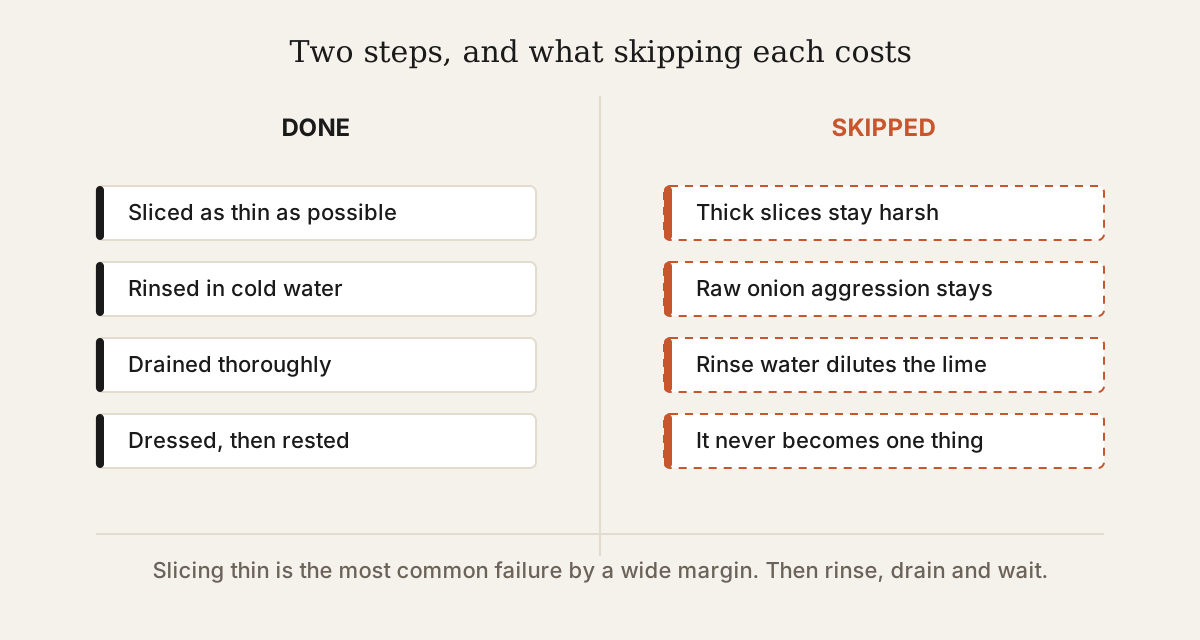
Slice as thin as you can manage, ideally on a mandoline. This is the most common failure by a wide margin. A thick slice stays harsh and crunches unpleasantly, and it does not soften in the lime within any useful time. A very thin slice cures quickly and eats easily.
Rinse the sliced onion in cold water for a few minutes, then drain it properly. The rinse removes the sulphurous compounds that make raw onion aggressive while leaving the crunch and the sweetness. Skipping it produces a relish that overwhelms whatever it is served with.
Drain it thoroughly after rinsing. Onion carrying rinse water dilutes the lime and the relish never seasons correctly, which is a subtler failure that people usually blame on the lime.
Then dress and wait twenty minutes. The onion softens slightly, the colour brightens, and the flavours settle into one thing.
How it differs from pico de gallo
Salsa criolla and pico de gallo look similar in a bowl and are built on different principles.
Salsa criolla is onion-led with no tomato, dressed in lime and eaten as a sharp counterweight to rich food. Its texture is sliced and its job is to cut.
Pico de gallo is tomato-led, with onion, coriander and chile in roughly balanced proportions, diced rather than sliced, and it functions as a fresh relish in its own right rather than purely as a foil.
Both traditions are in border on this site, so the comparison is between two real things rather than an exclusion. The point is that they are not versions of one another and substituting either changes what the plate is doing.
The Argentine and Uruguayan salsa criolla is a third thing again, carrying tomato and bell pepper in a vinegar dressing, closer to a chopped salad. Same name, different preparation, and worth knowing before following a recipe found under the term.
Where it belongs
Beside anything rich, fried or roasted, and specifically on the plate rather than in the dish.
The classic pairings are pollo a la brasa, chicharrón, fried fish, tamales and anticuchos. It appears in sandwiches, notably the Peruvian chicharrón sandwich, where it does the work a pickle would do elsewhere.
It is served with ají verde as often as not, and the pair is the point: one rich and coating, one sharp and raw. Neither covers the range alone.
It does not belong on delicate food. Raw onion and lime overwhelm mild fish or eggs, which is a real limit rather than a caution.
Buying it, which you should not
Salsa criolla is a made preparation and does not survive jarring in any useful form.
Checked on 13 August 2026, the first page of United States results for salsa criolla returned recipe publishers and reference material rather than sellers, which describes that search on that date rather than recommending any seller. The practical reading is that no meaningful commercial category exists for it in the United States, which is unsurprising for a preparation whose entire quality is the crunch of raw onion.
The only sourcing question is the pod, and even that is optional. Ají limo is difficult to find fresh; any moderate fresh pod substitutes acceptably here because the quantity is small and the onion is the point.
Everything else is in a general supermarket. This is one of very few preparations on this site that requires no specialist shopping at all.
Storage
Best within a few hours, acceptable the next day, and pointless after that.
The crunch is the preparation, and lime removes it steadily. By the second day the onion has gone soft and pink throughout and what remains is a mild pickled onion, which is pleasant and is not salsa criolla.
If it has to wait more than an hour, hold the lime back and dress it shortly before serving. The slicing and rinsing can be done well ahead.
It does not freeze, for the obvious reason.
Frequently asked questions
Why rinse the onion?
Because a few minutes in cold water removes the sulphurous compounds that make raw onion aggressive while leaving the crunch and the sweetness intact. Skipping the rinse is the second most common reason a homemade salsa criolla is unpleasant, after slicing it too thick. Drain it thoroughly afterwards, since carried water dilutes the lime.
How thin should the onion be?
As thin as you can manage, and a mandoline is worth using. Thickness is the single most common failure, because a thick slice stays harsh and does not soften in the lime within the twenty minutes the preparation is meant to stand. Thin slices cure quickly and eat cleanly.
Is salsa criolla the same as pico de gallo?
No. Salsa criolla is onion-led, sliced, dressed in lime and carries no tomato in its Peruvian form. Pico de gallo is tomato-led, diced, and balanced between tomato, onion, coriander and chile. Both are in border on this site, and they do different jobs on a plate rather than being versions of the same idea.
Can I use white onion instead of red?
You can, and the result is sharper and visually duller. Red onion is milder raw and turns a brighter pink as the lime works on it, both of which the preparation depends on. If you only have white onion, rinse it for longer than you would red, since it carries more of the harshness the rinse is there to remove.
How long before serving should I make it?
About twenty minutes, which lets the onion soften slightly and the flavours settle. Beyond an hour it begins losing the crunch that is the point, and by the next day it has become a mild pickled onion instead. If you need to prepare ahead, slice and rinse in advance and dress it shortly before it goes to the table.
The pairing
“Fina Estampa”, Chabuca Granda, 1961, Peru.
Lyrical. A portrait of a figure walking through Lima described entirely through small precise details, which is the same economy this preparation runs on: three ingredients, two techniques, nothing spare.
We write about seasoning preparations across Latin America, what separates the regional variants, and where to buy them in the United States.