An Honest Sazón: MSG, Colouring, and What to Read on the Packet
Most sazón packets are salt, MSG and dye. What the blend is supposed to contain, which versions leave the additives out, and how to read the label.
Sazón is a dry seasoning blend built on annatto for colour with cumin, coriander, garlic and oregano, and the commercial packet version is usually dominated by salt and monosodium glutamate with synthetic dye standing in for the annatto. Both are real products; only one is the blend the name refers to.
This page is about reading the packet, because the difference between a sazón worth buying and one worth skipping is entirely visible in the ingredient list before you open it.
What sazón is supposed to be
Sazón is a ground blend whose defining component is annatto, also called achiote, which supplies the orange-red colour, with cumin, coriander, garlic powder, oregano and salt making up the seasoning. It is a dry blend, shelf-stable, added during cooking rather than at the table.
The colour is not decoration. Annatto gives rice, stews and braises the warm orange cast that is a visual signature across a great deal of South and Central American home cooking, and it carries a mild peppery earthiness alongside the colour.
The blend belongs to the dry family: mixed dry, kept in a cupboard, and used at the start or middle of cooking. That distinguishes it from a base, which is cooked wet, and from a finish, which is added raw at the table.
A note on scope
The sazón packet most visible in United States supermarkets is strongly associated with Puerto Rican cooking, and Puerto Rico is a Caribbean island rather than part of the South and Central American mainland this site covers. The blend itself is used widely across the mainland, and this page is about the blend rather than about any one national tradition.
What is actually in the commercial packet
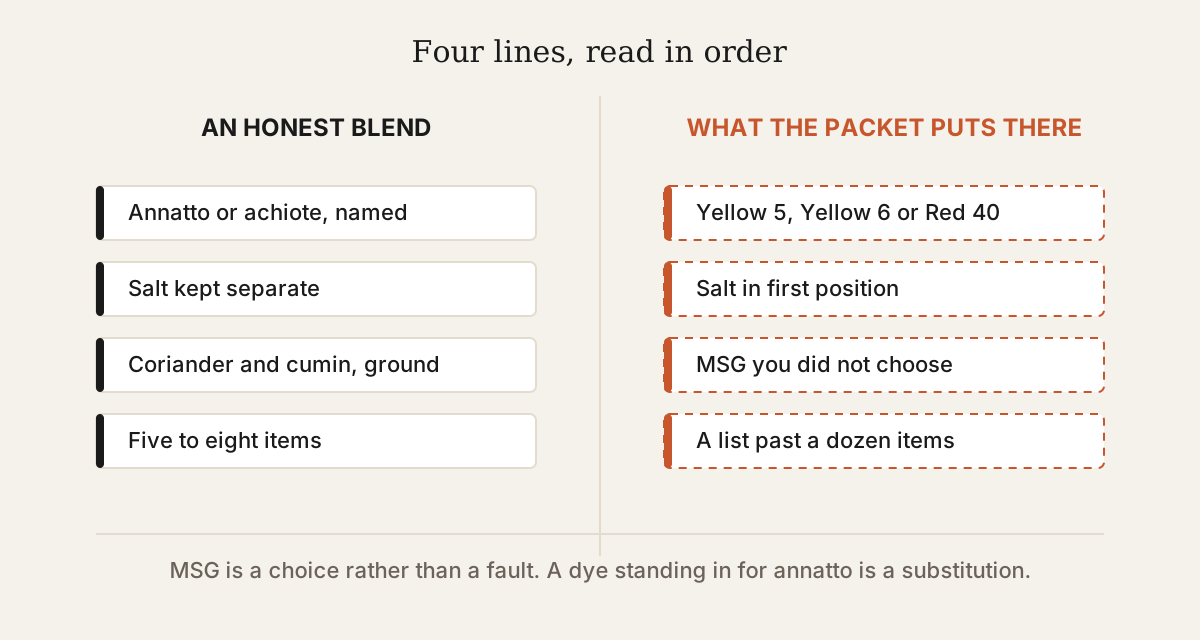
Read the order. On most commercial sazón, salt is first, monosodium glutamate is second or third, and the colour comes from a synthetic dye rather than from annatto.
Salt first means the packet is mostly salt. Ingredient lists run in descending order by weight, so a blend led by salt is a salt product carrying seasoning rather than a seasoning carrying salt. This matters practically: a recipe calling for a packet of sazón plus additional salt will usually be over-salted.
MSG is not a fault, but it should be a choice. Monosodium glutamate is a savoury enhancer with a long record of safe use, and plenty of cooks want it. The objection here is not health, it is that a blend leaning on MSG needs less of the actual aromatics, so the packet becomes salt, glutamate and colour with the seasoning as a rounding error.
Synthetic dye in place of annatto is the substitution that matters most. Where a label lists Yellow 5, Yellow 6 or Red 40 instead of annatto or achiote, the colour is present and the ingredient that traditionally produced it is not. Annatto contributes flavour as well as colour; a dye contributes only colour.
How to read the label
Four checks, in order, and all of them are on the front or back of the packet before you buy.
One. Where does salt sit? First means mostly salt. Third or lower means a blend where the aromatics are doing the work.
Two. Is the colour annatto or a dye? Look for annatto or achiote by name. Yellow 5, Yellow 6, Red 40 or a generic “artificial colour” means the traditional colouring agent has been replaced.
Three. Is MSG present, and do you want it? It will be listed as monosodium glutamate, sometimes alongside disodium inosinate or guanylate, which do the same job. Their presence in a short list usually means the aromatics have been thinned.
Four. How long is the list? A blend of five to eight recognisable spices is doing what the name promises. A list running past a dozen items, most of them not spices, is a different product.
Checked on 13 August 2026, the first page of United States results for sazon without msg returned recipe publishers giving homemade formulas alongside spice retailers and general marketplaces. That describes that search on that date rather than recommending any seller. The practical reading is that additive-free versions exist commercially and that a large share of the demand is being met by people making it themselves.
Making it, which is the reliable route
A homemade sazón is annatto, cumin, coriander, garlic powder, oregano and salt in proportions you control, and it takes about five minutes if the spices are already ground.
Annatto is the component to source deliberately. It is sold as whole seeds, as ground powder, and as achiote paste, which is a different product carrying acid and other seasonings. For a dry blend you want the ground seed.
Toast and grind the cumin and coriander if you can. The gap between pre-ground and freshly ground is larger for these two than for anything else in the blend, and it is most of what makes a homemade version taste better than a packet.
Control the salt separately. The strongest argument for making it is that you can leave the salt out entirely and season the dish on its own terms, which is impossible with a packet where salt is the main ingredient.
Ground blends fade. Make a small jar rather than a large one.
What to use it on
Sazón goes into rice, beans, stews, braises and marinades, added early enough for the annatto to colour the fat and the aromatics to bloom.
It is not a finishing seasoning. Sprinkled on at the end it tastes raw and dusty, because the ground spices need contact with heat and fat to open up. Add it with or just after the base.
The most common use is rice, where a small quantity turns the whole pot a warm orange and adds a savoury floor. It also belongs in bean pots, in braised chicken and pork, and rubbed onto meat before grilling.
Storage
Keep it sealed, dark and dry, and expect a homemade blend to hold well for about six months and a commercial packet longer because of its salt content.
Ground spice blends do not spoil so much as flatten. Cumin and coriander lose their volatile aromatics first, annatto holds its colour longer than its flavour, and what remains after a year is mostly colour and salt.
Buy or make small quantities more often. This is the single easiest improvement available with a dry blend.
Frequently asked questions
Is MSG in sazón harmful?
There is no good evidence that monosodium glutamate is harmful at the quantities used in seasoning, and it has a long record of ordinary use. The reason to prefer a blend without it is compositional rather than medical: a packet leaning on MSG generally carries less of the actual spices, so you are buying salt and enhancer where you wanted aromatics.
What is annatto and can I substitute it?
Annatto, also called achiote, is the seed of a tropical shrub, used ground for its orange-red colour and mild peppery earthiness. There is no exact substitute. Paprika gives colour without the same earthiness, turmeric gives a yellower colour and a quite different flavour. If a recipe depends on the colour, paprika is the nearer stand-in.
Is sazón the same as adobo?
No, though both are dry blends and both are sold in similar packets. Sazón is defined by annatto and its colour. Adobo seco is typically garlic-led, with oregano and often turmeric, and carries no annatto. They are used differently and are not substitutes.
Why is my rice not turning orange?
Almost always because the blend is colouring with a dye that has been added at a low rate, or because the sazón was added too late. Annatto colours fat, so it needs to go in while there is oil in the pan and heat available. Adding it to already-cooked rice will season the dish without colouring it.
Can I make sazón without salt?
Yes, sazón can be made without salt, and it is the main reason to make it. Annatto, cumin, coriander, garlic powder and oregano make a complete blend on their own, and leaving salt out lets you season the dish independently. Note that a salt-free blend will taste flat straight from the jar, which is expected rather than a sign it is wrong.
The pairing
“Moliendo Café”, Hugo Blanco, 1958, Venezuela.
Lyrical. The song is built entirely around the grinding of a raw ingredient into something usable, which is the same unglamorous step this page is about: the blend is only as good as what went into the grinder.
We write about South and Central American seasoning preparations, what separates the regional variants, and where to buy them in the United States.