Where to Buy a Base in the United States, and How to Judge a Jarred One
Jarred hogao, sofrito and aderezo are a real shelf-stable category. Where to find them, what the label should say, and when making it is the better call.
Jarred and frozen bases are sold in the United States through Latin American grocers, online Latin marketplaces and increasingly through general delivery services, and a good jarred base is a genuinely useful product rather than a compromise. The judgement is almost entirely in the ingredient list.
This page covers both halves of the same decision, because in practice nobody separates them: you find a jar and then decide whether it is worth buying.
Where they are actually sold
Latin American grocers carry them reliably, online Latin food marketplaces carry the widest range, and general delivery services increasingly stock one or two brands.
Checked on 13 August 2026, the first page of United States results for where to buy hogao returned a Latin food marketplace, a general grocery delivery service and community discussion rather than a dedicated retail category. That describes that search on that date rather than recommending any seller.
The practical reading is that this is an import category rather than a supermarket one, and that availability depends heavily on where you live. A city with a Colombian, Venezuelan or Ecuadorian population will have it on a shelf; elsewhere it is an online purchase.
Frozen is worth looking for and often better than jarred. Frozen bases skip the acidification and heat treatment that shelf-stable jars require, so they taste closer to the fresh preparation. Latin grocers with a freezer section frequently carry them.
The four checks on a jar
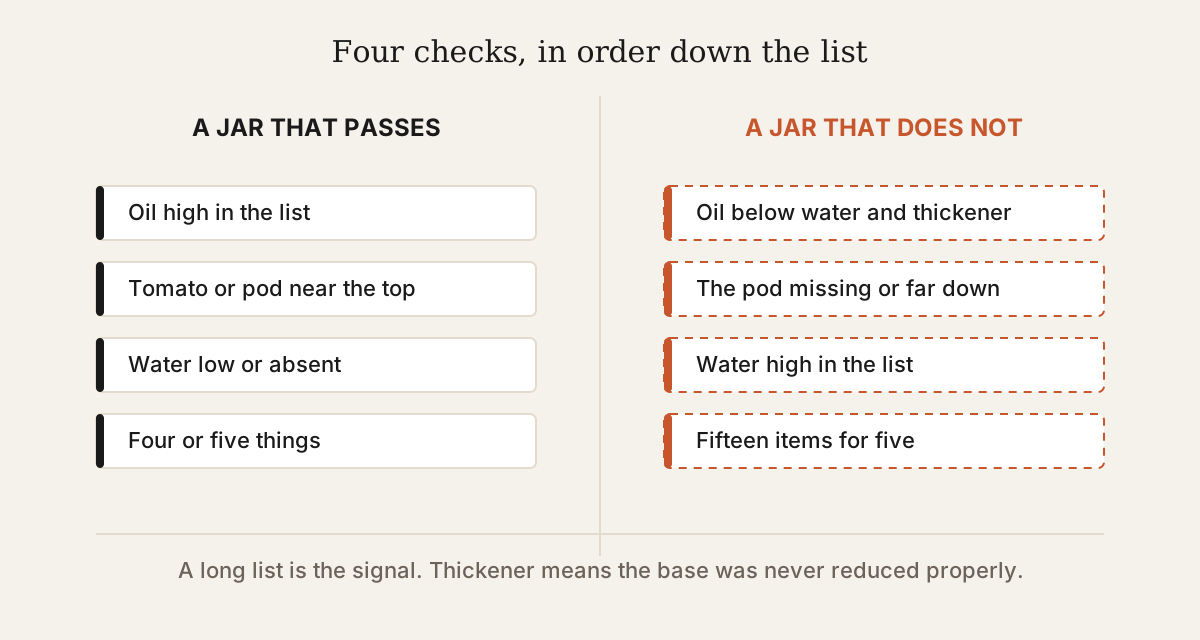
Read the ingredient list in order and check four positions. All four are visible before you buy.
One. Where is the fat? A base is aromatics cooked in fat, so oil should appear high in the list. A jar where oil is near the bottom, below water and thickeners, has been made with very little of it, and the preparation depends on fat to carry flavour.
Two. Where is the tomato or the pod? For hogao, tomato should be at or near the top alongside onion. For a Venezuelan sofrito, ají dulce should be named specifically rather than as generic pepper.
Three. Where is water? Water high in the list means the product has been extended, and it is the most common way a jarred base is cheapened.
Four. What is in the additive block? Acidifiers such as citric acid are normal and necessary for shelf stability. Thickeners suggest the base was not cooked down properly. Colouring suggests the achiote or the tomato is doing less work than it should.
What a good label looks like
Onion, tomato, oil, salt, garlic, and an acidifier. Six items or so, in that rough order, with nothing you would not have put in the pan yourself.
A long list is the signal, more than any single ingredient. A base is four or five things cooked slowly, and a jar needing fifteen items to reproduce it has reproduced something else.
When jarred is the right call, and when it is not
Buy jarred when you cook from a base regularly and want it on hand; make it when the dish is the point or when you want to control the aromatics.
Jarred is genuinely good for weeknight cooking. A base is already cooked and already reduced, so a jar loses less against the fresh version than almost any other preparation would. This is exactly why the shelf-stable category exists and why it has real competitors on the shelf.
Making it wins on three things. You control the fat, which is the component that carries regional identity. You control the salt. And you can use the specific pod, ají dulce or ají amarillo, that a commercial jar usually replaces with something more available.
The honest comparison. A good jarred hogao is perhaps eighty percent of a homemade one and costs twenty minutes less. That is a reasonable trade on a Tuesday and a poor one when the base is the dish.
What to do with a jar once you have it
Treat it as a starting point rather than a finished product, and refresh it in the pan before building on it.
Warming a jarred base in a little oil for a few minutes before adding anything else wakes it up considerably, because the aromatics have been sitting in an acidified liquid rather than in hot fat. This single step closes much of the gap with a fresh base.
Adding a little fresh allium at that point helps more than anything else. Fresh onion or garlic cooked briefly into a jarred base restores the top notes that heat treatment removed.
Taste before salting. Commercial jars vary widely in salt, and a recipe written for a homemade base will over-season a dish built on a salty jar.
Frequently asked questions
Is jarred hogao as good as homemade?
Close, and closer than any jarred finish would be, because a base is already cooked and reduced so processing costs it less. What you lose is the specific fat and pod, control over salt, and the top notes that survive in a fresh preparation. Warming a jarred base in oil with a little fresh onion recovers much of that.
What is the difference between jarred and frozen bases?
Frozen bases skip the acidification and heat treatment that shelf-stable jars require, so they generally taste closer to the fresh preparation. Jarred keeps in a cupboard and is more widely available. If a grocer carries both and you have freezer space, frozen is usually the better product.
Why is water in my jarred sofrito?
Usually to extend the product, which is the most common way a jarred base is cheapened. A small quantity low in the list is unremarkable. Water high in the list, above the oil or the tomato, means you are buying a diluted preparation, and it will taste correspondingly thin.
Can I substitute a jarred base for a different country’s version?
Within reason, yes, and the substitution costs less than it would between finishes. The four mainland bases share a method and a position in the dish, so a jarred hogao standing in for an Ecuadorian refrito changes the colour and adds a little less earthiness without breaking the dish. Note that jarred sofrito sold in the United States is frequently the Caribbean island version, which is a genuinely different preparation.
How long does a jarred base keep once opened?
Refrigerated and sealed, usually one to two weeks, and the label is the authority. Keeping a thin film of oil over the surface slows deterioration. If you will not finish it, portion the remainder into a freezer tray, since a cooked base freezes well.
The pairing
“Soledad”, Grupo Niche, 1993, Colombia.
Regional. Cali salsa built for a room rather than a stage, from the same practical, unshowy register as a jar of hogao bought on the way home and used without ceremony.
We write about South and Central American seasoning preparations, what separates the regional variants, and where to buy them in the United States.