The Seasoning Preparation, and the Three Families
Bases, finishes and dry blends across South and Central America. What separates the three, why country is an attribute rather than the organising idea, and where to start.
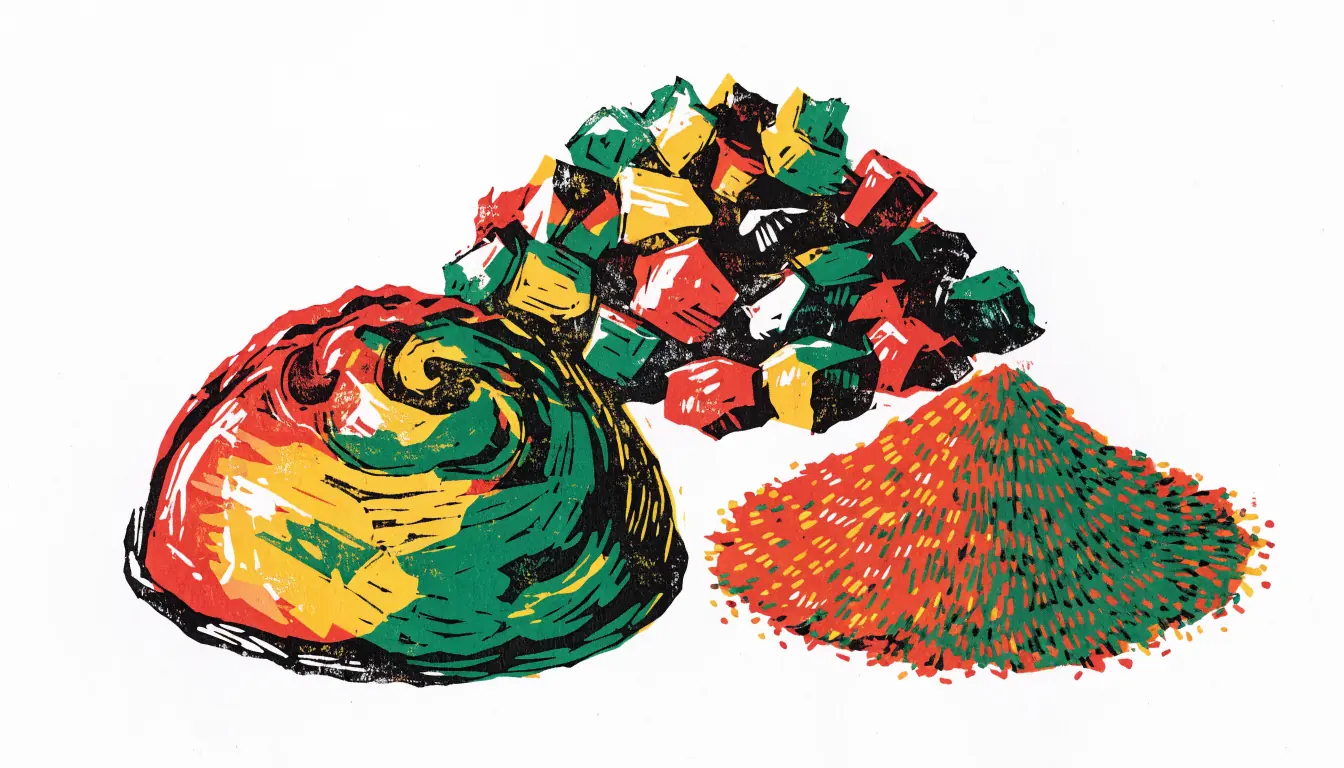
South and Central American seasoning preparations sort into three families defined by when they enter the cooking: bases go into the pan first and are cooked in fat, finishes are added raw at the table, and dry blends are mixed dry and kept on a shelf. Country is an attribute of a variant rather than the thing that organises them.
That last point is the whole structure of this site, and it is unusual enough to state plainly before anything else.
Why not organise by country
Organising by country fails twice over, and the failures compound. Each country has many preparations, and half of them overlap with the country next door.
Colombian hogao and Venezuelan sofrito are not two subjects that happen to resemble one another. They are one preparation with different aromatics, and a country-keyed map would have written that article twice while explaining the relationship in neither.
Organising by preparation puts the overlap in the middle instead of splitting it across two pages. The single most useful article on this site is the one comparing hogao, aderezo, refrito and sofrito, and it can only exist if the preparation rather than the border is the unit.
Country still matters. It is an attribute. A variant’s country tells you which aromatics and which fat, and it appears inside the article rather than above it.
The three families
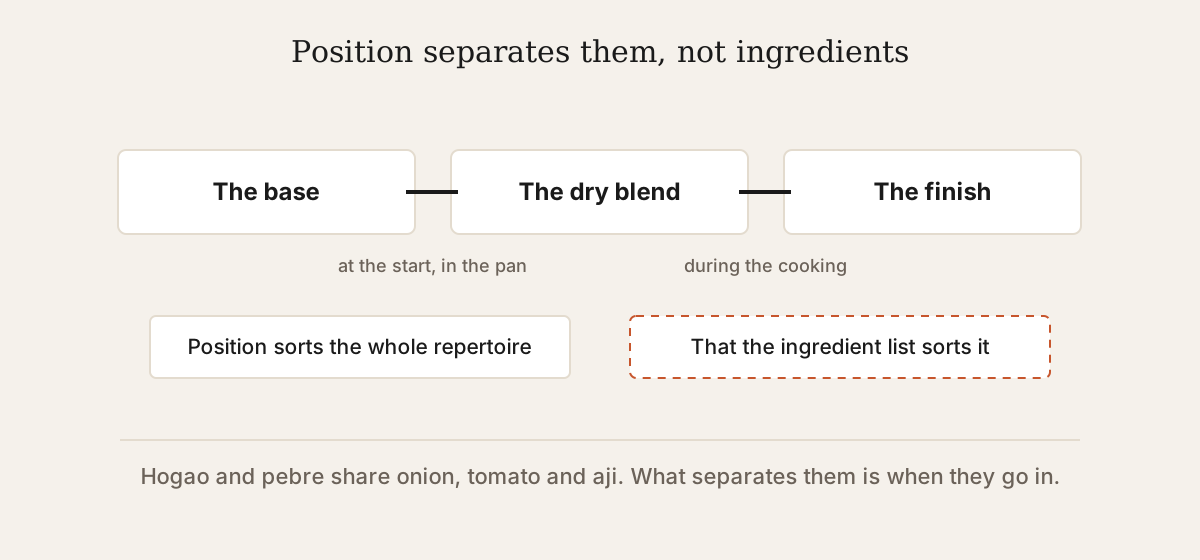
The three are separated by when a preparation enters the cooking and whether it was cooked at all, which is a sharper test than any ingredient list gives you.
The base
Aromatics cooked in fat at the start, with the dish built on top. Colombian hogao, Peruvian aderezo, Ecuadorian refrito, Venezuelan sofrito, and the aliño that begins a Chilean cazuela.
A base is cooked, it goes in first, and it cannot be separated out afterwards. It is structural. Of the three families it is the one that rewards batch cooking, because it is already cooked and reduced and therefore freezes well.
Start here: hogao, aderezo, refrito and sofrito are one preparation, then what a base is and how to build one.
The finish
Raw or barely cooked, added at the table by the eater. Argentine and Uruguayan chimichurri, Chilean pebre, ají criollo, Colombian ají picado, Peruvian ají verde and salsa criolla.
A finish stays separable from the dish and is added last. Its defining ingredients are raw herb and raw allium, which is why it keeps for days rather than weeks and why it does not freeze.
The dry blend
Mixed dry, shelf-stable, kept in a cupboard. Chilean aliño completo, an honest sazón without MSG or colouring, adobo seco, and merkén.
A dry blend is defined by its state rather than its position, and it can be used at either end of the cooking. It is bought as a pantry good and it fades rather than spoils.
All three are commercially real
Jarred bases and finishes are an established shelf-stable retail category with real competitors on the shelf, which is evidence of demand rather than a problem to design around.
This site does not treat the perishable families as less serious than the dry one. A jarred base is a genuinely good product, a jarred finish is a compromise worth understanding, and both are covered on their own terms.
Where a preparation is better made than bought, the pages say so directly. Salsa criolla takes twenty minutes and does not survive jarring; there is no reason to pretend otherwise.
Vocabulary, and why it is a border rule
Ají and merkén are not “chiles”, and chiles are not ají. Both traditions are in border and the words are not interchangeable between them.
This is not pedantry about words. Using Mexican vocabulary for a South American ingredient imports the wrong reference frame: it sets the wrong expectation for heat, points at the wrong substitutes, and quietly relocates the preparation to a different cuisine.
The engines do it too. Asked about Chilean pebre on 13 August 2026, one assistant glossed ají as “Aji (Chile Pepper)” without being prompted, which is a statement about that response on that date. That makes the correct vocabulary a differentiation rather than a nicety.
Scope
In: every South and Central American country, including its Caribbean coast. Colombian and Venezuelan coastal cooking is in border because the country is.
Out: Mexico. The Caribbean island nations, for now, which is a deferral rather than a judgement that they belong to a different subject.
Out: recipes for finished dishes. The entity here is the preparation, not the meal built on it. A page explains what a preparation is, how its variants differ, how to judge one and where to get it.
Where to start
If you cook from these traditions already, start with the overlap article, because it reorganises what you know.
If you are new to them, start with what a base is and then make one. The method transfers to every other base on the continent, and the difference between a base cooked properly and one rushed is larger than the difference between two countries’ versions.
If you are shopping rather than cooking, start with how to judge a jarred base and shelf life by format.
Frequently asked questions
What is the difference between a base and a finish?
When it goes in, and whether it was cooked. A base is cooked in fat at the start and disappears into the dish; a finish is raw, added at the table, and stays separable. Hogao and pebre share most of their ingredients and belong to different families, which is the clearest demonstration that position rather than composition defines them.
Why is country not the organising idea?
Because each country has many preparations and half of them overlap with its neighbours, so a country-keyed structure duplicates articles while explaining relationships in none of them. Treating country as an attribute of a variant keeps the overlap visible, which is where most of the useful information sits.
Are jarred versions worth buying?
Bases yes, finishes usually not, dry blends depending on the label. A base is already cooked and reduced so it survives commercial processing well. A finish depends on raw herb and onion, which jarring destroys. A dry blend is fine to buy but often mostly salt, so the ingredient order matters.
Why are ají and merkén not called chiles here?
Because the word belongs to the Mexican tradition and ají belongs to the South American one, and both are in border here. The substitution sets wrong expectations about heat and points readers toward substitutes from the other tradition. Using each region’s own term keeps two real traditions distinct rather than collapsing them into one.
Which preparation should I make first?
Hogao, if you want a base, because it is the least assertive of the four, keeps about a week and improves most savoury cooking. Chimichurri, if you want a finish, because it takes ten minutes and needs no unusual ingredients. Both demonstrate their family clearly enough that the rest follows.
The pairing
“La Piragua”, José Barros, 1969, Colombia.
Lyrical. The song is a catalogue of a working boat and the men on it, named plainly and without decoration, which is close to what a good seasoning preparation is: a short list of ordinary things doing a specific job.
We write about South and Central American seasoning preparations, what separates the regional variants, and where to buy them in the United States.